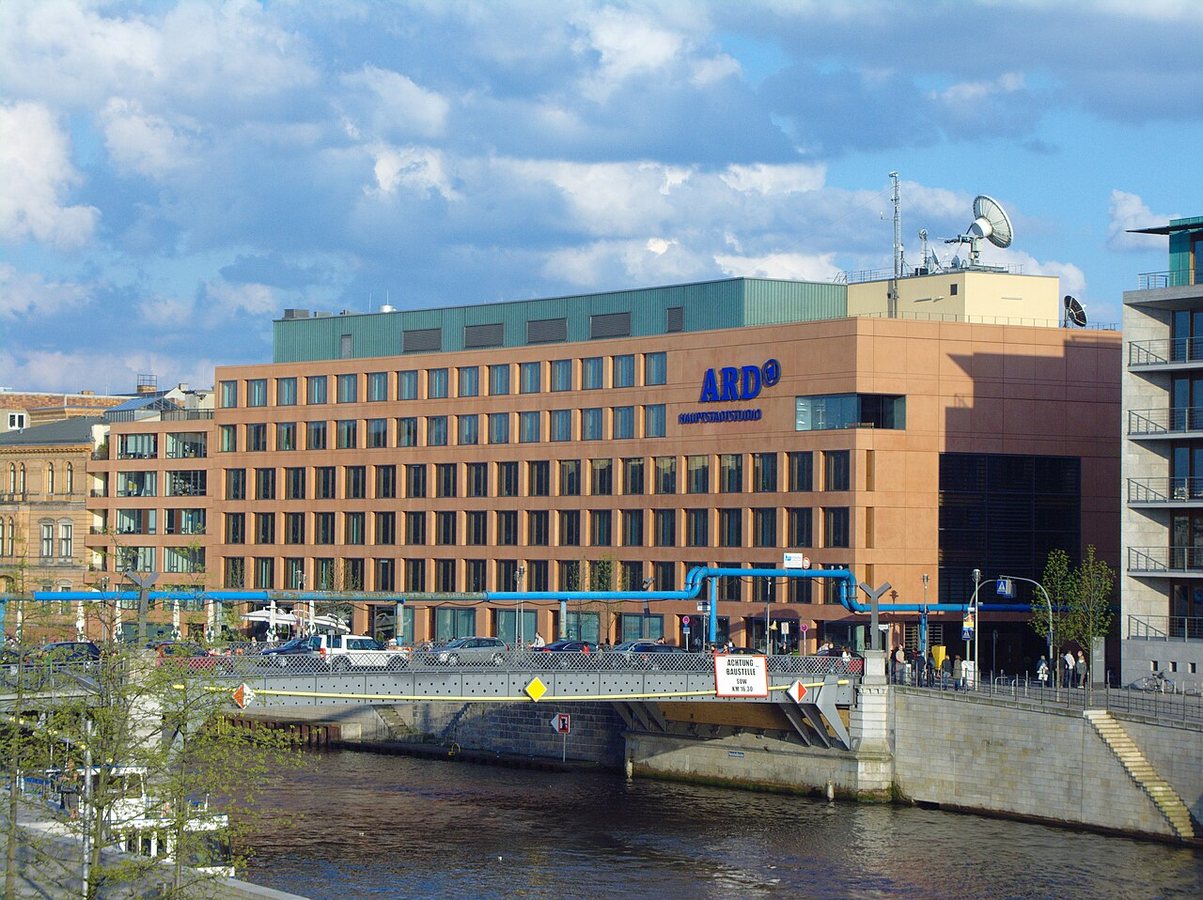
ARD is a joint organisation of Germany's regional public-service broadcasters, founded in 1950 in West Germany to represent their shared interests as broadcasting was rebuilt after the war, notably by introducing a joint television network. It is funded mainly by a mandatory household and business licence fee, collected through the Beitragsservice, and it describes itself as the largest public broadcaster network in the world. ARD runs the national channel Das Erste and produces programmes for its nine regional member broadcasters, which operate radio stations and regional TV networks across the country.
Post-war founding
After the Second World War, the Allied powers wanted German broadcasting to be decentralised and free from both state influence and the propaganda of the pre-war Reich broadcasting company. The new public institutions were organised as non-government, nonprofit bodies overseen by councils that included representatives of public life. ARD's founding members were regional stations from the British, French and American zones, and each was financed by a fee paid by German households owning a radio.
Television and national reach
Radio stations initially operated only regionally, so ARD pursued a countrywide television service from the outset, which was approved in 1952. The network began broadcasting in 1954 as Deutsches Fernsehen and was renamed several times before adopting the short name Das Erste in 1994. The daily news programme Tagesschau, first broadcast in 1952, became an ARD hallmark, reaching an average of around 8 million viewers.
Funding and independence
ARD members are meant to be independent of government and rely only slightly on advertising, drawing most of their income from licence fees set through a political process. Their legal mandate includes informing and entertaining the public, encouraging the integration of different parts of society, and giving minorities a voice in programming.