
Martin Luther was a German priest, theologian, author, hymnwriter, professor and former Augustinian friar who became the central figure of the Protestant Reformation. His theological beliefs form the basis of Lutheranism, and he is regarded as one of the most influential figures in Western and Christian history. Born in Eisleben in 1483, he was ordained a priest in 1507 and later rejected several teachings of the Roman Catholic Church, especially those concerning indulgences and papal authority.
Early life and education


Luther was born to a family of modest means in the Holy Roman Empire, and his father hoped he would become a lawyer. After studying at Latin schools and the University of Erfurt, he received a master's degree in 1505. A sudden storm and the death of a friend led him to abandon his legal studies and enter an Augustinian monastery in Erfurt that same year. He found the monastic life a period of deep spiritual struggle.
Break with the Church


Luther questioned the sale of indulgences and the authority of the pope, and his Ninety-five Theses of 1517 started an international debate on these issues. In 1521 the pope excommunicated him after he refused to retract his writings, and the Holy Roman Emperor condemned him as an outlaw. He taught that salvation comes through faith alone and that the Bible is the only source of revealed knowledge about the Gospel.
Legacy


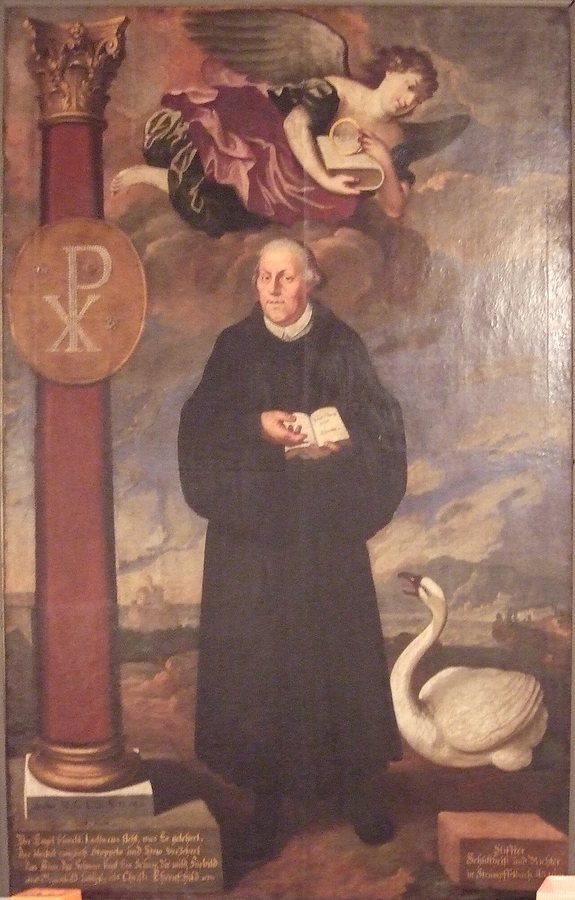

Luther's German translation of the Bible, published in 1534, made scripture far more accessible to laypeople and helped shape a standard form of the German language. His hymns shaped Protestant church singing, and his marriage to a former nun set a precedent allowing Protestant clergy to marry. Historians also note that his later antisemitic writings are widely criticised for encouraging hostility toward Jews.