factograf
EN
Sign in

Polish-born French physicist and chemist (1867–1934)

Marie Curie

Marie Curie

Marie Curie (born Maria Salomea Skłodowska, 1867–1934) was a Polish-born physicist and chemist who became a naturalised French citizen. She shared the 1903 Nobel Prize in Physics with her husband, Pierre Curie, for research on radioactivity, and later won the 1911 Nobel Prize in Chemistry for discovering the elements radium and polonium. She was the first woman to win a Nobel Prize and the first person to win two, as well as the only person to win in two different scientific fields.

Early life
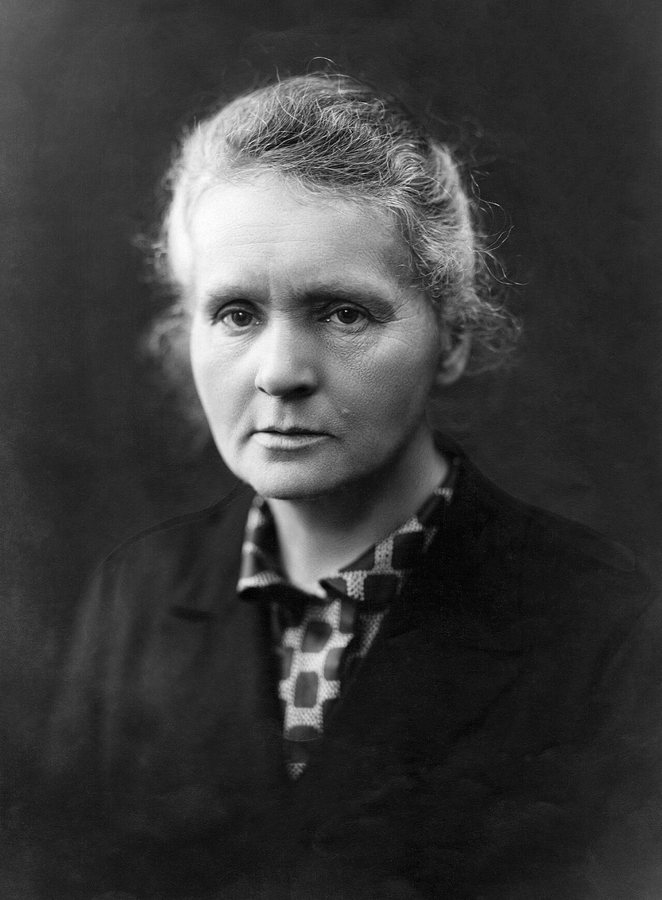
Marie Curie in the 1920s
Curie's birthplace at 16 Freta Street in New Town, Warsaw
Władysław Skłodowski with daughters Maria, Bronisława and Helena, 1890
Maria and her sister Bronisława, around 1886
Krakowskie Przedmiescie 66 in Warsaw, where Maria did her first scientific work in 1890–1891
Pierre Curie and Marie Skłodowska-Curie, 1895
Pierre and Marie Curie in the laboratory, around 1904
7 images

Curie was born in Warsaw, then part of the Russian Empire, to a family that had lost its property through involvement in Polish national uprisings. Her father taught mathematics and physics, and she grew up with access to laboratory equipment he brought home after such instruction was removed from Polish schools. Barred from regular higher education because she was a woman, she joined the clandestine Flying University, a Polish patriotic institution that admitted women, and she worked as a governess to help fund her sister's medical studies in Paris.

Scientific work

Pierre, Irène and Marie Curie, around 1902
Pierre and Marie Curie, around 1903
Portrait from the 1903 Nobel Prize
Diploma of the 1903 Nobel Prize
Marie Curie's business card as professor at the Faculty of Sciences
Caricature of Marie and Pierre Curie captioned "Radium" in Vanity Fair, December 1904
At the first Solvay Conference in 1911, Curie (seated second from right) talks with Henri Poincaré; Rutherford, Einstein and Paul Langevin stand nearby
7 images

In 1891 Curie moved to Paris, where she earned her higher degrees and conducted her later research. She married Pierre Curie in 1895 and worked with him on radioactivity, a term she coined. Her research led to the discovery of polonium, named after her native country, and radium. After Pierre died in a street accident in 1906, she became the first woman to be a professor at the University of Paris.

Legacy

Diploma of the 1911 Nobel Prize
Curie in a mobile X-ray vehicle, around 1915
Marie Curie and President Harding at the White House, 20 May 1921
Marie and daughter Irène, 1925
1935 statue facing the Radium Institute in Warsaw
Statue of Maria Skłodowska-Curie in Lublin
Bust of Maria Skłodowska-Curie at the CERN Museum, Switzerland, 2015
7 images

Under Curie's direction, early studies were carried out on treating tumours with radioactive isotopes. She founded the Curie Institutes in Paris and Warsaw, both of which remain major medical research centres. Curie died in 1934 of aplastic anaemia, probably caused by radiation exposure during her research and wartime radiological work. In 1995 she became the first woman entombed on her own merits in the Paris Panthéon, and the synthetic element curium is named in her honour.

In 194 languages

EnglishČeštinaDeutschEspañolFrançaisItaliano日本語PolskiPortuguêsРусскийУкраїнська中文AfrikaansShqipSouthern AltaiአማርኛOboloAragoneseالعربيةMoroccan ArabicEgyptian ArabicAsturianuঅসমীয়াAymaraAzbAzərbaycanBalineseBavarianbat-smgБашҡортBikolБеларускаяBetawiБългарскиBhojpuriBislamaবাংলাBrezhonegBosanskiBtmБуряадCatalàCebuanoНохчийнکوردیی ناوەندیCrimean TatarKashubianЧӑваш чӗлхиCymraegDanskZazaCentral DusunDtyΕλληνικάEsperantoEestiEuskaraExtremaduranفارسیSuomiFonFøroysktNorthern FrisianFurlanFryskGan ChineseGaeilgeGcrGàidhligGalegoGuaraniGpeગુજરાતીHakka ChineseHausaעבריתFiji Hindiहिन्दीHrvatskiHaitian CreoleMagyarՀայերենHywInterlinguaIbanBahasa IndonesiaIlokoIdoIsvÍslenskaJamaican Creole EnglishLojbanJawaKara-KalpakTaqbaylitქართულიKbpҚазақшаខ្មែរKanuriಕನ್ನಡ한국어کٲشُرKurdî (kurmancî)KernewekКыргызчаLadinoLatinLëtzebuergeschLigureLimburgishLombardລາວLietuviųLatviešuMadureseमैथिलीmap-bmsMalagasyMinangkabauМакедонскиമലയാളംমৈতৈলোন্МонголMnwमराठीMelayuMaltiမြန်မာمازرونیNahNeddersass’sch (Nedderlannen)Neddersass’schनेपालीNewariNederlandsNorsk nynorskNorskOccitanOloOromooଓଡ଼ିଆPampangaਪੰਜਾਬੀPicardPiemontèisWestern PanjabiPplپښتوRunasimiroa-rupRomânăRusynСаха тылаᱥᱟᱱᱛᱟᱲᱤसंस्कृत भाषाSicilianuScotsسنڌيSrpski (latinica)සිංහලSlovenčinaSlovenščinaAnarâškielâShqipСрпскиBasa SundaSvenskaKiswahiliதமிழ்TuluతెలుగుТоҷикӣไทยFilipinoTalyshSetswanaToki ponaTürkçeТатарТываUdmurtاردوO‘zbekVepsTiếng ViệtVolapükWarayWu ChineseMingrelianייִדישÈdè YorùbáZeelandiczh-yue

Редакція Factograf · Published October 14, 2026 · Partly based on Wikipedia, CC BY-SA 4.0 · Source article