
Albert Camus (1913–1960) was a French philosopher, writer, and political activist born in French Algeria. He received the 1957 Nobel Prize in Literature at the age of 44, the second-youngest laureate in history and the first born in Africa. His best-known works include The Stranger, The Plague, The Myth of Sisyphus, The Fall and The Rebel. His views helped shape the philosophy of absurdism, although he firmly rejected the label existentialist throughout his life.
Early life and education


Camus was born in Mondovi, French Algeria, to a poor family of pied-noir descent and never knew his father, who was killed during the First World War. He grew up in a working-class neighbourhood of Algiers, where he gained a scholarship to a prestigious secondary school thanks to his teacher Louis Germain, to whom he remained grateful throughout his life. Tuberculosis, diagnosed when he was seventeen, ended his football ambitions and turned him toward philosophy, which he studied at the University of Algiers.
Political engagement


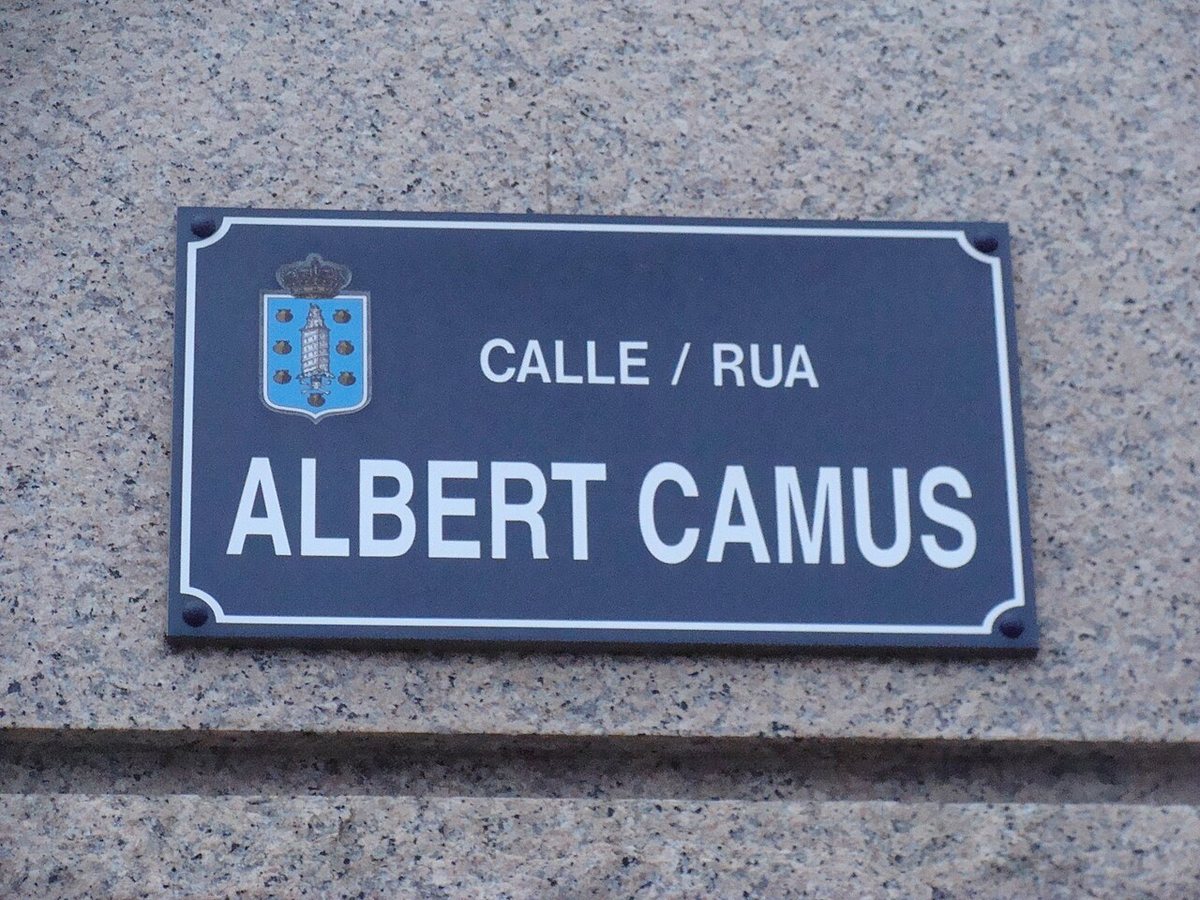
In his twenties Camus briefly joined the French Communist Party and later the Algerian Communist Party, but he was expelled for refusing to follow the party line. During the Second World War he joined the French Resistance and edited the underground newspaper Combat. During the Algerian War he took a neutral stance, advocating a multicultural and pluralistic Algeria, a position most parties rejected. He opposed Stalin and the Soviet Union because of their totalitarianism.