factograf
EN
Sign in

emperor of Ming dynasty China from 1402 to 1424

Yongle Emperor

Yongle Emperor

Yongle Emperor (1360–1424), personal name Zhu Di, was the third emperor of China's Ming dynasty, reigning from 1402 to 1424. He was the fourth son of the Hongwu Emperor, the dynasty's founder. After defeating his nephew, the Jianwen Emperor, in a three-year civil war, he took the throne himself. He is remembered for moving the capital to Beijing, sponsoring large scholarly and construction projects, and pursuing an active foreign policy that included maritime expeditions led by Zheng He.

Rise to power
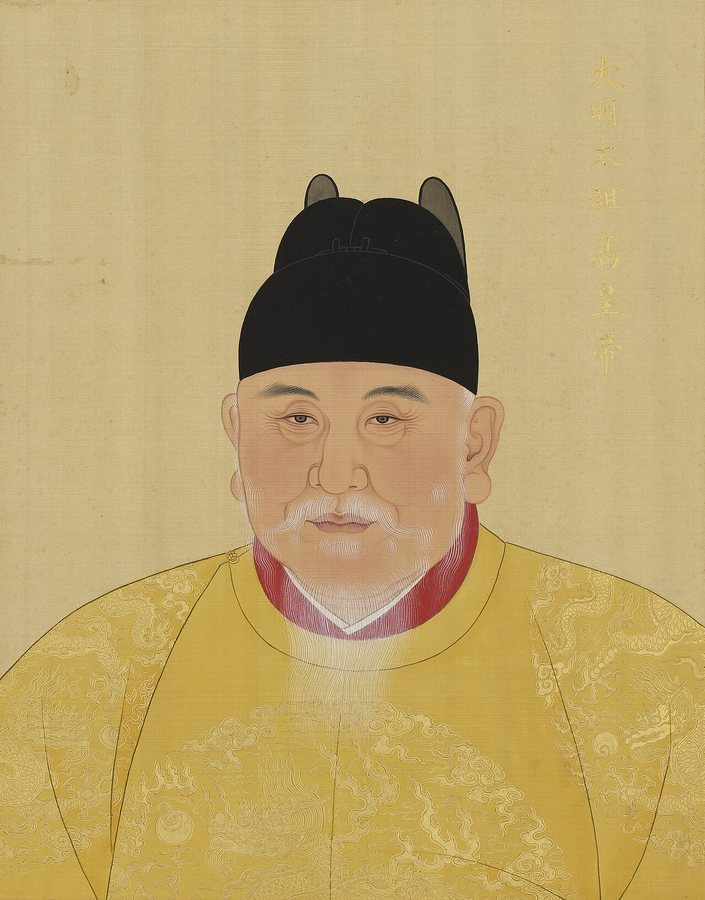
The Hongwu Emperor, father of Zhu Di, in his old age, c. 1397
Portrait of Lady Xu, wife of Zhu Di, as empress
Map of Ming territory in 1415, during the Yongle Emperor's reign
The Hall of Revering Heaven in the Forbidden City, Beijing, imperial residence of the Ming emperors from 1420 onward, with buildings largely restored under the Qing
Panorama of the Forbidden City in Beijing
5 images

Zhu Di was granted the title of Prince of Yan in 1370 and based himself in Beiping, present-day Beijing, where he guarded the northeastern frontier. He proved a capable military commander during the 1380s and 1390s and won support among soldiers. In 1399 he rebelled against his nephew, launching the Jingnan campaign. After three years of fighting he won and declared himself emperor in 1402.

Reign and achievements

The Grand Canal in Yangzhou, located east of the city's historic center
One page of a surviving volume of the Yongle Encyclopedia
Life-size model of a medium-sized treasure ship, 63.25 meters long, displayed at the Nanjing Treasure Shipyard, though the exact size of these ships is still debated
The giraffe brought from Bengal in 1414, depicted by Shen Du, which the Chinese associated with the mythical qilin
The Chang Mausoleum of the Yongle Emperor in the Ming tombs complex near Beijing, built to legitimize his rule and confirm Beijing as the Ming capital
5 images

The emperor elevated Beiping to a second capital, reducing the importance of Nanjing, and oversaw the construction of the new capital between 1407 and 1420. He also supervised the rebuilding of the Grand Canal, which supplied the capital and northern armies. He sponsored the compilation of the vast Yongle Encyclopedia and avoided the frequent purges of his father's reign, giving his administration greater stability. His military campaigns against the Mongols and in Đại Việt were ultimately unsuccessful.

In 50 languages

Редакція Factograf · Published October 14, 2026 · Partly based on Wikipedia, CC BY-SA 4.0 · Source article