
Vatican City, officially the Vatican City State, is a landlocked sovereign city-state in Southern Europe. It is ruled by the pope and is an enclave within the city of Rome, serving as the administrative centre of the Catholic Church. Its governing body, the Holy See, is itself a sovereign entity under international law. With about 882 residents in 2024 and an area of 44 hectares, it is the smallest country in the world by both area and population.
Name and origins


The name Vatican City was first used in the Lateran Treaty of 1929, which created the modern state. The word Vatican derives from Vatica or Vaticum, an Etruscan settlement in the area the Romans called Ager Vaticanus. In Roman times the district was considered marshy and unhealthy, and it gradually became home to villas, a circus built by Caligula and later completed by Nero, and a cemetery where many Christians were martyred. The Constantinian basilica of St. Peter was built in 326 over what was believed to be the tomb of Saint Peter.
Governance and significance


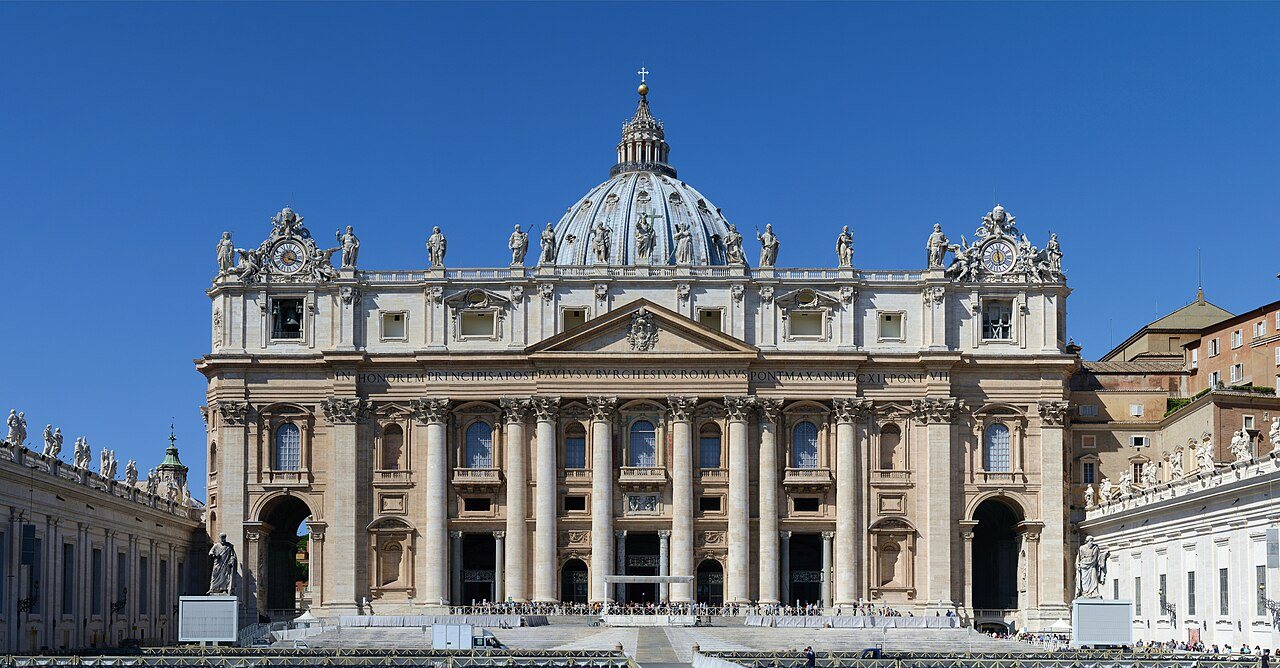

The state is governed by the pope, who is the bishop of Rome and head of the Catholic Church, and its highest officials are Catholic clergy. Since the Avignon Papacy, the popes have mainly resided in the Apostolic Palace here, though sometimes in the Quirinal Palace or elsewhere. The area holds major religious and cultural sites, including St Peter's Basilica, the Sistine Chapel, the Vatican Apostolic Library and the Vatican Museums. Its economy relies on donations, stamp and souvenir sales, museum admissions and publications, and it levies no taxes.