
The Sejm is the lower house of the bicameral parliament of Poland, officially called the Sejm of the Republic of Poland. Since 1989 it has been the highest governing body of the Third Polish Republic. Together with the Senate it forms the National Assembly. The Sejm has 460 deputies, elected every four years by universal ballot, and is presided over by the Marshal of the Sejm. The name is an old Proto-Lechitic word meaning gathering or meeting.
Historical origins


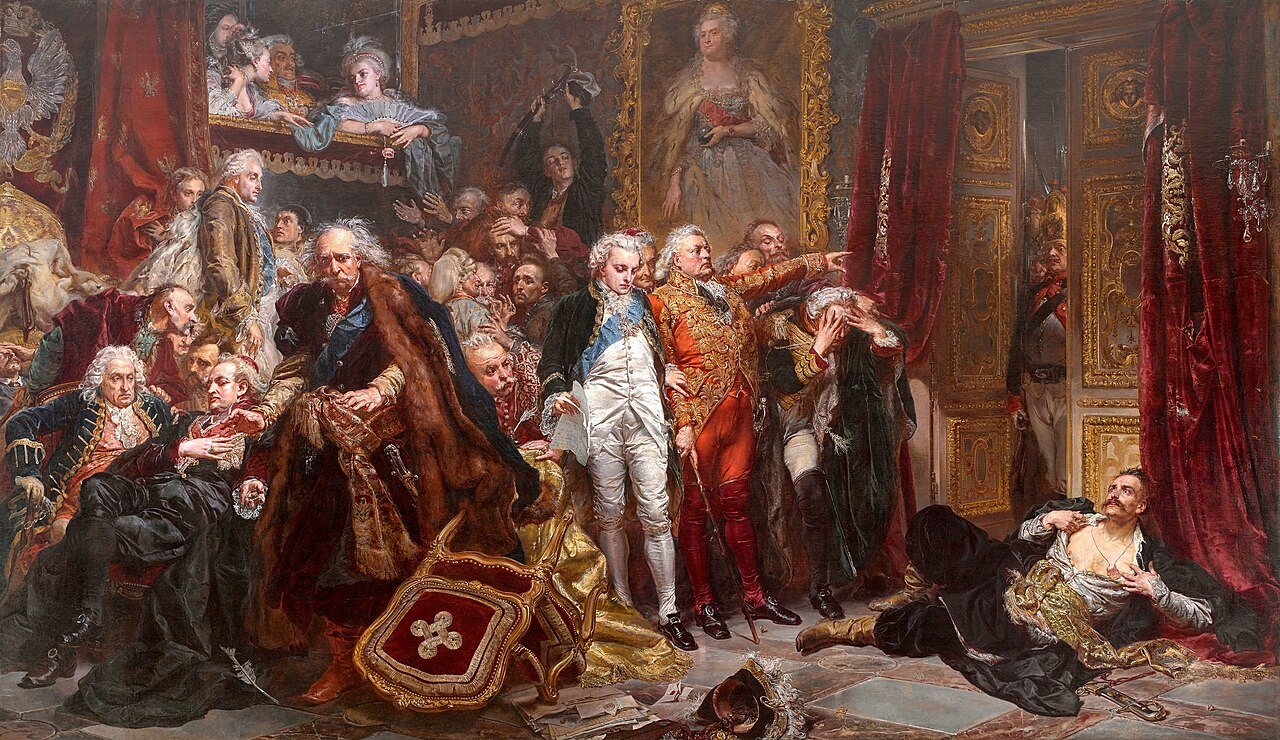

The Sejm grew out of the king's councils that gained authority during Poland's fragmentation between 1146 and 1295. The 1180 assembly in Łęczyca, often called the first Polish parliament, passed laws limiting royal power. From 1493 it met regularly, and by then it had two chambers, a Senate of bishops and dignitaries and a Chamber of Deputies of envoys chosen by local noble assemblies. In the Kingdom of Poland the term referred to the whole three-estate parliament with the king presiding.
Commonwealth era


After the Union of Lublin in 1569 the Sejm gained lawmaking, taxation and foreign policy powers, and its envoys grew influential for the nobility. The rule of unanimity later introduced the liberum veto, which let a single objection void a session's resolutions and at times paralysed the body. The Constitution of 3 May 1791 abolished the veto, but the partitions of the Commonwealth followed, ending over three centuries of Polish parliamentary continuity.
Modern role


During the Polish People's Republic the Sejm was a unicameral body that mainly approved decisions of the ruling party. After the collapse of communism in 1989 it was restored as the lower house of a democratically elected bicameral parliament, operating within a separation of powers among three branches under the Third Polish Republic.