
Reinhard Heydrich (1904–1942) was a senior SS and police official in Nazi Germany and one of the principal architects of the Holocaust. He held the rank of SS-Obergruppenführer and General der Polizei. Many historians regard him as one of the most sinister figures in the Nazi regime, and Adolf Hitler described him as "the man with the iron heart". From 1939 he led the Reich Security Main Office, which included the Gestapo, Kripo and SD, and he chaired the January 1942 Wannsee Conference that formalised the plans for the "Final Solution to the Jewish question".
Early life


Heydrich was born in 1904 in Halle an der Saale to a composer and opera singer and his wife. His family was well off and musical, and he was trained in piano and violin from childhood. He was a talented student and athlete but was shy and often bullied, partly because of rumours about Jewish ancestry that were unfounded. After Germany's defeat in World War I, he joined a Freikorps unit during civil unrest in Halle, and he later claimed membership of an antisemitic nationalist league. In 1922 he entered the German Navy.
Role in the Holocaust
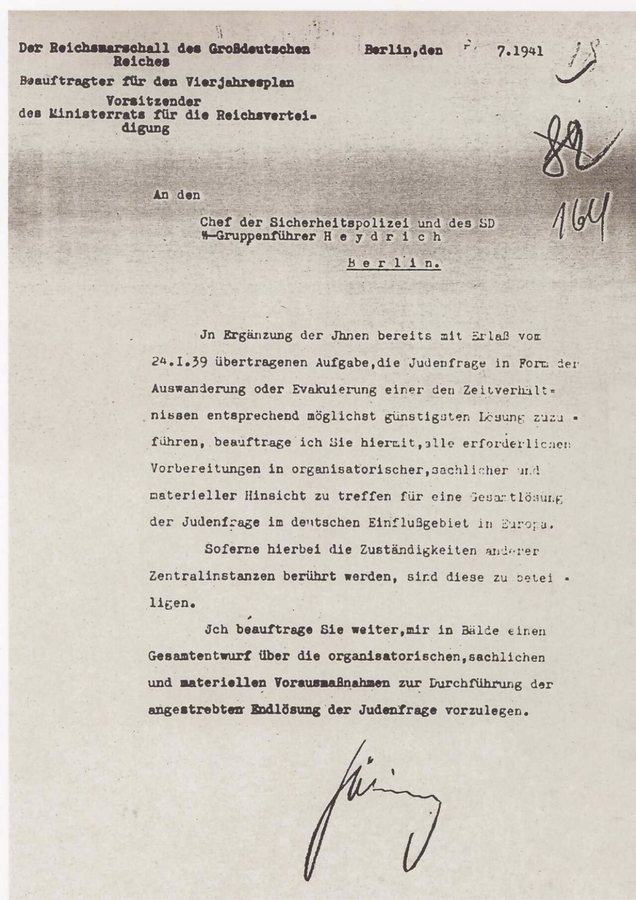


Heydrich founded the Sicherheitsdienst, an intelligence service that pursued and suppressed opposition to the Nazi Party. He helped organise the attacks on Jews known as Kristallnacht in November 1938. After taking charge in Prague, he directed the Einsatzgruppen, mobile units that murdered more than two million people, including 1.3 million Jews. He was mortally wounded in 1942 in Operation Anthropoid, a Czechoslovak resistance attack, and died of sepsis a week later. Nazi reprisals destroyed the villages of Lidice and Ležáky.