
Plato was an ancient Greek philosopher of Classical Athens, widely regarded as the foundational thinker of the Western philosophical tradition. An innovator of the literary dialogue and dialectic forms, he influenced nearly every major area of theoretical and practical philosophy. He founded the Academy in Athens, a school that taught the theories later known as Platonism. Along with his teacher Socrates and his student Aristotle, he is a central figure in the history of Western philosophy.
Early life and Socrates


Plato was born into an aristocratic and influential Athenian family, and through his mother he was a descendant of Solon, a statesman associated with the foundations of Athenian democracy. As a young man he encountered Socrates, who became his teacher and his greatest source of inspiration. Plato never speaks in his own voice in his dialogues, and almost every one features Socrates. Scholars continue to debate how closely Plato's portrait of Socrates matches the historical figure.
Political turmoil and travels


Plato hoped for a career in public affairs, but after Sparta defeated Athens and the Thirty Tyrants took power, he grew disillusioned by their atrocities. The restored democracy later prosecuted Socrates, which ended Plato's political ambitions. After Socrates' death, Plato studied with philosophers influenced by Heraclitus and Parmenides, and he later travelled to Megara to study with Euclid of Megara, before returning to Athens.
Legacy

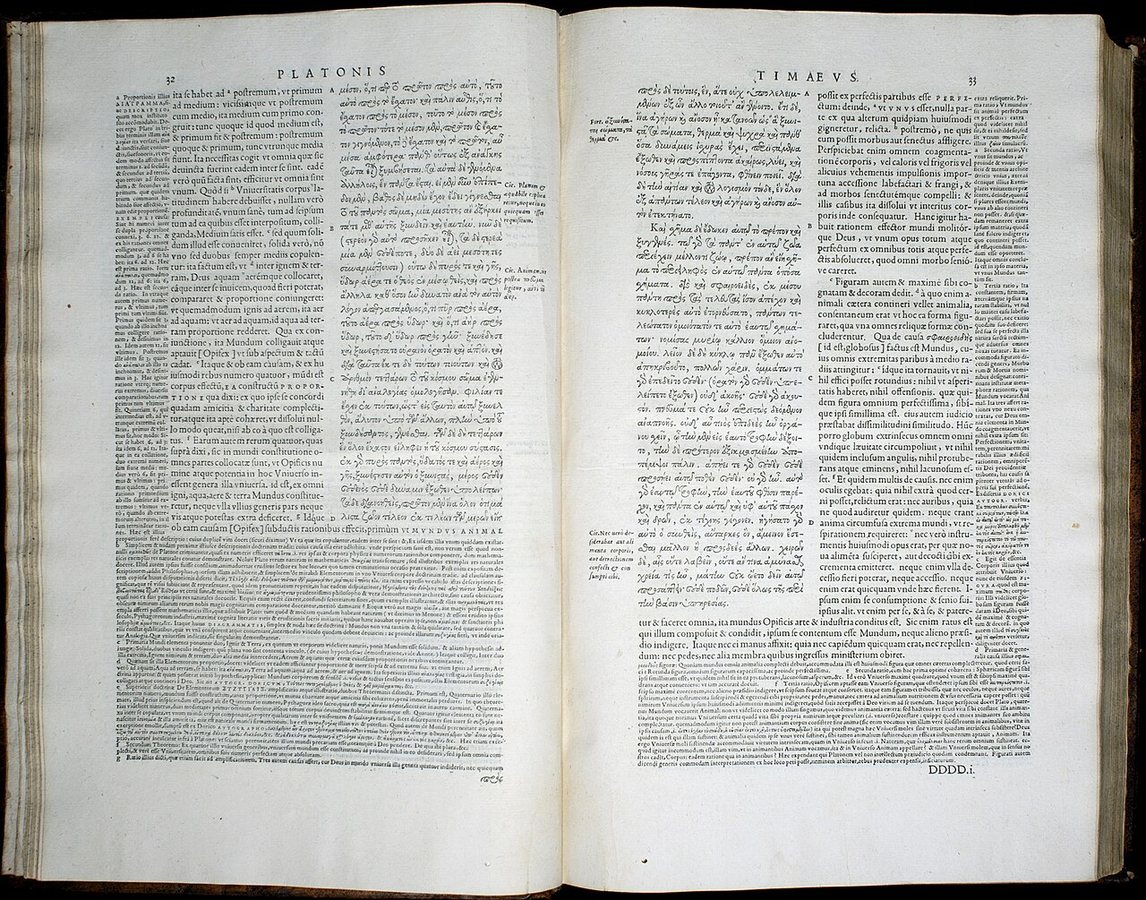

Plato's best-known contribution is his Theory of Forms, which aims to address the problem of universals. His complete works are believed to have survived, unlike those of nearly all his contemporaries, and they have been read and studied continuously. Through Neoplatonism, his ideas also shaped Christian, Jewish and Islamic philosophy. Alfred North Whitehead once remarked that the European philosophical tradition consists of a series of footnotes to Plato.