factograf
EN
Sign in

country in Northern Europe

Norway

Norway

Norway, officially the Kingdom of Norway, is a Nordic country covering the western and northernmost parts of the Scandinavian Peninsula, along with the Arctic island Jan Mayen and the Svalbard archipelago. It shares a long eastern border with Sweden and borders Finland and Russia to the northeast. Its capital and largest city is Oslo. With about 5.6 million people, it is a constitutional monarchy and a unitary state with a parliamentary system. Norway has an extensive coastline and a economy strongly shaped by petroleum, which makes it one of the world's leading producers of oil and natural gas outside the Middle East.

Early history and unification

Nordic Bronze Age rock carvings at Steinkjer, Central Norway
The Oseberg Viking ship
Viking swords at Bergen Museum
Saga stead 01
Saga stead 01
The Gjermundbu helmet, found in Buskerud, is the only known reconstructable Viking Age helmet.
The Norwegian Kingdom at its greatest extent in the 13th century, including the open border with the Novgorod Republic
Bryggen in Bergen, once the centre of trade in Norway under the Hanseatic League, now preserved as a World Heritage Site
The Battle of the Sound between an allied Dano-Norwegian–Dutch fleet and the Swedish navy, 8 November 1658 (29 October OS)
The 1814 constitutional assembly, painted by Oscar Wergeland
A Sámi family in Norway, c. 1900
The slogan "Norge for Nordmænd" (Norway for Norwegians) at a school in Oslo on 13 August 1905, a voting place during the referendum on dissolving the union with Sweden
Bombing of Kristiansund; the German invasion resulted in 24 towns being bombed in spring 1940.
12 images

Human occupation began along the coast after the last ice age, and later farming settlers arrived in the east. Several small political entities existed during the Viking Age. According to tradition, Harald Fairhair unified them in 872 after the Battle of Hafrsfjord, creating the first united Norwegian kingdom. Norway later converted to Christianity gradually during the late 10th and early 11th centuries, partly through missionary kings such as Olaf I Tryggvasson and Olaf II Haraldsson.

Union and modern independence

A satellite image of continental Norway and nearby countries in winter
A fishing village on the island of Moskenesøya in the Lofoten archipelago
Map of Norway showing average annual precipitation, period 1961–1990.
Muskox in the low alpine tundra at Dovrefjell National Park
Crown Prince Haakon Magnus, 2025
Prime Minister Gahr Støre in April 2025
The Royal Palace in Oslo
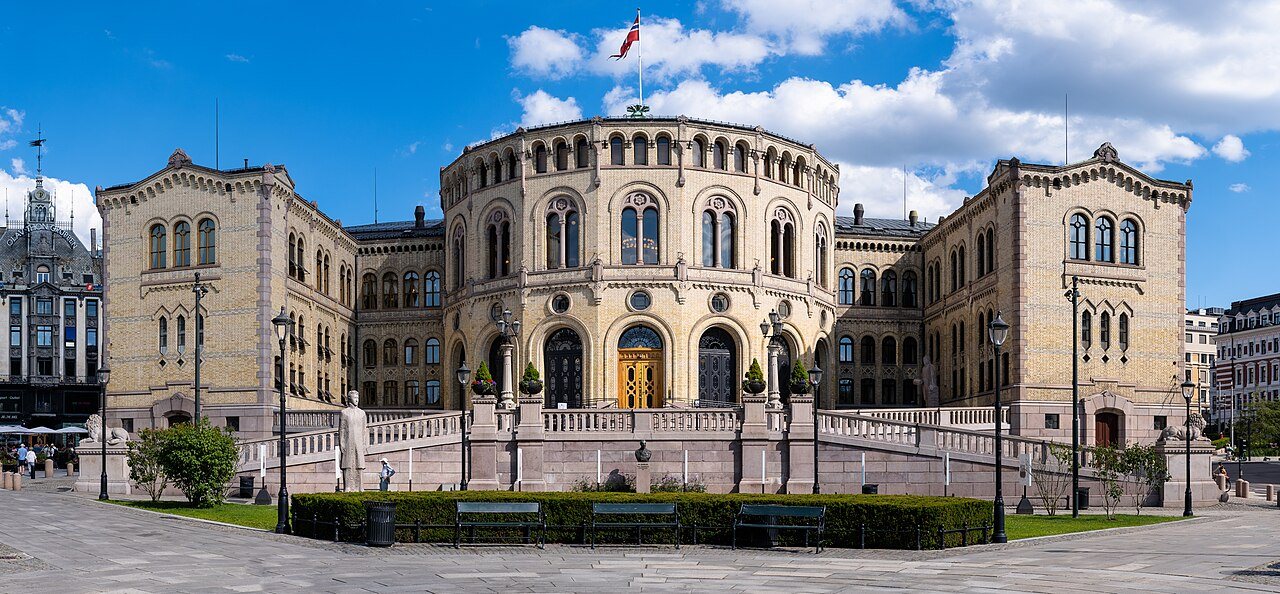
The Storting is the Parliament of Norway.
Municipal and regional reform: from 14 June 2022, the Storting decided the following division of counties.
Royal Norwegian Navy Fridtjof Nansen-class frigate
The first Norwegian F-35 Lightning II lands at Luke Air Force Base.
Agriculture is a significant sector despite the mountainous landscape (Øysand).
12 images

From 1537 to 1814 Norway was part of Denmark–Norway, and from 1814 to 1905 it was in a personal union with Sweden. Norway stayed neutral in the First World War but was invaded and occupied by Nazi Germany in April 1940 until the end of the Second World War. Today it is a founding member of the United Nations and NATO and maintains close ties with the European Union, while not being a full member.

Economy and society

Niels Henrik Abel made pioneering contributions in many fields. The Abel Prize in mathematics, originally proposed in 1899 to complement the Nobel Prizes, is named in his honour.
The Geirangerfjord in Møre og Romsdal, on UNESCO's World Heritage list since 2005.
Norwegians with two Norwegian-born parents, either born abroad or in Norway, as a share of the population nationally and by region in 2021
Nidaros Cathedral in Trondheim
The main building of the Norwegian University of Science and Technology in Trondheim
Map showing the division of Norwegian dialects into the main groups.
Traditional Norwegian farmers' costumes, known as folkedrakt, and modern costumes inspired by them, known as bunad, are widely worn on special occasions.
Egil Ragnar Monn-Iversen had so much influence on Norwegian culture that he received the nickname the Godfather.
Edvard Grieg, composer and pianist
Henrik Ibsen, the most frequently performed dramatist in the world after Shakespeare.
The Urnes Stave Church, listed by UNESCO as a World Heritage Site
Dalen Hotel in Telemark, built in Dragon Style, an architectural design style that originated during Norwegian romantic nationalism.
12 images

Norway follows the Nordic model, with universal health care and a comprehensive social security system. The state holds large stakes in key industries and the country has extensive reserves of petroleum, natural gas, minerals, timber, seafood and fresh water. Petroleum accounts for roughly a quarter of gross domestic product. The country also operates the world's largest sovereign wealth fund.

In 308 languages

EnglishČeštinaDeutschEspañolFrançaisItaliano日本語PolskiPortuguêsРусскийУкраїнська中文AbkhazianAcehneseAdygheAfrikaansShqipAmiአማርኛOld EnglishOboloAngikaAragoneseAramaicالعربيةMoroccan ArabicEgyptian ArabicAsturianuঅসমীয়াKotavaAvaricAwadhiAymaraAzbAzərbaycanBalineseBavarianbat-smgБашҡортBatak TobaBikolБеларускаяBetawiБългарскиBhojpuriBislamaBanjarBamanakanবাংলাབོད་སྐད་BishnupriyaBrezhonegBosanskiBugineseБуряадCatalàcbk-zamCdoCebuanoНохчийнᏣᎳᎩChamorroCheyenneکوردیی ناوەندیCorsicanCrimean TatarKashubianChurch SlavicЧӑваш чӗлхиCymraegDagDanskDinkaZazaDolnoserbšćinaDtyDivehiརྫོང་ཁEʋegbeΕλληνικάEmlEsperantoEestiEuskaraExtremaduranفارسیPulaarfiu-vroSuomiFijianFøroysktArpitanNorthern FrisianFurlanFryskGagauzGan ChineseGaeilgeGcrGàidhligGilakiGalegoGuaraniकोंकणीGorontaloGothicગુજરાતીGaelgHakka ChineseHausaʻŌlelo HawaiʻiעבריתFiji Hindiहिन्दीHrvatskiHornjoserbšćinaHaitian CreoleMagyarՀայերենHywInterlinguaIbanBahasa IndonesiaInterlingueIgboInupiaqIlokoIngushIdoIsvÍslenskaInuktitutJamaican Creole EnglishLojbanJawaKara-KalpakTaqbaylitქართულიKabardianKbpKgeKongoGikuyuҚазақшаខ្មែរಕನ್ನಡKomi-Permyak한국어Karachay-BalkarKölschکٲشُرKurdî (kurmancî)KomiKernewekКыргызчаLadinoLatinLbeLëtzebuergeschLezghianLingua Franca NovaLugandaLigureLimburgishLldLombardLingálaລາວLatgalianLietuviųLatviešuMadureseमैथिलीmap-bmsMokshaMalagasyMariMinangkabauMāoriМакедонскиമലയാളംমৈতৈলোন্МонголMnwWestern MariमराठीMelayuMaltiMirandeseErzyaမြန်မာمازرونیNeapolitanNeddersass’sch (Nedderlannen)Neddersass’schनेपालीNewariNederlandsNorsk nynorskNovialNorskNrmSesotho sa LeboaNupNavajoNyanjaOccitanOloOromooଓଡ଼ିଆИронPangasinanPampangaPapiamentoਪੰਜਾਬੀPicardPennsylvania GermanPalatine GermanPiemontèisWestern PanjabiPonticپښتوRunasimiRumantschRomanyIkirundiroa-rupRoa (Tara)RomânăRusynIkinyarwandaСаха тылаᱥᱟᱱᱛᱟᱲᱤसंस्कृत भाषाSicilianuScotsSarduسنڌيDavvisámegiellaSängöတႆးSrpski (latinica)සිංහලSkrSlovenčinaSlovenščinaAnarâškielâSamoanChiShonaSoomaaliShqipSranan TongoСрпскиSwatiSaterland FrisianSesothoBasa SundaSvenskaKiswahiliSylŚlōnskiSzyதமிழ்TayTuluTetumతెలుగుТоҷикӣไทยትግርኛTürkmen diliFilipinoTalyshSetswanaToki ponaLea fakatongaTok PisinTarokoTürkçeTsongaТатарTumbukaAkanТываTahitianUdmurtئۇيغۇرچەاردوO‘zbekVenetoVepsVendaTiếng ViệtWest FlemishVolapükWarayWalloonWolofWu ChineseIsiXhosaMingrelianייִדישÈdè YorùbáVahcuenghZeelandicⵜⴰⵎⴰⵣⵉⵖⵜzh-yueIsiZulu

Редакція Factograf · Published October 14, 2026 · Partly based on Wikipedia, CC BY-SA 4.0 · Source article