factograf
EN
Sign in

germany from 1933 to 1945 while under control of the nazi party

Nazi Germany

Nazi Germany

Nazi Germany, officially the German Reich and later the Greater German Reich, was the German state from 1933 to 1945, when Adolf Hitler and the Nazi Party controlled the country and turned it into a totalitarian dictatorship. The Nazis called it the Third Reich and claimed it succeeded the Holy Roman Empire and the German Empire, though it lasted only twelve years. It ended in May 1945, when the Allies defeated Germany and entered Berlin, bringing an end to World War II in Europe.

Seizure of power

Atlas map of the Holy Roman Empire and neighbouring kingdoms and provinces, drawn by Iulium Reichelt
Adolf Hitler became Germany's head of state, with the title Führer and Reich Chancellor, in 1934.
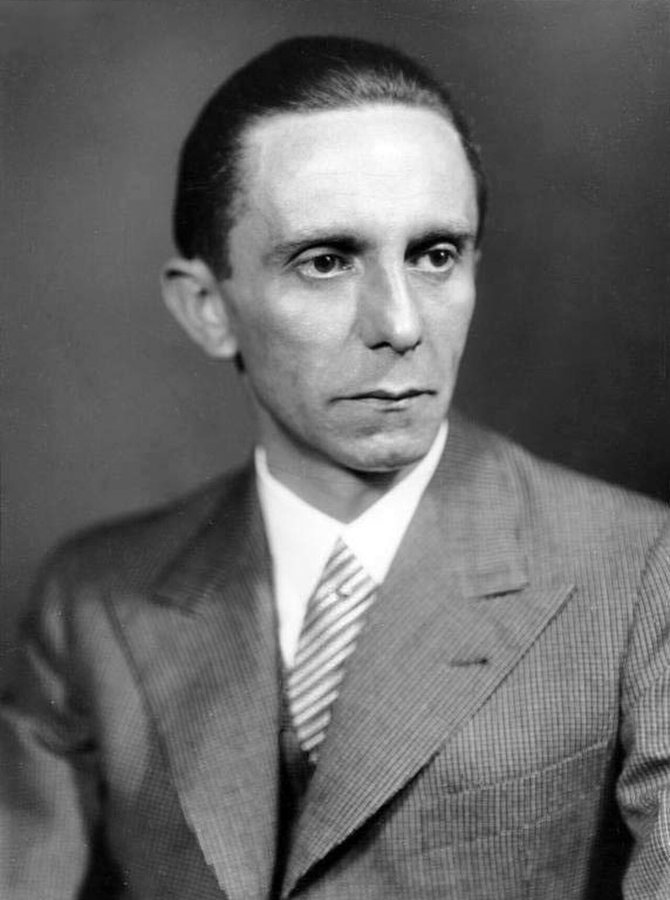
Joseph Goebbels, Reich Minister of Public Enlightenment and Propaganda
Adolf Hitler giving a speech at Heldenplatz in Vienna
Annexation of Sudeten German territories, 1938
German soldiers march near the Arc de Triomphe in Paris, 14 June 1940
Death and destruction during the Battle of Stalingrad, October 1942
German refugees in Bedburg, near Kleve, 19 February 1945
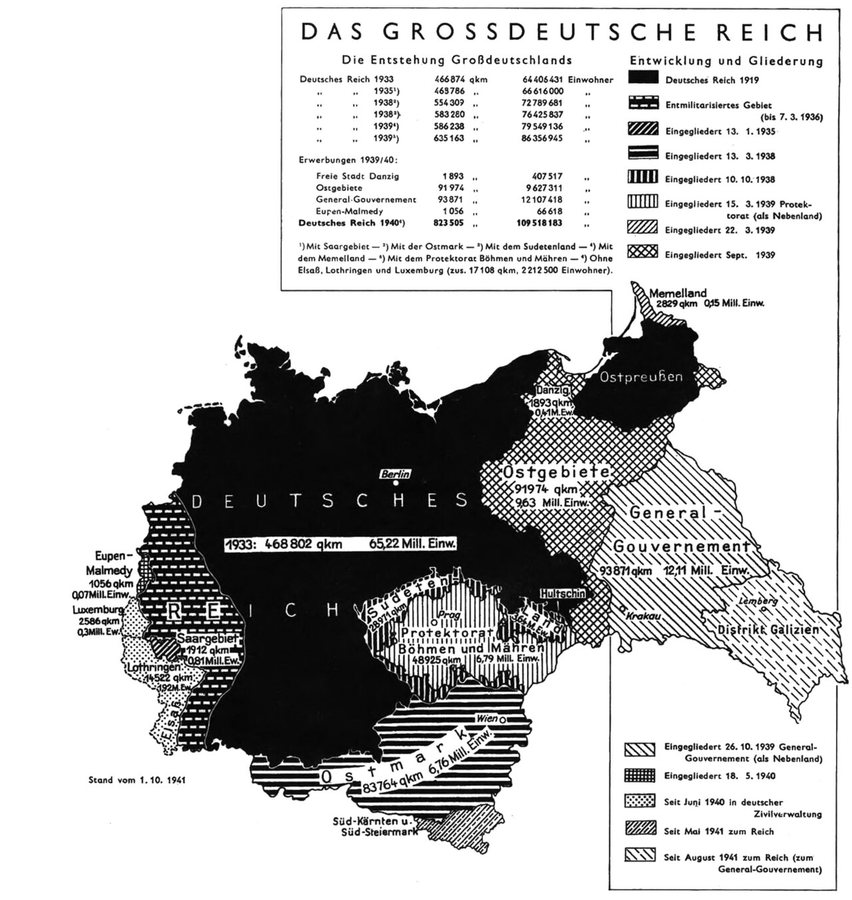
Map explaining German territorial expansion from 1933 to 1941 to Wehrmacht soldiers
Public execution of 54 Poles in Rożki near Radom, German-occupied Poland, 1942
Heinrich Himmler, Hitler and Viktor Lutze perform the Nazi salute at the Nuremberg Rally, September 1934.
11 images

After Hitler was appointed Chancellor in January 1933, the Nazi Party removed political opponents and concentrated power in his hands, and a 1934 referendum confirmed him as sole Führer. To tackle the Great Depression, the regime relied on heavy military spending, public works such as the motorways, and a secret rearmament programme financed by deficit spending. Economic recovery boosted its popularity, while Hitler pursued increasingly aggressive territorial demands that led to war in 1939.

Ideology and persecution

Hitler, Göring, Goebbels and Rudolf Hess at a military parade in 1933
Four jurists who imposed Nazi ideology on German law: Roland Freisler, Franz Schlegelberger, Otto Georg Thierack and Curt Rothenberger
Column of tanks and armoured vehicles of the Panzerwaffe near Stalingrad, 1942
Nazi boycott of Jewish businesses in Berlin
Members of the Leibstandarte SS Adolf Hitler at their barracks in Berlin
IG Farben synthetic oil plant under construction at Buna Werke in 1941, part of the complex at Auschwitz concentration camp
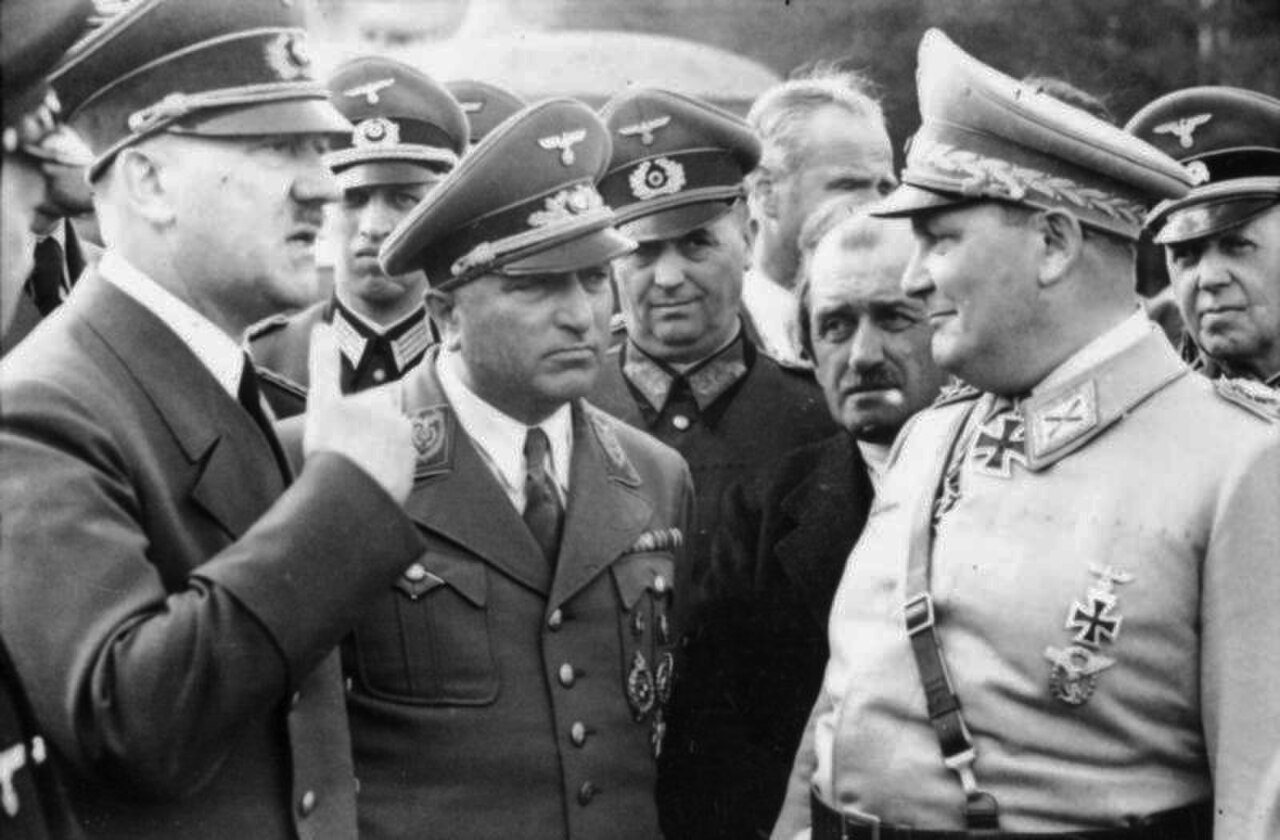
Hitler, Robert Ley, Ferdinand Porsche and Hermann Göring, head of the Four Year Plan, 1942
Woman wearing an Ostarbeiter badge at the IG Farben plant in Auschwitz
Nazi boycott of Jewish businesses, April 1933, with posters reading 'Germans! Defend yourselves! Don't buy from Jews!'
Nazi Party Office of Racial Policy poster claiming a person with a hereditary illness costs the community 60,000 RM over a lifetime
10 images

Racism, eugenics and especially antisemitism were central to the regime's ideology, which held that Germanic peoples formed a master race. Jews, Slavs, Romani people, political opponents and others were imprisoned, deported or murdered, and the racial policies culminated in the Holocaust. Propaganda, controlled art and education shaped public life, while women's career and educational opportunities were restricted.

Defeat and aftermath

Wagon of corpses outside the crematorium at Buchenwald concentration camp, liberated by the U.S. Army in 1945
Soviet prisoners of war at Mauthausen
Nazi salute in a school, 1934, when children were indoctrinated from an early age
Young women of the League of German Girls practising gymnastics, 1941
Statues of the ideal body erected in Berlin streets for the 1936 Summer Olympics
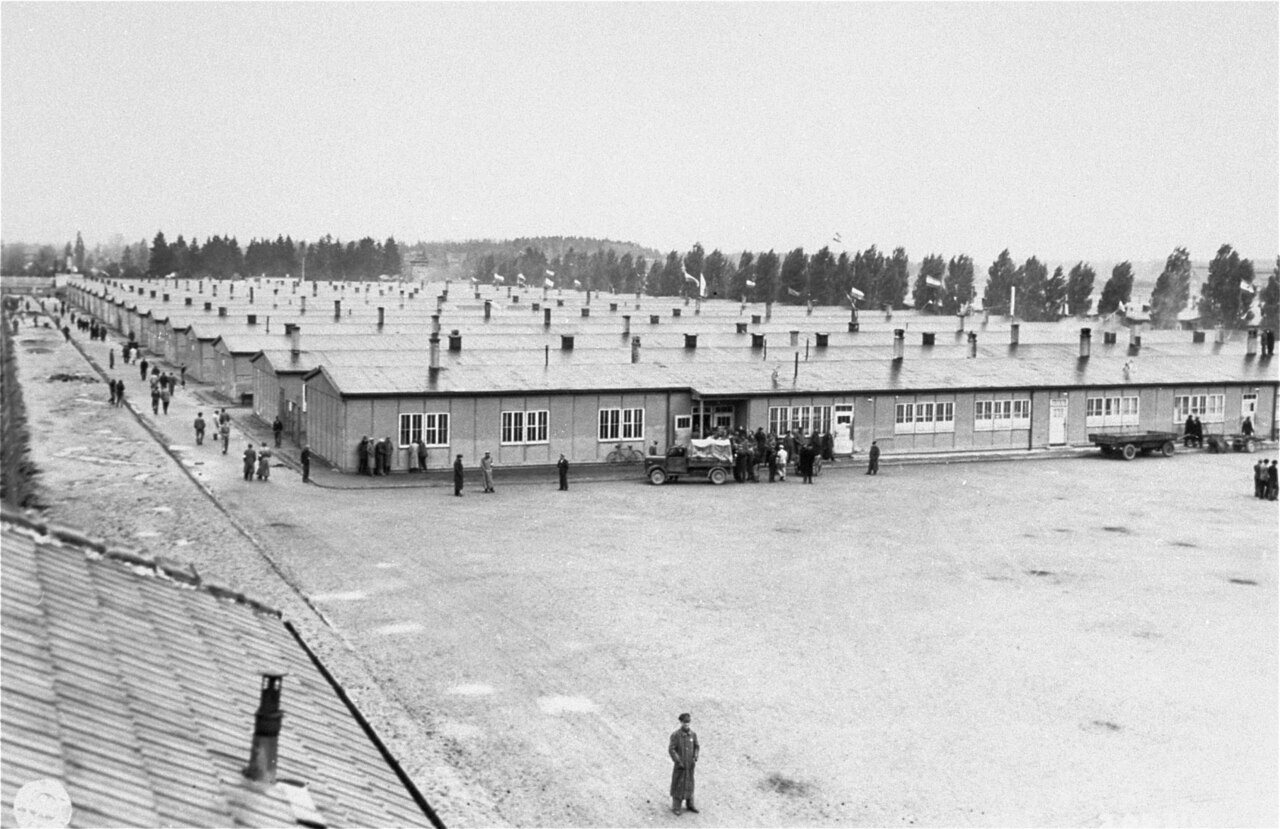
Prisoner barracks at Dachau concentration camp, which held a dedicated barracks for clerical opponents of the regime from 1940
Nazi book burning in Berlin on 10 May 1933, when books by Jewish and leftist authors were burned
Plans for Berlin with a People's Hall and triumphal arch at either end of a wide boulevard
Leni Riefenstahl behind a cameraman at the 1936 Summer Olympics
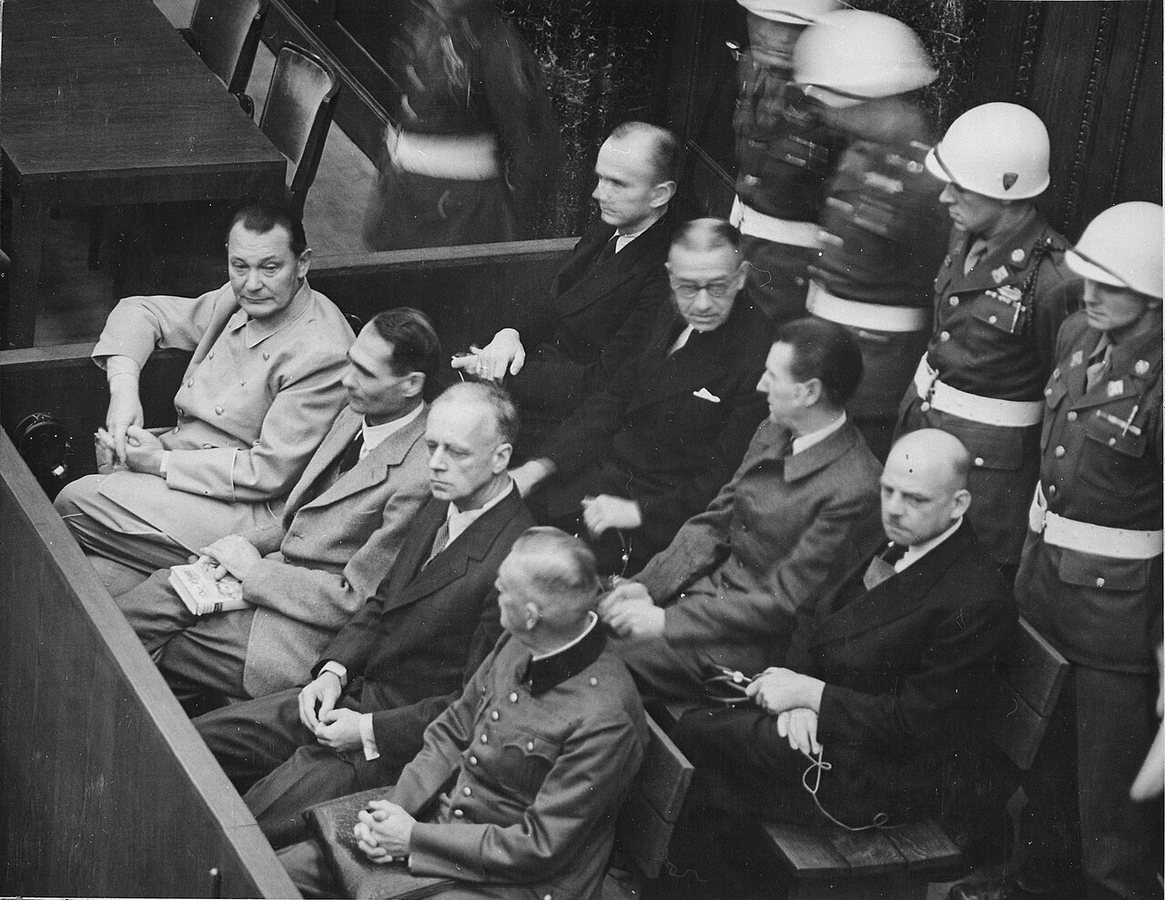
Defendants in the dock at the Nuremberg trials
10 images

After invading the Soviet Union in 1941, Germany lost the initiative by 1943 and was pushed back to its 1939 borders by late 1944. It was conquered by Soviet forces from the east and the other Allies from the west, and capitulated in 1945. The Allies then pursued denazification and tried surviving leaders for war crimes at the Nuremberg trials.

In 164 languages

EnglishČeštinaDeutschEspañolFrançaisItaliano日本語PolskiPortuguêsРусскийУкраїнська中文AfrikaansShqipአማርኛOld EnglishOboloAragoneseالعربيةMoroccan ArabicEgyptian ArabicAsturianuঅসমীয়াAvaricAymaraAzbAzərbaycanBalineseBavarianbat-smgБашҡортBatak TobaБеларускаяБългарскиবাংলাBrezhonegBosanskiБуряадCatalàCdoНохчийнکوردیی ناوەندیKashubianЧӑваш чӗлхиCymraegDanskΕλληνικάEsperantoEestiEuskaraفارسیfiu-vroSuomiFøroysktNorthern FrisianFryskGaeilgeGàidhligGilakiGalegoGuaraniGothicGaelgHakka ChineseעבריתFiji Hindiहिन्दीHrvatskiMagyarՀայերենInterlinguaBahasa IndonesiaIlokoIdoIsvÍslenskaJawaJjuქართულიKbpҚазақшаខ្មែរ한국어Karachay-BalkarکٲشُرKurdî (kurmancî)KomiKernewekКыргызчаLatinLëtzebuergeschLezghianLingua Franca NovaLimburgishLldLombardລາວLietuviųLatviešuMadureseMinangkabauМакедонскиമലയാളംমৈতৈলোন্МонголमराठीMelayuMirandeseမြန်မာمازرونیNeddersass’sch (Nedderlannen)Neddersass’schनेपालीNewariNederlandsNorsk nynorskNovialNorskߒߞߏOccitanOloИронPapiamentoਪੰਜਾਬੀPalatine GermanPiemontèisWestern PanjabiپښتوRomanyRomânăRusynСаха тылаScotsSarduسنڌيSrpski (latinica)SlovenčinaSlovenščinaShqipСрпскиSaterland FrisianBasa SundaSvenskaKiswahiliŚlōnskiதமிழ்తెలుగుไทยFilipinoToki ponaTürkçeТатарاردوO‘zbekVenetoTiếng ViệtWarayWalloonWu ChineseMingrelianייִדישÈdè YorùbáZeelandiczh-yue

Редакція Factograf · Published October 14, 2026 · Partly based on Wikipedia, CC BY-SA 4.0 · Source article