
Leonardo da Vinci was an Italian polymath of the High Renaissance, active as a painter, draughtsman, engineer, scientist, theorist, sculptor and architect. Though first known for his painting, he is also famous for notebooks filled with drawings and notes on subjects including anatomy, astronomy, botany, cartography and palaeontology. He is widely regarded as a genius who embodied the Renaissance humanist ideal, and his work shaped European art to a degree rivalled only by his younger contemporary Michelangelo.
Early life and training


Leonardo was born out of wedlock in or near the Tuscan hill town of Vinci in 1452, to a successful Florentine notary and a woman of lower social standing. His formal schooling was basic, as his artistic talent was recognised early. In the mid-1460s his family moved to Florence, where he entered the workshop of the painter and sculptor Andrea del Verrocchio. There he learned painting, drawing, sculpture and a range of technical crafts, including chemistry, metalworking and mechanics.
Major works and inventions


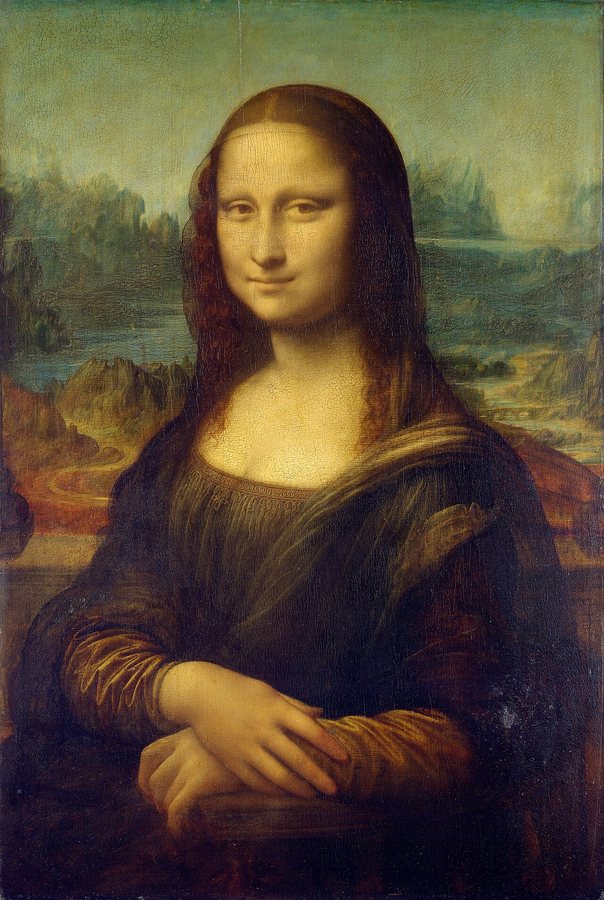
Although fewer than 25 major works are attributed to him, many of them unfinished or lost, Leonardo produced some of the most influential paintings in Western art. The Mona Lisa is regarded as the world's most famous painting, and The Last Supper is the most reproduced religious painting. He also conceived flying machines, armoured vehicles and concentrated solar power, though few of his designs could be built in his era. His discoveries in anatomy, hydrodynamics and optics were largely unpublished and had little direct influence on later science.
Final years



Leonardo worked in Florence and Milan, spent time in Rome, and attracted many imitators and students. At the invitation of Francis I, he moved to France for his last three years, and he died there in 1519. His achievements, varied interests and personal life have continued to attract interest and admiration ever since, making him a frequent subject and namesake in culture.