
Klaus Barbie (1913–1991) was a German officer of the Schutzstaffel and Sicherheitsdienst who became known as the "Butcher of Lyon" for personally torturing prisoners while heading the Gestapo in Lyon during the Second World War. After the war, United States intelligence services employed him, and he later lived in Bolivia. He was extradited to France in 1983, convicted of crimes against humanity, and sentenced to life in prison, where he died in 1991.
Early life and career
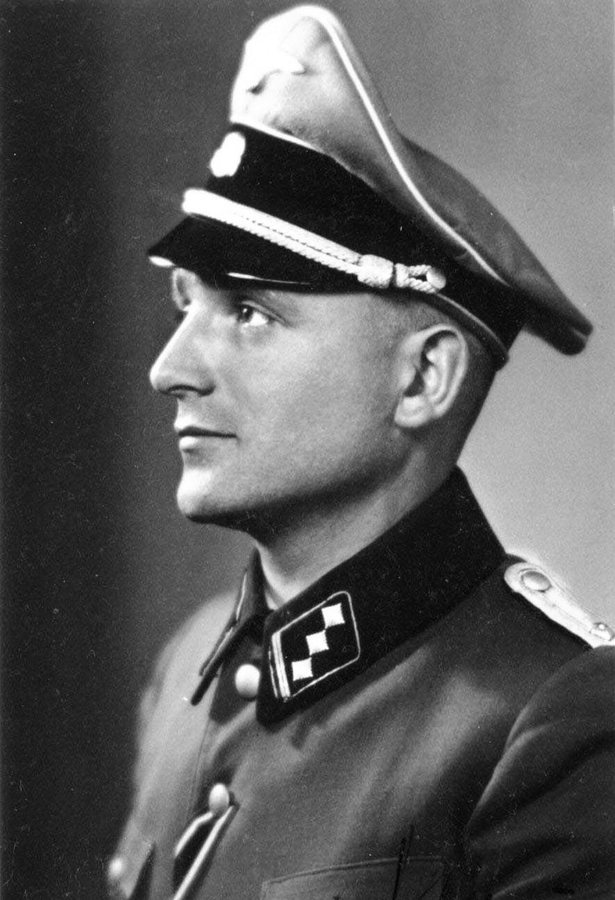
Born in Godesberg, now part of Bonn, Barbie joined the SS in 1935 and worked in the Sicherheitsdienst, the security service that gathered intelligence for the Nazi Party. After the German occupation of the Netherlands, he was posted to Amsterdam, where he helped identify and deport Dutch Communists, Jews and Freemasons. In 1942 he was sent to Dijon and then, in November of that year, to Lyon as head of the local Gestapo, where he set up headquarters at the Hôtel Terminus.
Crimes in Lyon
Barbie is estimated to have been directly responsible for the deportation of up to 14,000 Jews and resistance fighters. He arrested the resistance leader Jean Moulin, whom he tortured to death. In April 1944 he ordered the deportation to Auschwitz of 44 Jewish children from an orphanage at Izieu. Accounts of his methods describe severe physical torture of both adults and children.
Postwar escape and trial
After the war, United States counterintelligence recruited Barbie for anti-communist work and helped him flee to Bolivia, despite French requests for his extradition. In 1983 the United States apologised to France for this. Barbie was then extradited to France, where he was convicted of crimes against humanity in 1987 and died in prison in 1991.