
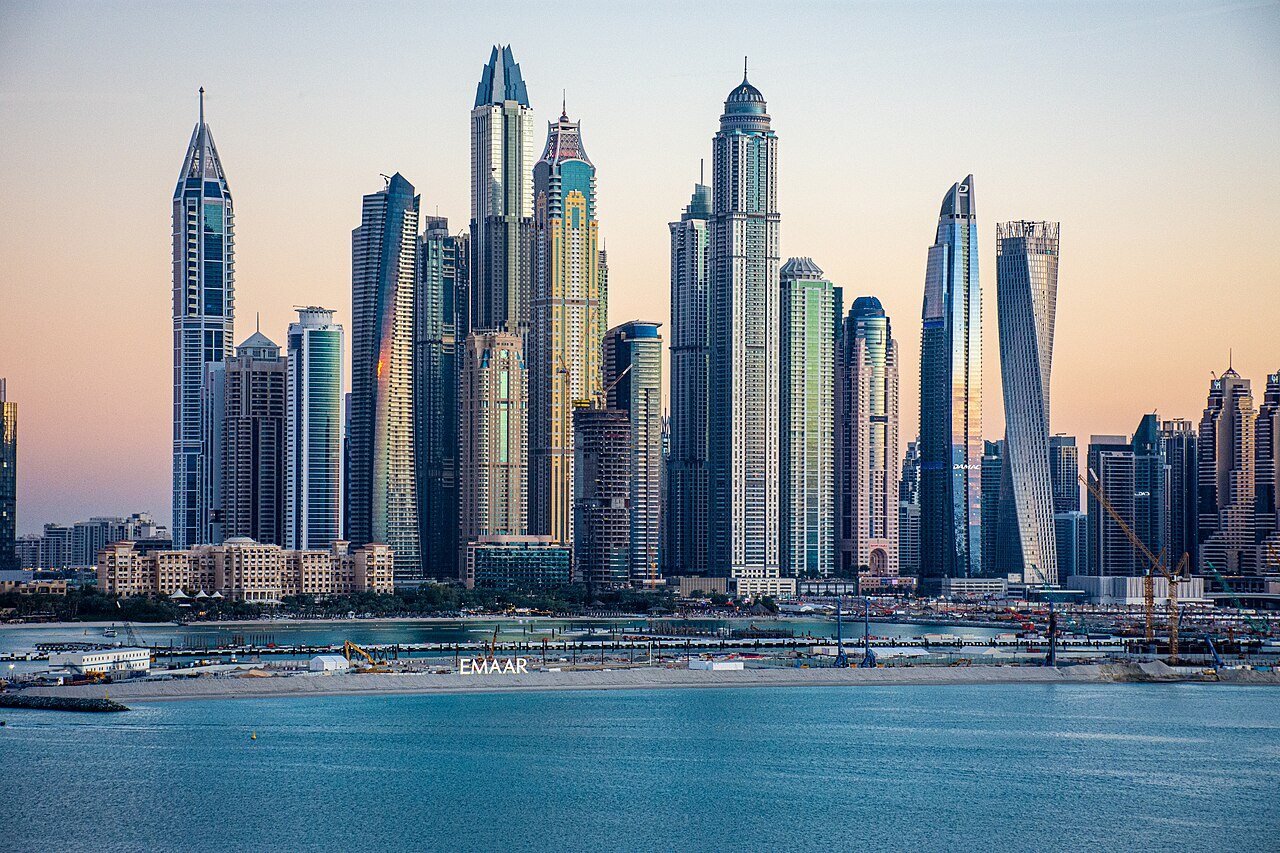
Dubai is the most populous city in the United Arab Emirates and the capital of the Emirate of Dubai. It lies on a creek on the southeastern coast of the Persian Gulf and had a population of about 4 million in 2025, most of whom were expatriates. Its economy centres on trade, tourism, aviation, financial services and real estate, and it hosts one of the world's densest skylines, including the Burj Khalifa, the world's tallest building.
Early history



Dubai was established as a pearling and fishing village in the early 18th century. In 1833, members of the Al Bu Falasah tribe seceded from Abu Dhabi and settled there, and their leaders founded the Maktoum dynasty. In 1901, Maktoum bin Hasher Al Maktoum declared Dubai a free port with no taxes on imports or exports, which attracted merchants and turned the town into a leading regional trading centre.
Modern growth


Modest oil revenue helped speed Dubai's development from the 1960s to the 1990s, when the city began to diversify its economy. Since the 1990s, rapid construction and extensive land reclamation have added more than 300 kilometres of artificial coastline. In 2018, oil production contributed less than 1% of the emirate's GDP, and in 2024 Dubai ranked as the seventh most-visited city globally.