
Christopher Columbus was an Italian explorer and navigator from the Republic of Genoa who completed four Spanish transatlantic voyages in the name of the Catholic Monarchs. His expeditions were the first known European contact with the Caribbean and Central and South America, opening the way for widespread European exploration and colonization of the Americas. Columbus was largely self-educated and sought a western sea route to the East Indies, hoping to profit from the spice trade, a plan that led to the voyages that began in 1492.
Early life and career


Historians have concluded that Columbus was born in the Republic of Genoa, probably between late August and late October 1451, to a family of wool weavers. He went to sea at a young age and travelled widely, as far north as the British and Irish Isles and as far south as present-day Ghana. He lived in Lisbon for several years, married a Portuguese noblewoman, and had a son, Diego. Later he took a Castilian mistress, who bore a second son, Fernando.
The voyages west


After persistent lobbying in several kingdoms, the Catholic Monarchs, Isabella I of Castile and Ferdinand II of Aragon, agreed to sponsor a journey west. Columbus sailed from Palos in August 1492 with three ships and made landfall in the Americas on 12 October, on an island in the Bahamas that its inhabitants called Guanahani. He later visited Cuba and Hispaniola, and made three further voyages that explored the Lesser Antilles and parts of South and Central America. He never clearly gave up his belief that he had reached the Far East.
Legacy and debate


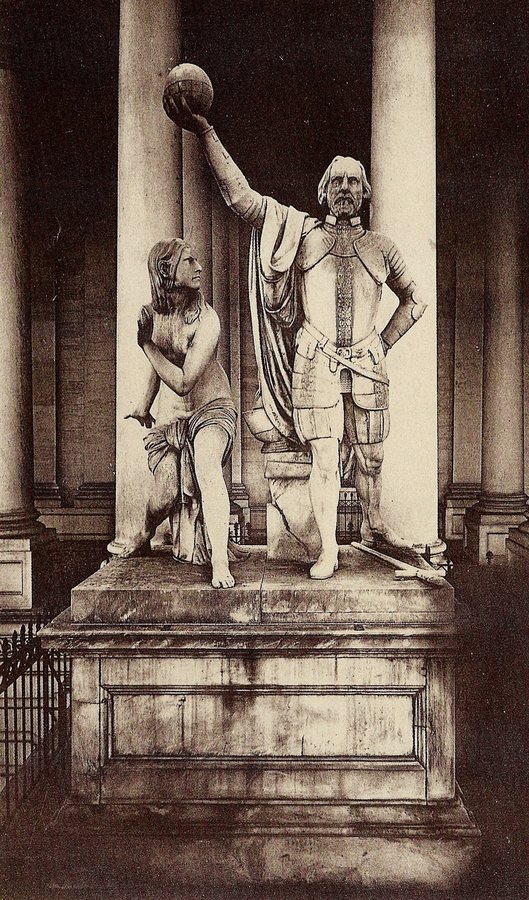


His voyages started a long period of exploration, conquest and colonization, and the exchange of plants, animals, people and diseases between the Old World and the New World is known as the Columbian exchange. As a colonial governor he was accused of brutality and removed from his post. Infectious diseases and mistreatment contributed to the deaths of many Indigenous people, and Columbus is now less celebrated than he once was. Many places are named after him.