
Boris Nemtsov (1959–2015) was a Russian physicist, liberal statesman and politician who became one of the most prominent opposition leaders and outspoken critics of Vladimir Putin. He trained as a physicist before entering politics, serving as the first governor of Nizhny Novgorod Oblast in the 1990s and later holding federal posts under President Boris Yeltsin. From 2000 until his assassination in Moscow in 2015, he criticized Putin's government as increasingly authoritarian and corrupt.
Early Career
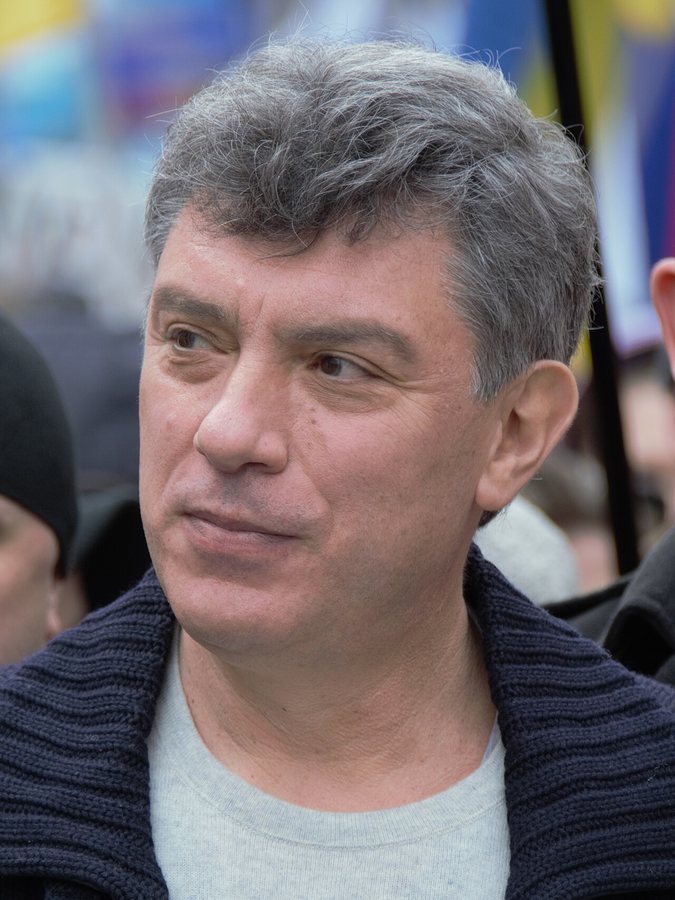


Nemtsov studied physics at the State University of Gorky and earned a PhD in 1985, producing numerous academic publications on quantum physics, thermodynamics and acoustics. In 1990 he was elected to the Supreme Soviet of the Russian Republic as the only non-communist candidate from Gorky. He impressed Boris Yeltsin, who appointed him governor of Nizhny Novgorod Oblast in 1991. His tenure included a wide-ranging free market reform program that brought notable economic growth to the region, earning him praise from Margaret Thatcher.
Federal Government Service


In 1997 Nemtsov was appointed First Deputy Prime Minister of Russia, with responsibility for reforming the energy sector and restructuring monopolies. In the late 1990s he founded or co-founded several political movements and parties, including Young Russia and the Union of Right Forces. He also served in the Federation Council and the State Duma, where he remained a liberal voice in parliament.
Opposition and Assassination


From 2000 onward Nemtsov criticized Putin's government, publishing reports that linked corruption directly to the president and organizing protests such as the Dissenters' Marches. He was shot dead on a bridge near the Kremlin on 27 February 2015, while helping to organize a rally against Russia's military involvement in Ukraine. In 2017 a Moscow court found five Chechnya-born men guilty of carrying out the killing, but the person who hired them has not been officially identified.