
Belgorod is a city in western Russia that serves as the administrative center of Belgorod Oblast. It lies on the Seversky Donets River, about 40 kilometers north of the border with Ukraine, and had a population of 339,978 at the 2021 census. The city was founded in 1596 as a defensive fort on Russia's southern frontier. Its name means "white city," a reference to the region's historical abundance of limestone.
Early fortress history
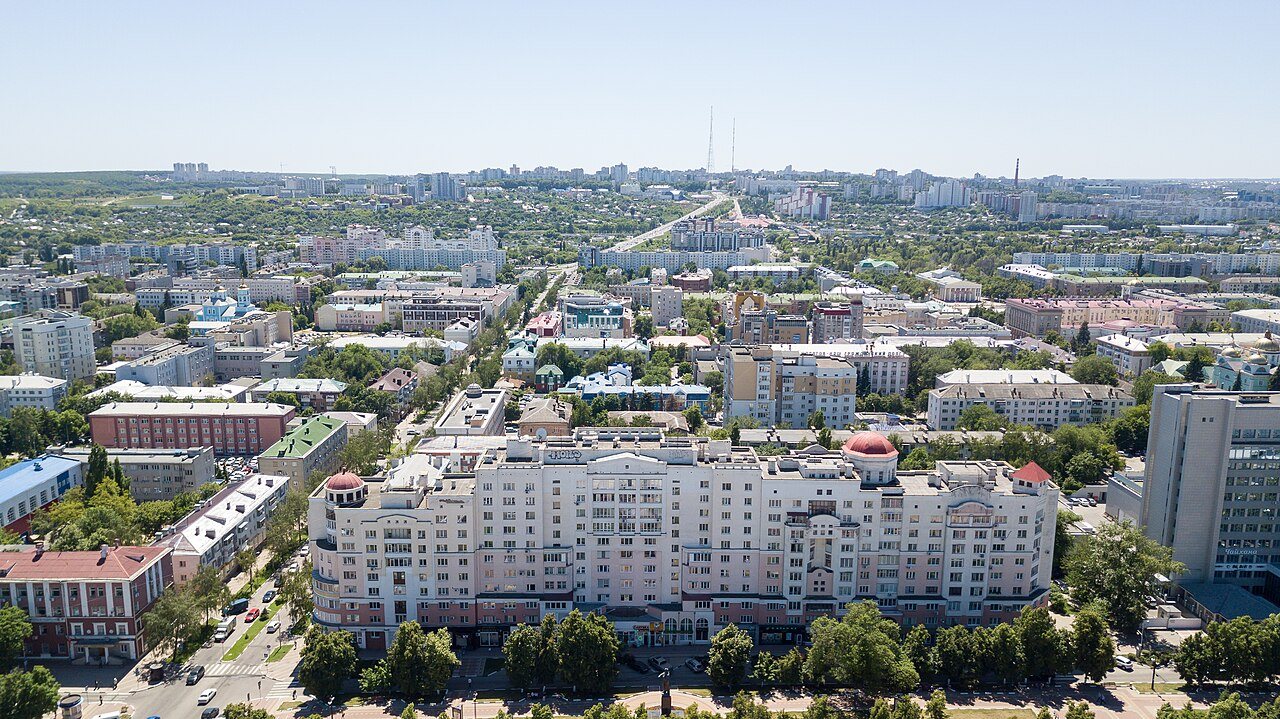


The first fortress was built in 1596 on the White Mountain, the highest point of the right bank of the Seversky Donets, to protect Russia's southern borders from Crimean Tatar raids. A settlement had existed in the area earlier, but it was ravaged in 1237 during the Mongol invasion of Kievan Rus'. As Russia's borders expanded, the fortress lost its military importance, and by the mid-18th century only the Kremlin remained. A new regular street plan was developed in 1767 and 1768 under governor Andrei Fliverk and architect Andrey Kvasov.
Modern significance


Belgorod was contested by various factions during World War I and the Russian Civil War, and it briefly served as the temporary Soviet Ukrainian capital at the turn of 1918 and 1919. Today it is the main administrative, population and economic hub of its oblast. The city has a humid continental climate, with cold, changeable winters and warm summers, and its reservoirs typically freeze from late November or early December until March or April.