factograf
EN
Sign in

founding empress of Zhou dynasty (r. 690–705); de facto ruler of Tang dynasty from 665 to 690

Wu Zetian

Wu Zetian

Wu Zetian (624–705) was the only undisputed female sovereign in Chinese history. She first held power as empress consort of Emperor Gaozong of the Tang dynasty and then as empress dowager during the reigns of her sons. In 690 she proclaimed the Zhou dynasty in place of the Tang and ruled as its sole emperor until 705. Her 45-year de facto rule came during the High Tang period, a peak of Chinese political power and cultural influence, and she was known for her patronage of Buddhism and the arts.

Early life and rise
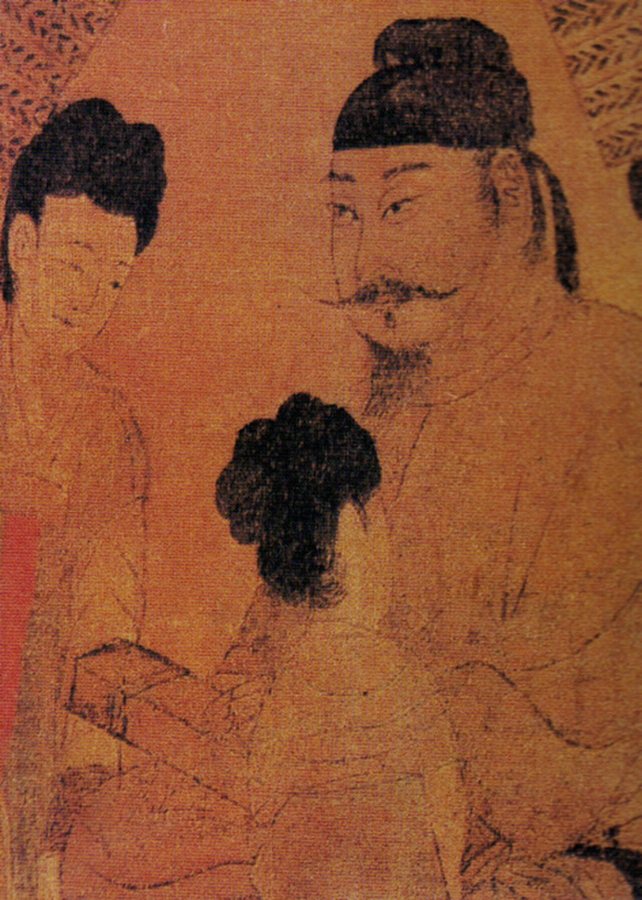
A painting of Emperor Taizong of Tang by painter Yan Liben (c. 600–673)
The Fengxian cave (c. 675) of the Longmen Grottoes, commissioned by Wu Zetian, with a large central Buddha representing Vairocana
Epitaph for Yang Shun, a general under Empress Wu Zetian, from Luoyang, 693, limestone, Royal Ontario Museum
The Giant Wild Goose Pagoda, built in 652 and rebuilt in 701–704 during Wu Zetian's reign, largely unchanged since the 8th century
Buddhist statue of Wu Zetian from the 8th century, based on her likeness, at Huangze Temple, Sichuan
Estimated territorial extent of Wu Zetian's empire
Blank Tablet, or Wordless Stele, east of the Phoenix Gate at the Qianling Mausoleum, built near Chang'an in 706, 6.3 meters tall and weighing 98 metric tons
7 images

Born to a family of timber merchants, Wu was taken as a concubine of Emperor Taizong at an early age and later married his successor, Emperor Gaozong, becoming empress in 655. After Gaozong suffered a debilitating stroke in 660, she administered the empire on his behalf until his death in 683. She then kept power from her sons, and in 690 she founded her own dynasty, a break with precedent in Chinese history.

Governance and legacy

Side view of the Blank Tablet at the Qianling Mausoleum
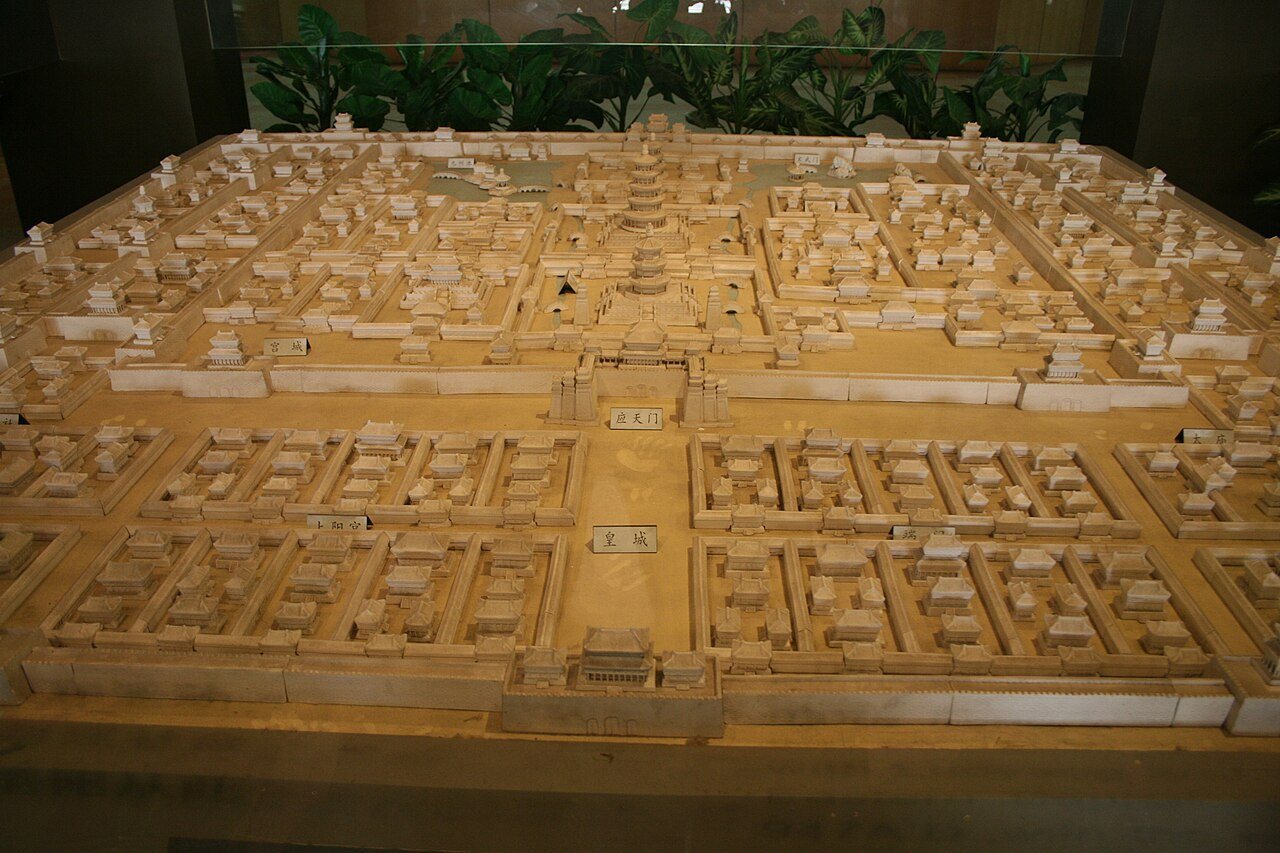
Model of the Luoyang palace city during Wu Zetian's reign
Model of the Bright Hall of Luoyang, commissioned by Wu Zetian and originally 93 meters tall, where many major construction projects began in her time
Features of the Vairocana statue in the Longmen Grottoes, supposedly based on Wu Zetian's image
Maitreya statue from the reign of Wu Zetian
Text from a Wu Zetian-era stele dedicated to Ji Jin, crown prince of King Ling of Zhou, using modified characters she promulgated
18th-century Qing dynasty illustration of Wu Zetian
7 images

During her rule Wu used informants, enforced strict laws, purged members of the Tang royal house and older officials, and reformed the civil service to favor merit. She supported Buddhism and literature and led military campaigns against Turkic and Tibetan incursions. Her governance grew more autocratic in later years. She was removed in the Shenlong Coup, which restored the Tang dynasty, and she died a few months later.

In 67 languages

Редакція Factograf · Published October 14, 2026 · Partly based on Wikipedia, CC BY-SA 4.0 · Source article