
Vladimir the Great (c. 958 – 1015) was Prince of Novgorod from 970 and Grand Prince of Kiev from 978 until his death. Born the illegitimate son of Sviatoslav I, he seized power after a fratricidal struggle, expanded his realm to the Baltic Sea and defended its frontiers. Originally a pagan, he adopted Christianity in 988 and brought it to Kievan Rus'. The Catholic Church and the Eastern Orthodox Church both canonised him as Saint Vladimir.
Rise to power


Vladimir was the youngest son of Sviatoslav I, born to a housekeeper named Malusha. After his father's death in 972, a war broke out between his brothers, and Vladimir fled abroad. He returned with a Varangian army, deposed his brother Yaropolk in 978 and was proclaimed ruler of all Kievan Rus'. He then extended his territories, including taking the Cherven towns from Poland and subduing several eastern and western tribes.
Conversion to Christianity


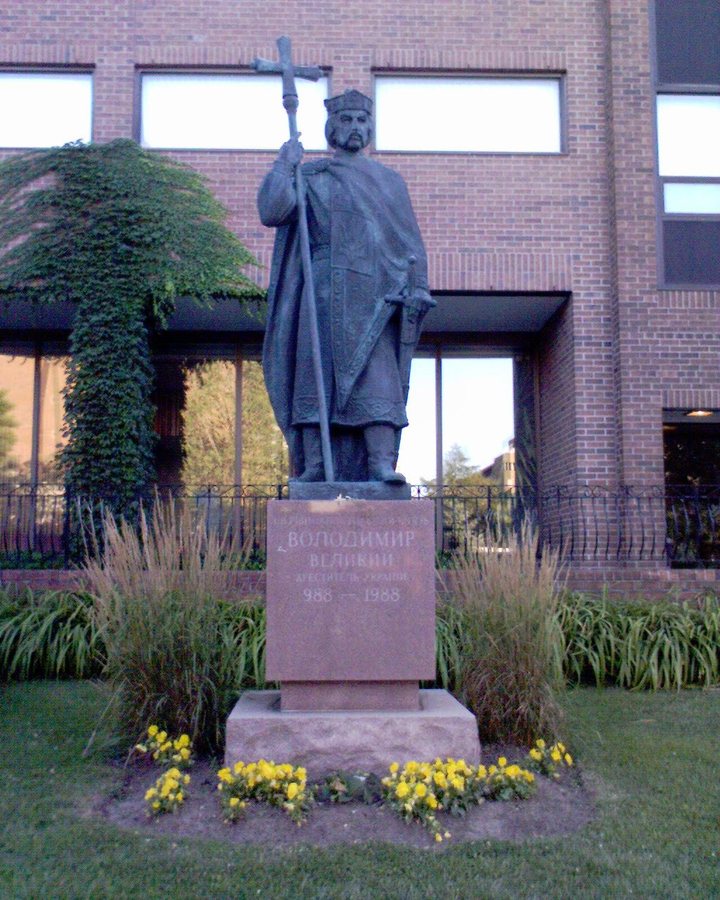


Vladimir initially honoured the Slavic gods and built a pagan temple in Kiev, but a violent incident against Christians prompted him to reconsider his faith. According to the Tale of Bygone Years, he studied several religions before choosing Eastern Christianity. He was baptised at Chersonesus in 988, taking the Christian name Basil, and married the Byzantine princess Anna. He then Christianised his people, a decision that shaped the later history of the region.