
Vincent van Gogh was a Dutch Post-Impressionist painter who is among the most famous and influential figures in the history of Western art. In just over a decade he created about 2,100 artworks, including around 860 oil paintings, most of them in the last two years of his life. His bold colours and expressive brushwork contributed to the foundations of modern art. He died by suicide at age 37 after years of mental illness and poverty.
Early life and career
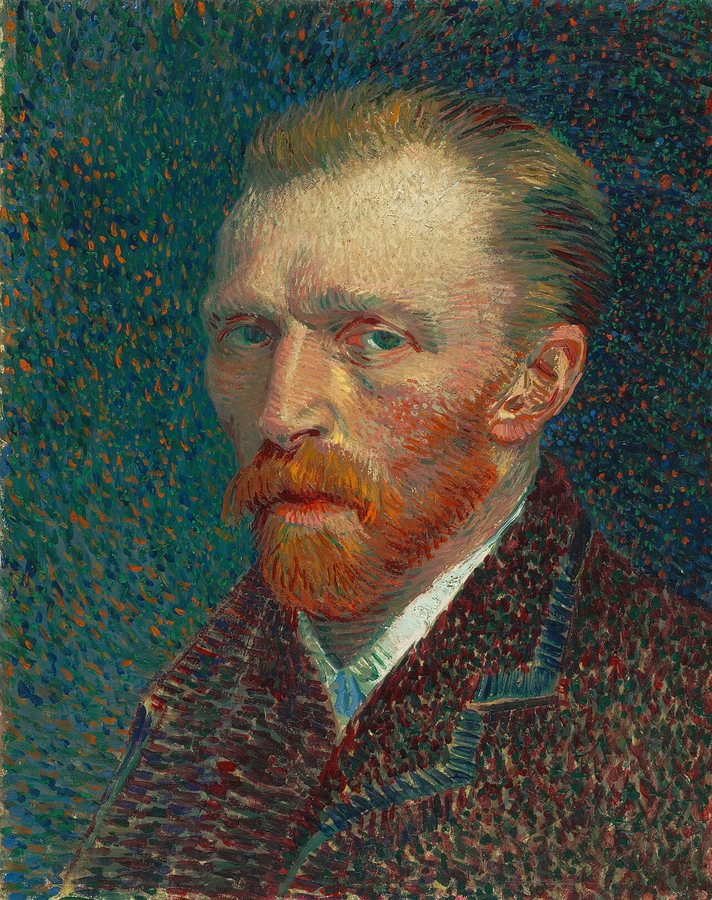


Born in 1853 into an upper-middle-class family in Zundert, in the Netherlands, Van Gogh drew as a child. As a young man he worked as an art dealer, often travelling, before turning to religion and serving as a Protestant missionary in southern Belgium. He took up painting in 1881, while living with his parents, and his younger brother Theo supported him financially. The two kept up a long correspondence by letter, which remains the most comprehensive primary source on his life and thinking about art.
Mature work


After moving to Paris in 1886, Van Gogh met avant-garde artists who were reacting against Impressionism. His paintings grew brighter in colour, and his style became fully realised during his stay in Arles in the south of France in 1888. He broadened his subjects to include series of olive trees, wheat fields and sunflowers. He suffered from psychotic episodes and spent time in psychiatric hospitals before his death in 1890.
Legacy


Van Gogh was largely unsuccessful during his lifetime, but his reputation grew in the early 20th century as elements of his style were adopted by the Fauves and German Expressionists. He later attained widespread critical, commercial and popular success. He is remembered as an important painter whose troubled personality has come to typify the romantic ideal of the tortured artist.