factograf
EN
Sign in

armed conflict in Vietnam, Laos, and Cambodia between North Vietnam and South Vietnam, from 1955 to 1975

Vietnam War

Vietnam War

The Vietnam War was an armed conflict fought in Vietnam, Laos and Cambodia between North Vietnam and South Vietnam and their allies from about 1955 to 30 April 1975. North Vietnam received support from the Soviet Union and China, while South Vietnam was backed by the United States and other anti-communist nations. It was the second of the Indochina wars and a proxy war within the Cold War. Direct US military involvement escalated from 1965 until American forces withdrew in 1973, and the conflict ended with all three countries becoming communist.

Background and escalation

U.S. Army UH-1H Hueys drop off ARVN troops at Khâm Đức, Vietnam, 12 July 1970
PAVN troops in battle
Interment of victims of the Hue Massacre
Bombing in Vietnam
Bombing in Vietnam
Execution in Saigon
Execution in Saigon
Bảo Đại (right) as the "supreme advisor" to the government of the Democratic Republic of Vietnam led by President Ho Chi Minh (left), September 1945.
The 1954 Geneva Conference
Caricature in a periodical criticizing the division of Vietnam by foreign powers at Geneva
Anti-Bảo Đại revolutionaries of the State of Vietnam at Saigon city hall, May 1955.
President Dwight D. Eisenhower and Secretary of State John Foster Dulles greet President Ngô Đình Diệm of South Vietnam in Washington, 8 May 1957
President Kennedy's news conference of 23 March 1961
President Kennedy meeting with Secretary of Defense McNamara in June 1962
12 images

Vietnam had been part of French Indochina since the 1880s, and after France's defeat in the First Indochina War, the 1954 Geneva Conference affirmed Vietnamese independence but divided the country at the 17th parallel. North Vietnam, led by the Viet Minh under Ho Chi Minh, supported a guerrilla insurgency in the south. The United States increasingly provided military advisers and aid to South Vietnam, and after the 1964 Gulf of Tonkin incident, Congress authorized President Lyndon B. Johnson to expand the American military presence without a formal declaration of war.

Withdrawal and final fall

A Marine from 1st Battalion, 3rd Marines moves a suspected Viet Cong during a search and clear operation 15 miles west of Da Nang Air Base, 1965.
Peasants suspected of being Viet Cong held by the US Army, 1966
Viet Cong fighters leave to join the Tet Offensive around Saigon-Gia Dinh
ARVN forces assault a stronghold in the Mekong Delta
Ruins of part of Saigon's Cholon neighborhood after fierce fighting between ARVN forces and Viet Cong main force battalions
A chiêu hồi ("open arms") center for defectors from communist forces to the Republic of Vietnam, 1969.
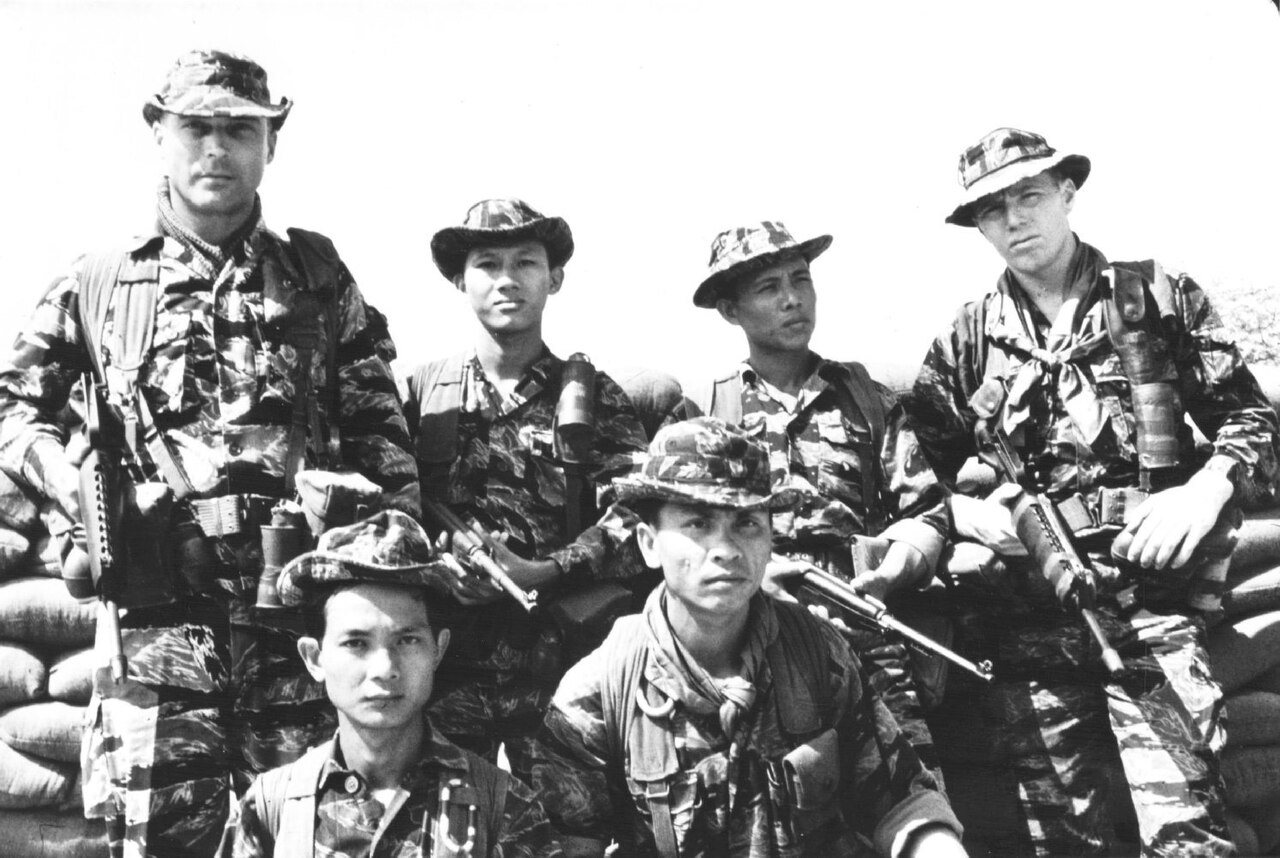
ARVN and US Special Forces, 1968
An alleged Viet Cong fighter captured during an attack on an American outpost near the Cambodian border is interrogated.
PAVN artillery bombards ARVN positions near Kon Tum, 1972.
Soviet advisers inspect the debris of a B-52 shot down near Hanoi
American POWs released from North Vietnamese prison camps, 1973
Memorial to the 1974 Buon Me Thuot campaign, showing a Montagnard of the Central Highlands, an NVA soldier and a T-54 tank
12 images

The 1968 Tet Offensive was a tactical defeat for communist forces but strengthened growing American opposition to the war. Under President Richard Nixon, the United States pursued Vietnamization, handing more fighting to South Vietnamese forces while its troops withdrew. Following the 1973 Paris Peace Accords, the last American forces left, but fighting continued. In 1975, North Vietnamese forces captured Saigon, and the two Vietnams were officially reunified in 1976.

Human cost

Soviet air defense instructors and North Vietnamese crewmen at an air defense training center in Vietnam, spring 1965
Victims of the My Lai massacre
Victims killed in a Viet Cong mine explosion in Phú Yên, 1965
Mourning the remains of victims found at Đá Mài Creek in 1969, a year after the Huế massacre
A nurse treats a Vietnamese child, 1967
A wounded Black American soldier is evacuated during the My Lai massacre
Guerrillas assemble shells and rockets delivered along the Ho Chi Minh Trail.
B-52 wreckage in Hữu Tiệp Lake, Hanoi, shot down during Operation Linebacker II, now turned into a war monument
Vietnamese refugees fleeing Vietnam, 1984
A young Marine private waits on the beach during the Marine landing at Da Nang, 3 August 1965
A Marine has his wounds treated during operations in Huế City, 1968
US helicopter spraying chemical defoliants in the Mekong Delta, South Vietnam, 1969
12 images

The war caused enormous losses, with estimates of Vietnamese soldiers and civilians killed ranging from 970,000 to 3 million. Many Cambodians and Laotians also died, and 58,220 American service members were killed. The conflict was marked by atrocities such as the Huế and Mỹ Lai massacres, and widespread use of toxic herbicides left lasting health problems. Political repression after the war contributed to the Indochina refugee crisis.

In 147 languages

EnglishČeštinaDeutschEspañolFrançaisItaliano日本語PolskiPortuguêsРусскийУкраїнська中文AbkhazianAfrikaansShqipአማርኛAngikaAragoneseالعربيةMoroccan ArabicEgyptian ArabicAsturianuঅসমীয়াAzbAzərbaycanBalinesebat-smgБашҡортБеларускаяБългарскиBlkবাংলাBrezhonegBosanskiБуряадCatalàCdoНохчийнکوردیی ناوەندیCorsicanCrimean TatarCymraegDanskΕλληνικάEsperantoEestiEuskaraفارسیfiu-vroSuomiFøroysktNorthern FrisianFurlanFryskGaeilgeGàidhligGalegoGuaraniHakka ChineseעבריתFiji Hindiहिन्दीHrvatskiMagyarՀայերենInterlinguaBahasa IndonesiaIlokoIdoÍslenskaJawaJjuქართულიҚазақшаខ្មែរ한국어کٲشُرKurdî (kurmancî)KernewekКыргызчаLatinLëtzebuergeschLezghianLimburgishLombardລາວLietuviųLatviešuMalagasyMinangkabauМакедонскиമലയാളംМонголमराठीMelayuMirandeseမြန်မာمازرونیNeddersass’schनेपालीNewariNederlandsNorsk nynorskNorskSouth NdebeleOccitanИронਪੰਜਾਬੀPiemontèisWestern PanjabiپښتوRumantschRomânăRusynСаха тылаSicilianuScotsSarduسنڌيSrpski (latinica)සිංහලSlovenčinaSlovenščinaSoomaaliShqipСрпскиSvenskaKiswahiliதமிழ்తెలుగుไทยFilipinoTalyshToki ponaTürkçeТатарاردوO‘zbekVenetoVepsTiếng ViệtWarayWu ChineseMingrelianייִדישVahcuenghzh-yue

Редакція Factograf · Published October 14, 2026 · Partly based on Wikipedia, CC BY-SA 4.0 · Source article