factograf
EN
Sign in

Putinist political party in Russia

United Russia

United Russia

United Russia is the ruling political party of Russia, in power since 2001. It holds 349 of the 450 seats in the State Duma as of 2026, a majority it has held since 2007. Although it proclaimed Russian conservatism as its official ideology in 2009, political scientists often describe it as a big-tent party or a party of power rather than one grounded in a firm ideology. Its leader in practice is Vladimir Putin, who supports the party even without holding a formal post within it.

Origins and formation

Party leader Vladimir Putin with Yuri Luzhkov, Dmitry Medvedev, Sergei Shoigu and Boris Gryzlov at the 11th United Russia Party Congress, 2009
12th Congress of United Russia
Medvedev and Putin at the 12th Party Congress in September 2011
Vladimir Putin at an interregional conference in the Southern Federal District announcing the creation of the All-Russia People's Front
Nikolay Fyodorov, responsible for work on the People's Program for United Russia and the ONF
Official inauguration ceremony of the elected head of the Sakha Republic, Aysen Nikolaev, on 27 September 2018
Participant of the United Russia and ONF primaries in Nizhny Novgorod
Vyacheslav Volodin with South Korean President Moon Jae-in in the State Duma on 21 June 2018
8 images

United Russia grew out of the Unity bloc, created three months before the December 1999 Duma elections to counter the Fatherland – All Russia bloc. Unity won 23.3% of the vote, a result that was widely linked to the popularity of Prime Minister Vladimir Putin after his military campaign in Chechnya. In December 2001, Unity merged with the Fatherland and All Russia movements and took the name United Russia. Its early appeal rested on stability, a theme Putin stressed after a decade of turbulent change.

Electoral dominance

Speech by party chairman Vladimir Putin at the 11th Congress of United Russia, 21 November 2009
Putin (standing) at the 9th United Russia Party Congress on 15 April 2008
Putin and Medvedev at the party congress on 24 September 2011
Sergey Shoigu
Sergey Shoigu
Yuri Luzhkov at Moscow's UNESCO event, 2010
President of the Republic of Tatarstan Mintimer Shaimiev
Boris Gryzlov, 2006
Boris Gryzlov, 2006
Vladimir Putin New Year 2012
8 images

Since the 2003 and 2011 elections the party has held a parliamentary majority, and it has held a constitutional majority in several elections, including those of 2007, 2016 and 2021. Its vote share peaked at 64.3% in the 2007 legislative election. In recent years its popularity has declined. The party has branches in every region of Russia and tens of thousands of primary branches across the country.

Ideology and role
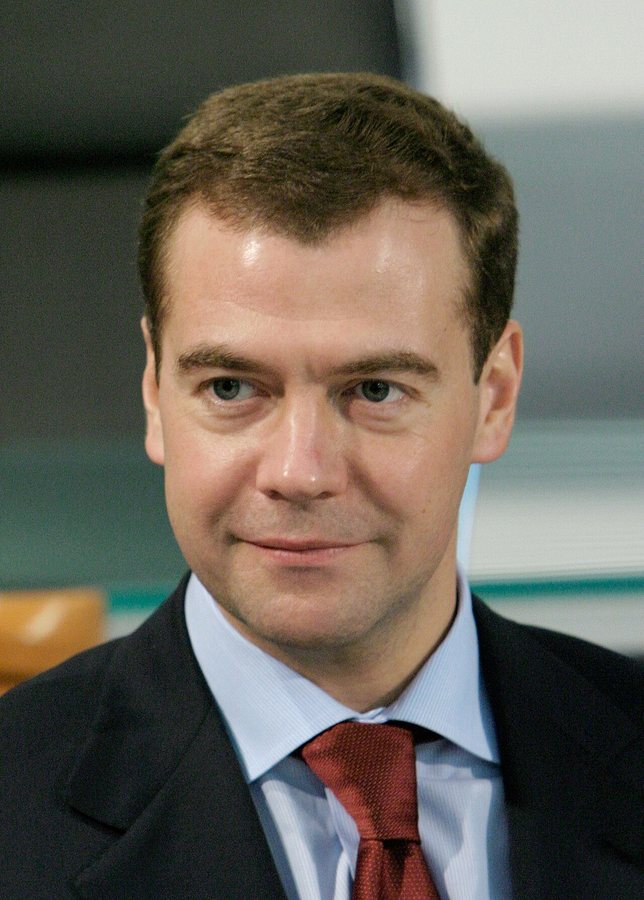
Dmitry Medvedev, official large photo
Interregional conference of United Russia in the Far East
Members of party clubs at a joint meeting in 2010
Professor Vladimir Sobkin at a joint meeting of the Center for Social and Conservative Policy and the State Patriotic Club
Liberal club and party member Andrey Makarov
Russians protest against Putin's re-election in 2012
United Russia local office sign in 2011, with graffiti reading 'THIEVES'
One of many United Russia posters in Saint Petersburg on election day, 4 December 2011, displayed in violation of the law
8 images

The party's ideology has been described as inconsistent, combining nationalist and Eurosceptic positions that vary among its officials, all of whom back Putin. Its primary appeal is to pro-Putin and non-ideological voters, which is why analysts treat it as a party of power. Its critics have accused it of serving the Kremlin rather than acting as an independent political organisation.

In 74 languages

Редакція Factograf · Published October 14, 2026 · Partly based on Wikipedia, CC BY-SA 4.0 · Source article