Tatwine was an eighth-century Benedictine monk who served as the tenth Archbishop of Canterbury from 731 until his death in 734. Born in Mercia around 670, he previously held the position of abbot at a monastery in Breedon-on-the-Hill. A scholar noted for his learning and devotion, he is recognized for his contributions to early medieval literature, including works on Latin grammar and a collection of riddles. He is venerated as a saint in the Catholic tradition.
Life and works
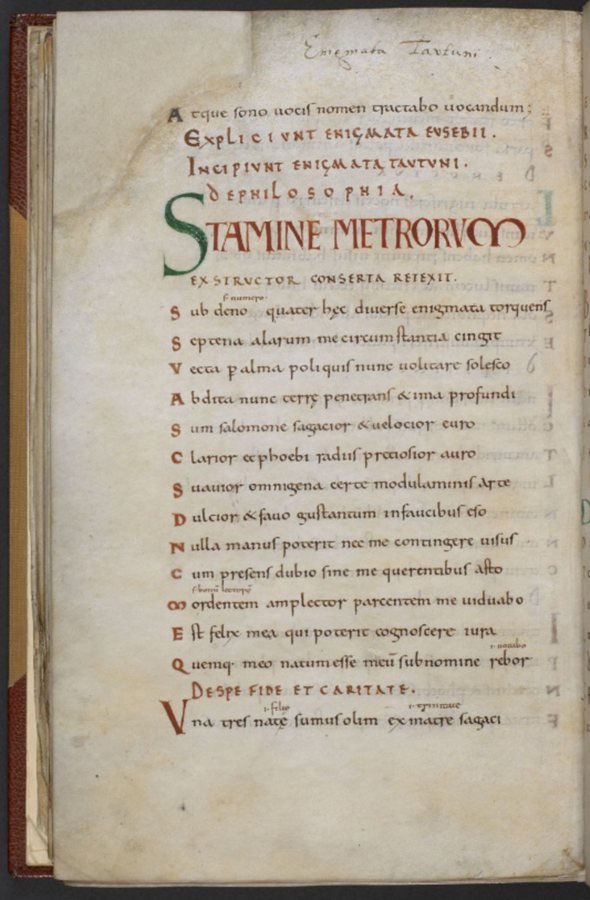
After serving as an abbot, Tatwine was appointed archbishop through the influence of King Æthelbald. His tenure was largely uneventful, though he consecrated bishops in Lindsey and Selsey. He was a prolific writer, composing an advanced Latin grammar known as the Ars Grammatica Tatuini and a series of forty riddles. These poetic enigmas, which utilize acrostics, cover diverse subjects ranging from theology and ecclesiastical objects to natural phenomena.
Veneration
Tatwine is remembered as a saint, with his feast day observed on 30 July. His intellectual legacy was preserved through several manuscripts, including his grammatical studies and his riddles, which were used by students both in England and on the European continent.


