
The Tang dynasty was an imperial dynasty of China that ruled from 618 to 907, with a break between 690 and 705. It followed the Sui dynasty and was succeeded by the Five Dynasties and Ten Kingdoms period. Historians generally regard it as a high point of Chinese civilisation and a golden age of cosmopolitan culture. Its territory, expanded through the campaigns of its early rulers, surpassed that of the Han dynasty.
Founding and rise


The dynasty was founded by Emperor Gaozu (born Li Yuan), who took advantage of the decline of the Sui dynasty and rose in rebellion in 617. His son Li Shimin, later known by his temple name Taizong, deposed him in 626 and led a period of progress and stability in the first half of the dynasty. The family's ancestry has been debated by historians, with some arguing that its claimed Han descent may have been fabricated and that it had Xianbei roots.
Decline and legacy


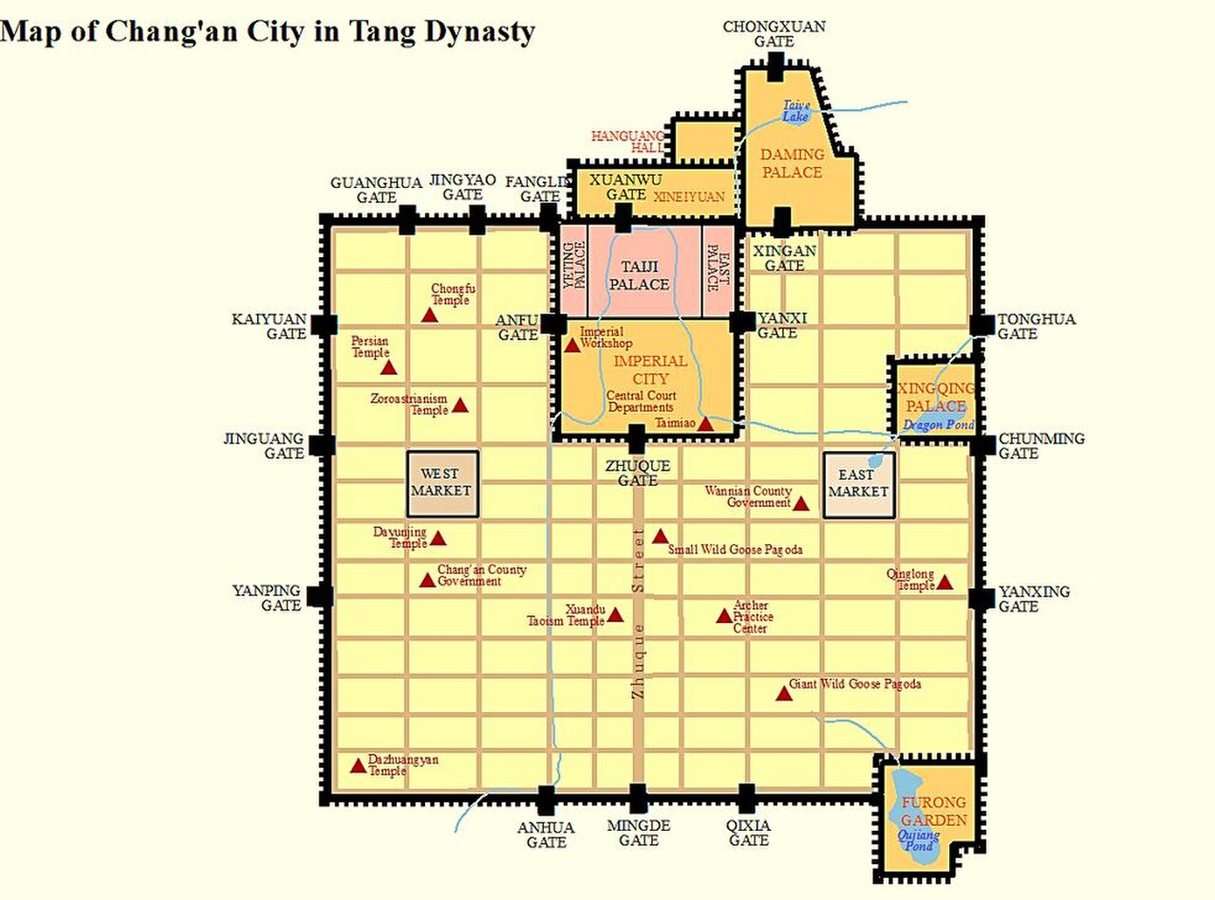




Empress Wu Zetian interrupted the dynasty from 690 to 705 by proclaiming the Wu Zhou dynasty. The An Lushan rebellion from 755 to 763 caused widespread devastation and weakened central authority, and regional military governors undermined civil order in the 9th century. Agrarian rebellions in the later 9th century led to population loss, poverty and government dysfunction, ending the dynasty in 907. Its capital Chang'an was among the world's most populous cities, and its culture, especially poetry, left a lasting influence.