
Richard Nixon (1913–1994) was the 37th president of the United States, serving from 1969 until his resignation in 1974. A Republican, he represented California in both houses of Congress and served eight years as vice president under Dwight D. Eisenhower. His presidency saw reduced American involvement in the Vietnam War, détente with the Soviet Union and China, the Apollo 11 Moon landing, and the creation of the Environmental Protection Agency. He was the only U.S. president to resign, following the Watergate scandal.
Early life and career


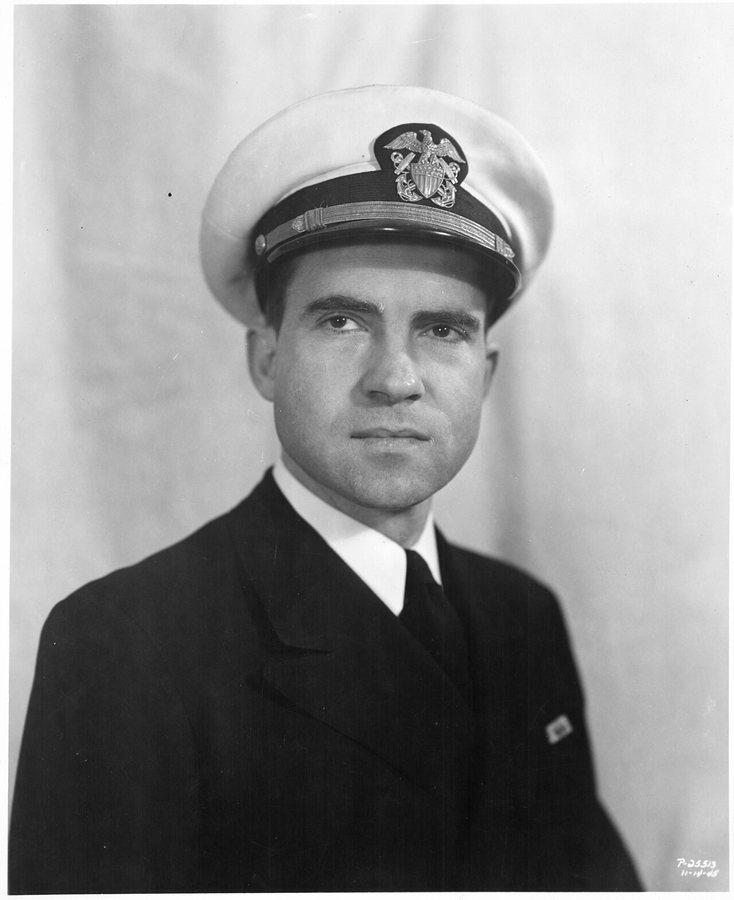


Nixon was born into a poor Quaker family in Yorba Linda, California, and grew up working in his family's store after the family ranch failed. He studied at Whittier College and Duke University School of Law, then practiced law in California before working for the federal government in Washington, D.C. He was elected to the House of Representatives in 1946, where his work on the Alger Hiss case made him a prominent anti-communist, and he won a Senate seat in 1950.
Presidency and Watergate


As president, Nixon pursued diplomatic openings to China and the Soviet Union, and he ended American combat involvement in Vietnam. Domestically, his administration launched the Environmental Protection Agency and the war on cancer, and it ended the convertibility of the dollar to gold. He won re-election in 1972 by a large margin. Revelations about the administration's role in the Watergate break-in and its cover-up eroded his support, and he resigned in August 1974 before almost certain impeachment. His successor, Gerald Ford, later pardoned him.
Later years


During nearly two decades of retirement, Nixon wrote several books and travelled abroad extensively, gradually regaining a reputation as an elder statesman and expert on foreign affairs. He suffered a stroke in April 1994 and died four days later.