
Perm is the administrative centre of Perm Krai in the European part of Russia, situated on the banks of the Kama River near the Ural Mountains. Originally known as Yagoshikha and briefly named Molotov during the Soviet period, it has more than one million residents and is the 15th-largest city in Russia. It serves as a major railway hub and an important industrial, scientific and cultural centre of the Urals region.
Early history
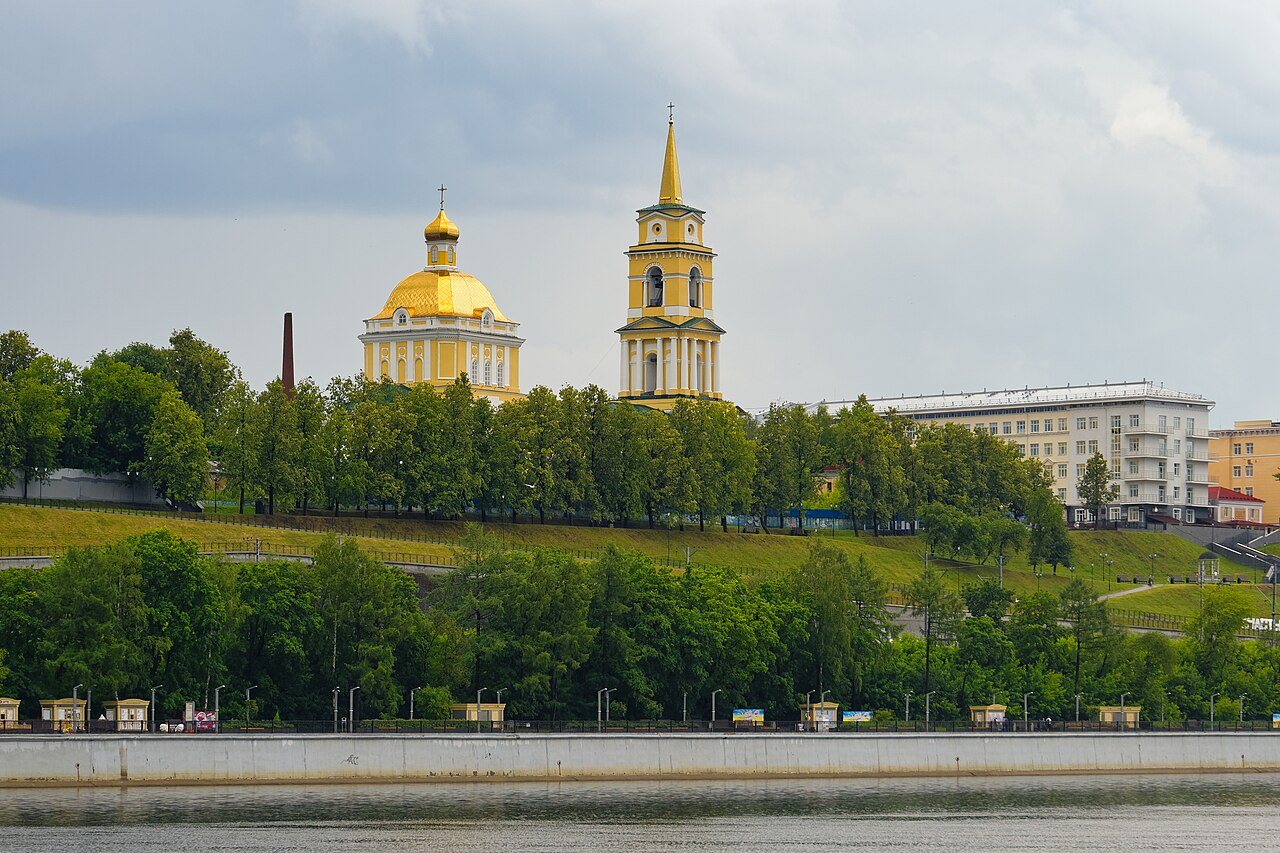


Perm was first mentioned as the village of Yagoshikha in 1647, but the history of the modern city begins with Tsar Peter the Great's development of the Ural region. In 1723 a copper-smelting works was founded at the village, and in 1781 it was granted city status and renamed Perm. Its position on the navigable Kama River and on the Siberian Route across the Urals helped it become an important trade and manufacturing centre, and it served as a stopover or final destination for many exiles under Tsarist and Soviet rule.
Industry and universities


Perm grew considerably during Soviet industrialization, and its metallurgical, engineering and chemical industries remain significant today. The city hosts a major petroleum refinery supplied by pipeline from West Siberia, and it produces fertilizers, dyes and agricultural machinery. Perm State University, founded in 1916, is among its prominent institutions of higher education.
Geography


The city sits on hilly terrain along the Kama, the main tributary of the Volga and one of Russia's deepest rivers. The Kama divides the city into a central part and a right-bank part. Perm has a warm summer continental climate, with long, snowy and quite cold winters and moderately warm summers.