factograf
EN
Sign in

forced partition of the Polish–Lithuanian Commonwealth

Partitions of Poland

Partitions of Poland

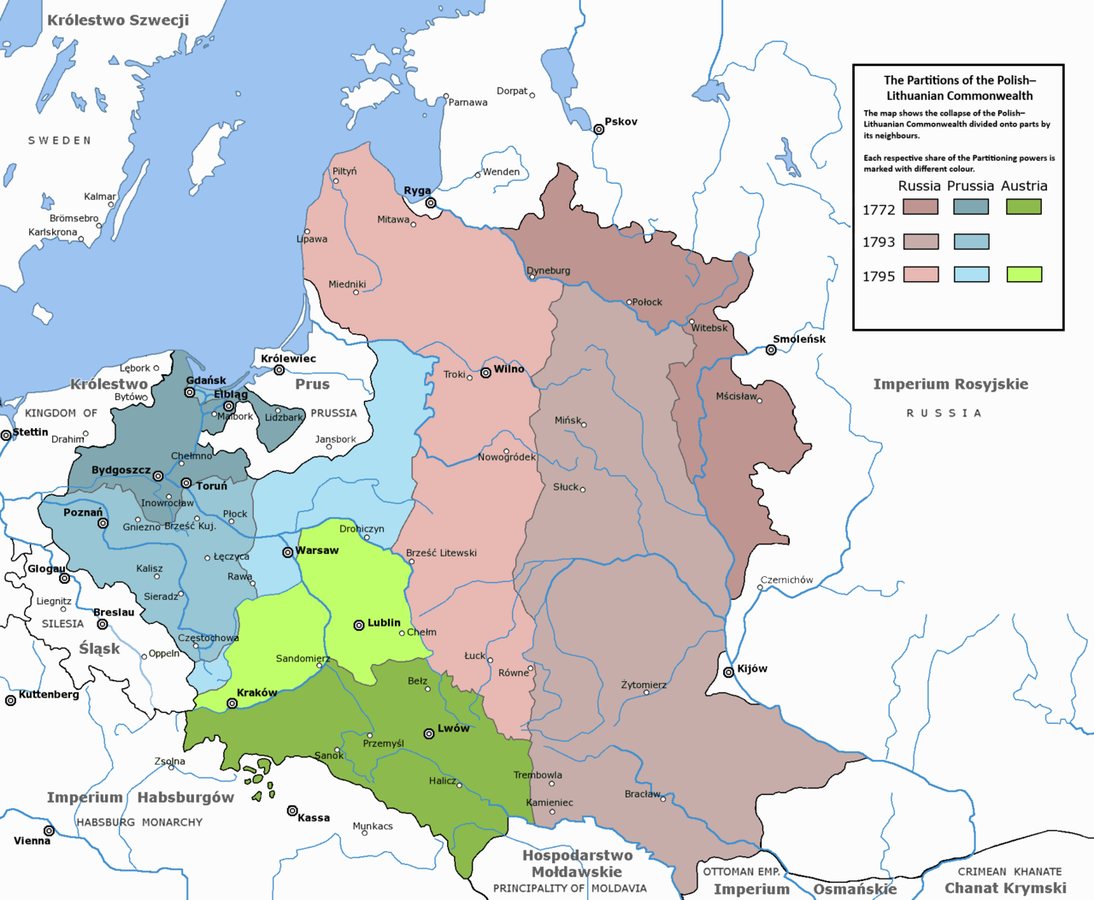
Partitions of Poland were three partitions of the Polish–Lithuanian Commonwealth carried out between 1772 and 1795 by the Habsburg monarchy, the Kingdom of Prussia and the Russian Empire, which divided the commonwealth's lands among themselves. The partitions ended the existence of the state, leaving Poland and Lithuania without sovereignty for 123 years. The term is used both for the sequence of acts of dividing and annexing the country and, geographically, for the three resulting parts: the Austrian, Prussian and Russian partitions.

Background to the partitions

Polish-Lithuanian Commonwealth in 1772
Rzeczpospolita partitions, map 3
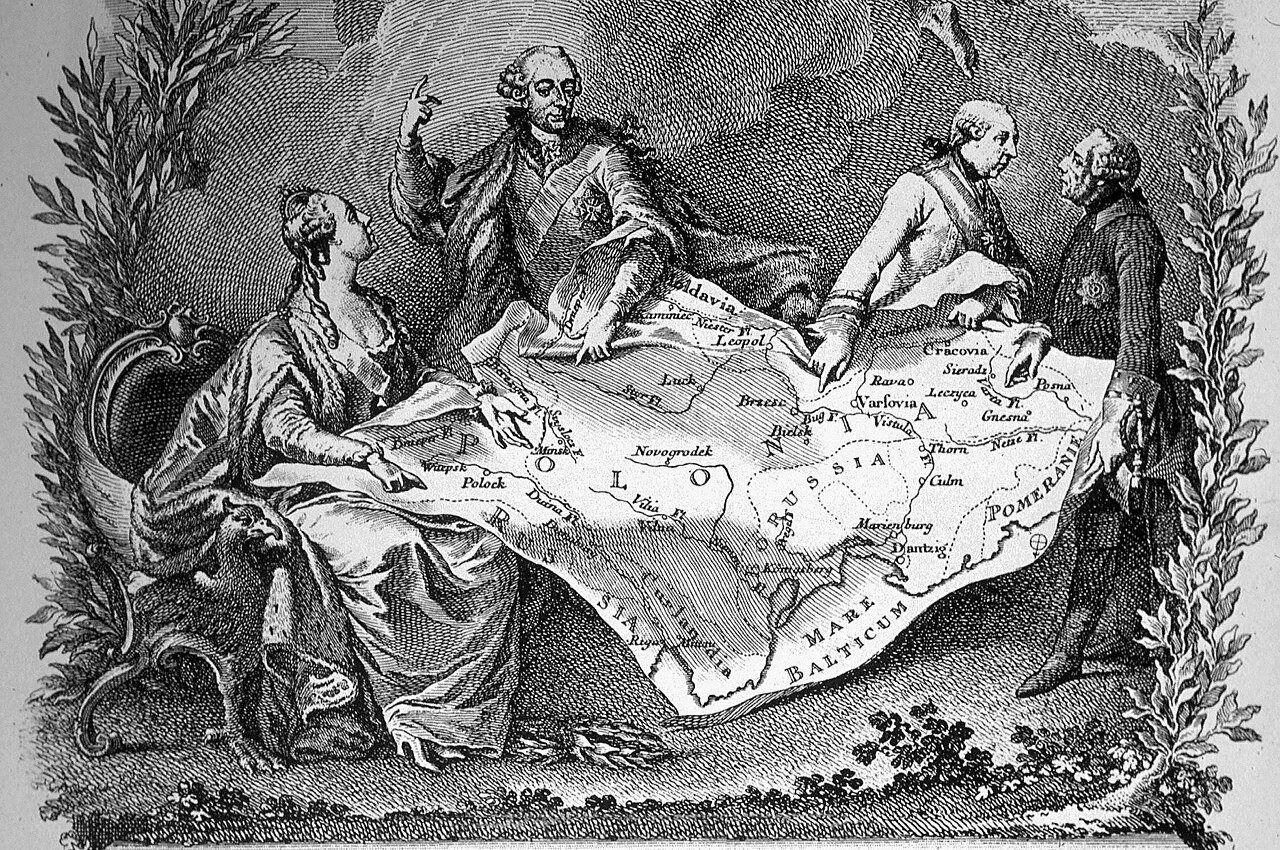
Allegory of the first partition of Poland, showing Catherine the Great of Russia (left), Joseph II of Austria (middle) and Frederick the Great of Prussia (right) quarrelling over their territorial seizures
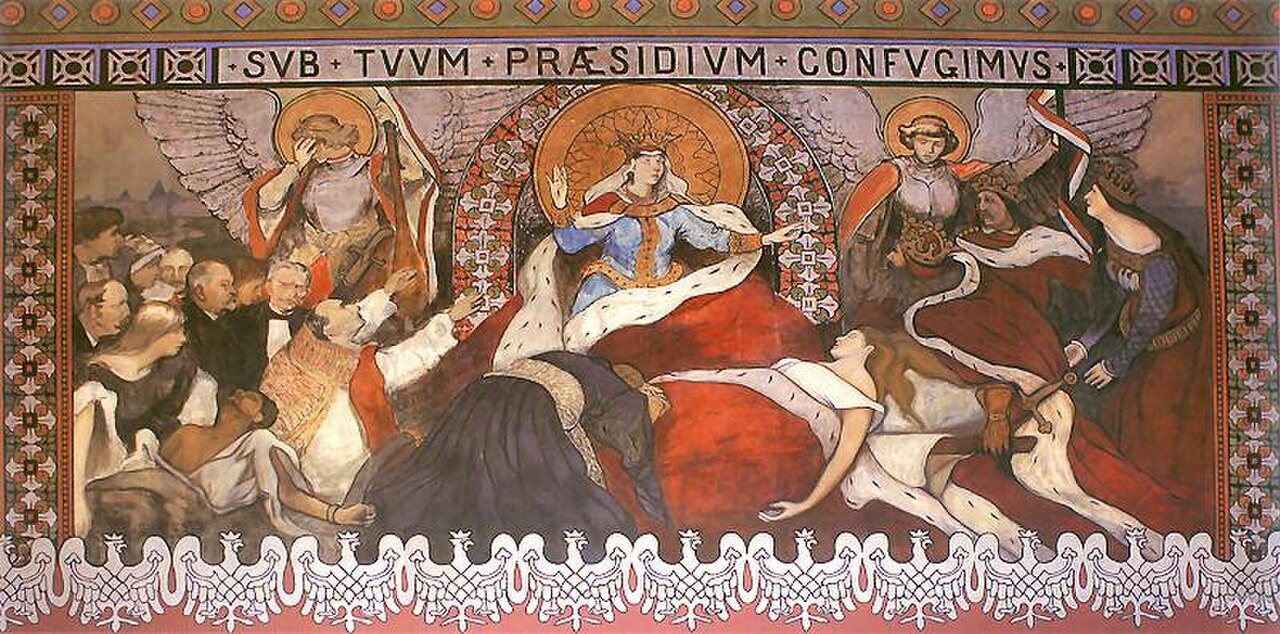
Włodzimierz Tetmajer, Allegory of Dead Poland, St. Nicholas Cathedral, Kalisz
4 images

By the mid-18th century the commonwealth was weakened by the liberum veto, a parliamentary rule that let a single deputy block legislation, and foreign powers often influenced the election of its kings. In 1730 Prussia, Austria and Russia secretly agreed to preserve the commonwealth's existing laws, an arrangement later called the Alliance of the Three Black Eagles. Russian intervention in domestic affairs, including the Repnin Sejm of 1767 and the subsequent Bar Confederation War, deepened the crisis and gave the neighbouring powers pretexts for involvement.

The three partitions

The Polish–Lithuanian Commonwealth after the First Partition, as a protectorate of the Russian Empire (1773–1789)
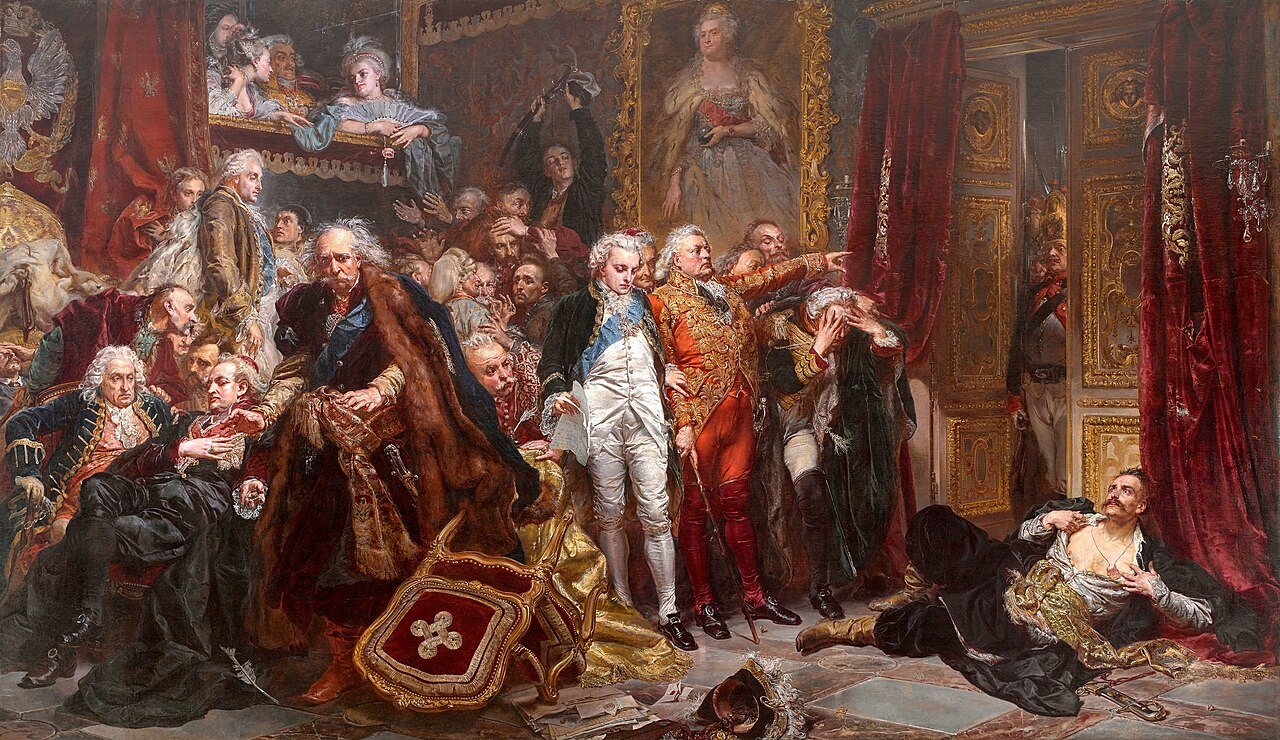
Rejtan at the Sejm of 1773, oil on canvas by Jan Matejko, 1866, 282 cm × 487 cm, Royal Castle in Warsaw
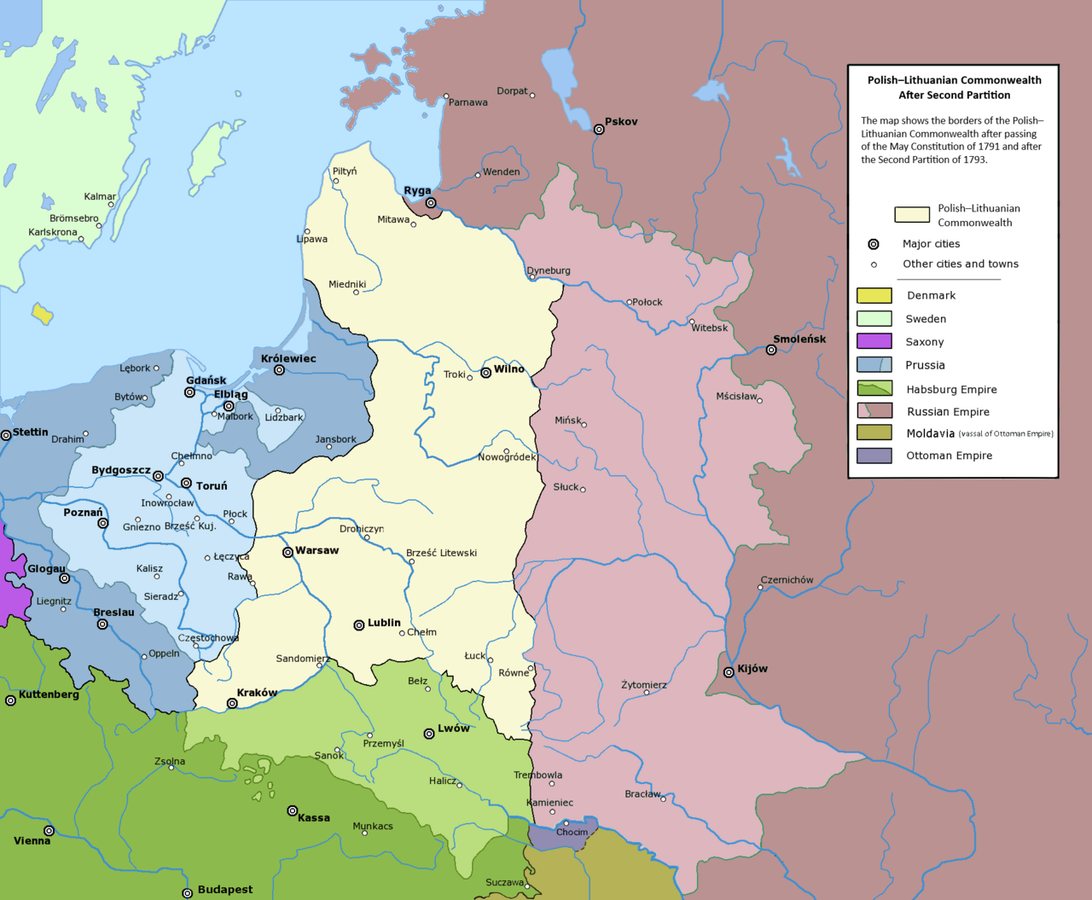
The Polish-Lithuanian Commonwealth after the Second Partition (1793)
3 images

The First Partition was decided in August 1772 after the Bar Confederation lost its war with Russia. The Second Partition followed the Polish–Russian War of 1792 and the Targowica Confederation, and was agreed at the Grodno Sejm in January 1793 without Austrian participation. The Third Partition, in October 1795, came after the failed Kościuszko Uprising and ended the commonwealth's existence altogether.

Legacy of the partitions

1793 Russian campaign medal
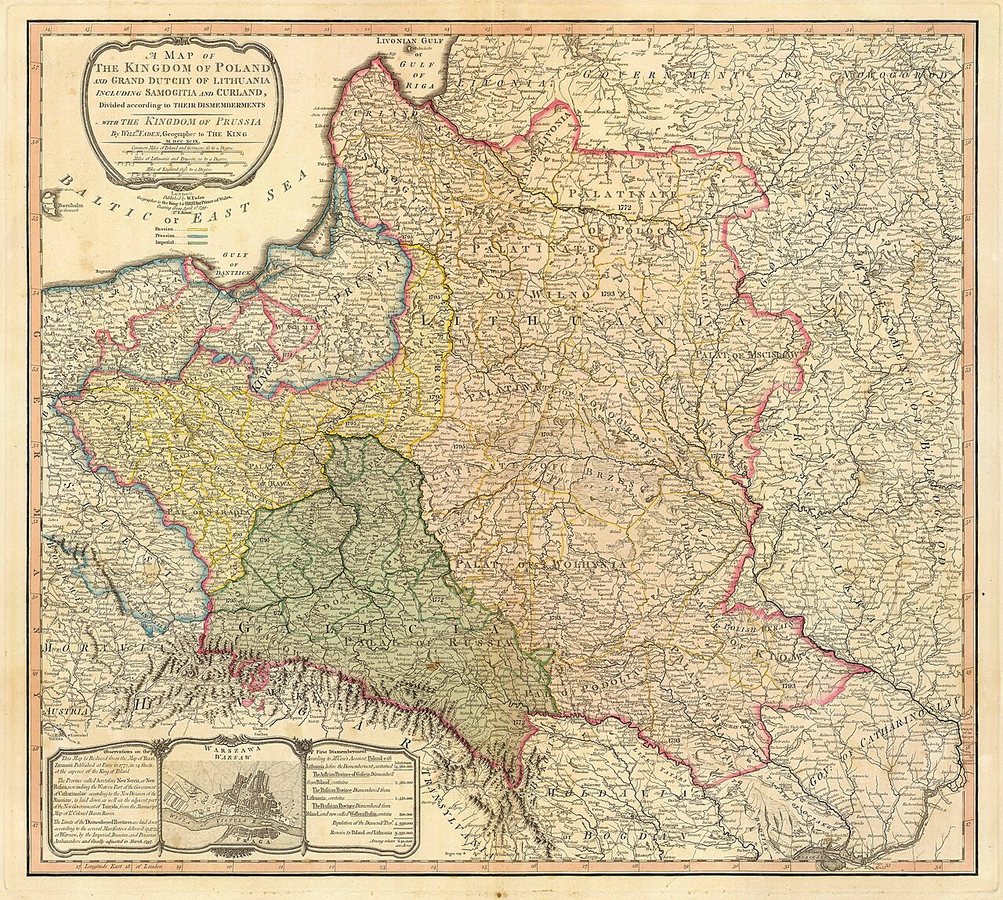
A map of the Kingdom of Poland and the Grand Duchy of Lithuania, including Samogitia and Courland, divided according to their dismemberments with the Kingdom of Prussia, from 1799
The partition of the Duchy of Warsaw according to the Congress of Vienna; division of Polish territories in 1815
3 images

After the Congress of Vienna in 1815 the borders of the partitioned sectors were redrawn, with Austria establishing Galicia and Russia forming Congress Poland. Polish historians use the term Fourth Partition for later annexations of Polish lands, and in a temporal sense for the diaspora communities that helped restore Polish independence in 1918, after 123 years.

In 61 languages

Редакція Factograf · Published October 14, 2026 · Partly based on Wikipedia, CC BY-SA 4.0 · Source article