
Nikola Tesla (1856–1943) was a Serbian-American engineer, futurist, and inventor known for his contributions to the design of the modern alternating current (AC) electricity supply system. Born in the Austro-Hungarian Empire, he emigrated to the United States in 1884 and built laboratories and companies in New York to develop electrical and mechanical devices. His AC induction motor and polyphase patents, licensed to Westinghouse Electric in 1888, became central to the polyphase system that the company marketed.
Early life
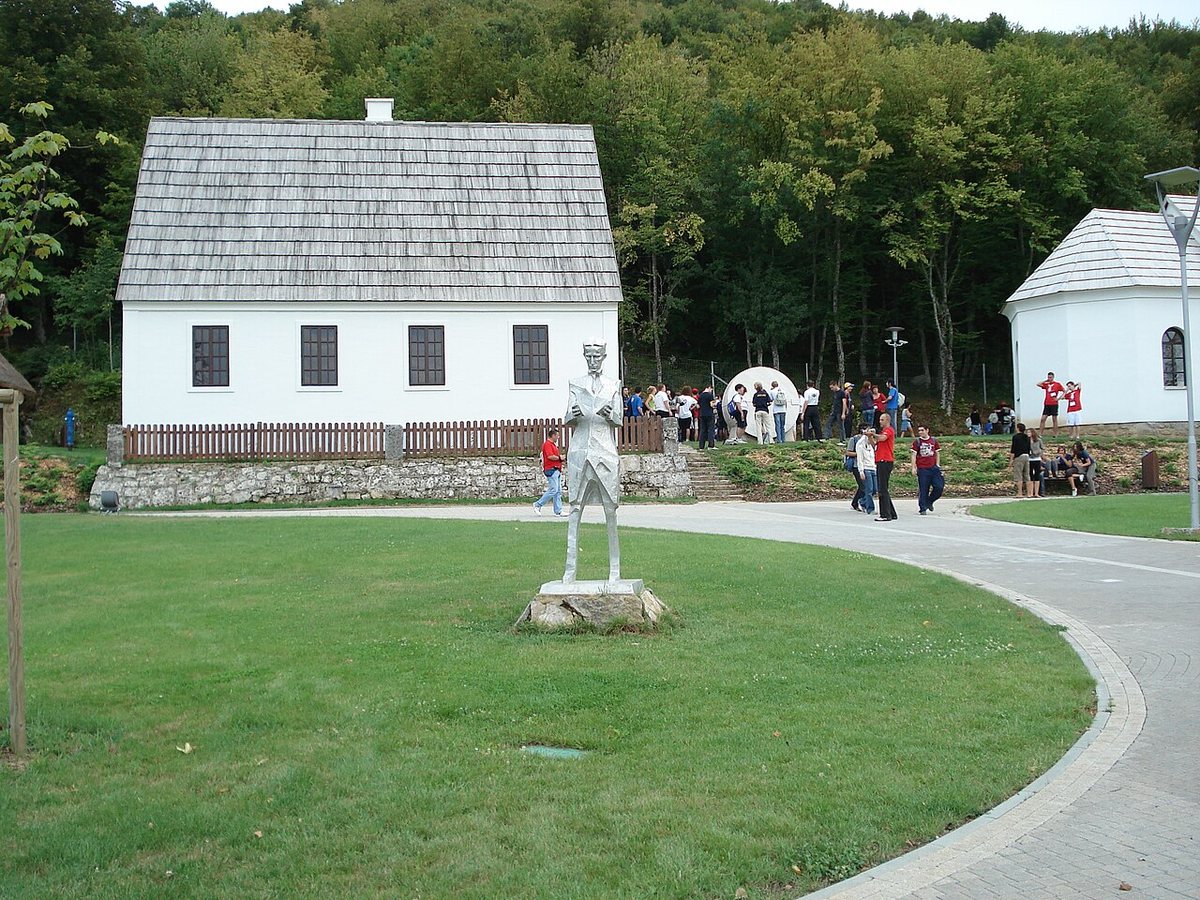


Tesla was born in 1856 in Smiljan, then part of the Military Frontier of the Austrian Empire, into a family of ethnic Serbs. His father was an Orthodox priest, and his mother was known for her mechanical skill and memory for epic poetry. Tesla studied engineering and physics in the 1870s at schools in Graz and Prague but left without a degree. He then worked in telephony and in the new electric power industry in Europe before moving to the United States.
Work and experiments


In New York, Tesla pursued projects in wireless lighting, high-voltage experiments, and wireless power distribution, including experiments in Colorado Springs. He built a radio-controlled boat and gave public lectures known for their showmanship. His planned Wardenclyffe Tower, intended for intercontinental wireless communication and power transmission, was left unfinished after funding ran out. In later decades he worked on a series of inventions with mixed results, and he died in a New York hotel in 1943.
Legacy


After his death, Tesla's work received less attention until 1960, when the General Conference on Weights and Measures named the SI unit of magnetic flux density, the tesla, in his honor. Public interest in him revived from the 1990s onward. In 2013, Time magazine named him one of the 100 most significant figures of all time.