
Nicetas the Goth was a 4th-century military soldier of Gothic origin who lived near the Danube region. Following his baptism by the bishop Theophilus, he became an active proponent of the Christian faith among his people. During the civil conflicts between pagan and Christian Gothic factions, he remained committed to his religious convictions. His life ended in martyrdom in 372 when he faced execution during a period of renewed pagan persecution led by the judge Athanaric.
Life and martyrdom
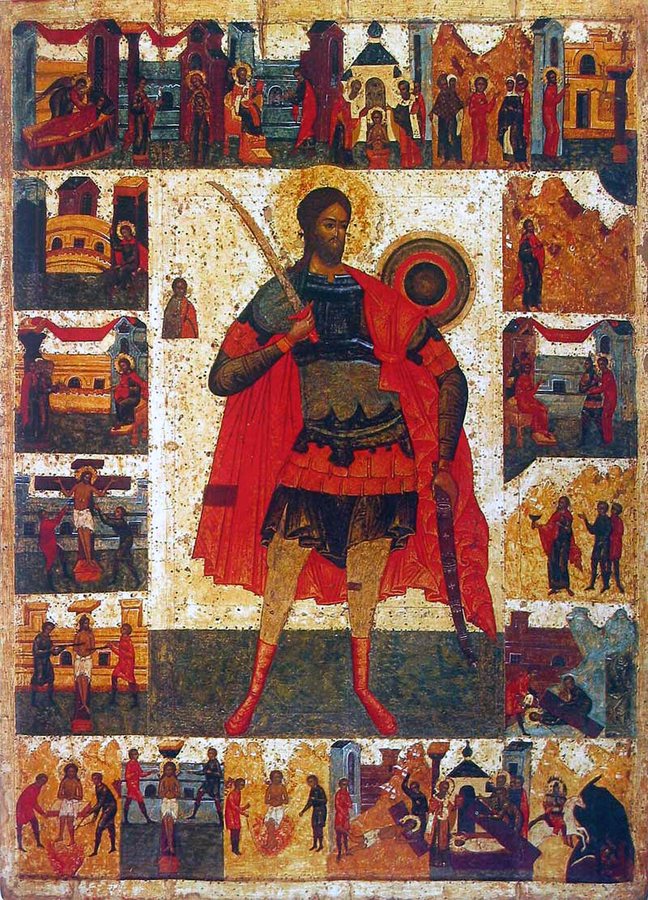
As a member of the Gothic upper class, Nicetas was trained in the Christian faith during the mid-4th century. He participated in the internal struggles of the Goths, supporting the Christian faction. When Athanaric regained power and resumed persecuting Christians, Nicetas was sentenced to death by fire. He is said to have resisted temptation to renounce his faith through prayer and divine assistance before being executed at the stake.
Veneration and legacy
Recognized as a great martyr, he is honored in the Catholic and Eastern Orthodox traditions. His remains were moved from Cilicia to Constantinople, and some relics eventually reached Serbia. Numerous churches and monasteries across Greece, Russia, and the Balkans bear his name. In certain traditions, he is invoked to help protect children from birth defects.