factograf
EN
Sign in

country in East Asia

Mongolia

Mongolia

Mongolia is a landlocked country in East Asia, bordered by Russia to the north and China to the south. It covers about 1.56 million square kilometers, making it the 18th-largest country in the world and the second-largest landlocked nation after Kazakhstan. With a population of about 3.5 million, it is the most sparsely populated sovereign state apart from Western Sahara. Its landscape includes grassy steppe, mountains to the north and west, and the Gobi Desert to the south. The capital, Ulaanbaatar, is home to roughly half of the population.

Early history

7th-century Göktürk artifacts found 180 km (112 mi) from Ulaanbaatar
Yuan dynasty, c. 1294
A 1278 portrait of Genghis Khan
Altan Khan (1507–1582) founded the city of Hohhot, helped introduce Buddhism and originated the title of Dalai Lama.
The eighth Jebtsundamba Khutuktu, Bogd Khaan
Khorloogiin Choibalsan led Mongolia during the Stalinist era and presided over an environment of intense political persecution.
Mongolian troops fight against the Japanese counterattack at Khalkhin Gol, 1939.
Mongolian Premier Yumjaagiin Tsedenbal was the longest-serving leader in the Eastern Bloc, with over 44 years in office.
The southern portion of Mongolia consists of the Gobi Desert, while the northern and western portions are mountainous.
The Khentii Mountains in Terelj, close to the birthplace of Genghis Khan
The Gobi Desert in Ömnögovi Province. Desertification is a key issue in Mongolia.
Bactrian camels by sand dunes in the Gobi Desert
12 images

The territory has been ruled by a succession of nomadic empires, including the Xiongnu, the Xianbei, the Rouran and the Turkic khaganates. In 1206, Genghis Khan founded the Mongol Empire, which became the largest contiguous land empire in history. His grandson Kublai Khan conquered China and established the Yuan dynasty. After the Yuan collapsed, the Mongols returned to their homeland, where Tibetan Buddhism spread in the 16th century and the Qing dynasty absorbed the country in the 17th century.

Independence and socialism

Presidential portrait of Ukhnaagiin Khurelsukh
Prime Minister Nyam-Osoryn Uchral, official portrait 2026, cropped
State Great Khural during the opening of the spring session in March 2014
Mongolian President Ukhnaagiin Khürelsükh with Russian President Vladimir Putin in Ulaanbaatar, 3 September 2024
Mongolian President Tsakhiagiin Elbegdorj with US Secretary of State John Kerry, June 2016
Mongolian, Chinese and Russian national flags set on armored vehicles during the large-scale military exercise Vostok 2018 in Eastern Siberia
View of Ulaanbaatar with the Blue Sky Tower
Oyu Tolgoi employs 21,000 workers and produced 168,000 tons of copper in 2023.
Mongolian landscape
Mongolian landscape
Thermal Power Plant No. 4 in Ulaanbaatar is Mongolia's largest power station.
Train at Zamyn-Üüd station in Dornogovi Province
While the Mongolian horse continues to be revered as the national symbol, it is rapidly being replaced by motorized vehicles.
12 images

After the Qing dynasty fell in 1911, Mongolia declared independence and gained actual independence from China in 1921. It then became a satellite state of the Soviet Union, and the Mongolian People's Republic was founded as a socialist state in 1924. Following the revolutions of 1989, a peaceful democratic revolution in 1990 led to a multi-party system, a new constitution in 1992 and a transition to a market economy.

Society today

Mongolian ferry Sukhbaatar on Lake Khovsgol in Khovsgol Province
Ulaanbaatar is the capital and largest city of Mongolia.
Public Library and Museum in Mörön, Khövsgöl province, with signage in Mongolian (Mongolian script and Cyrillic) and English
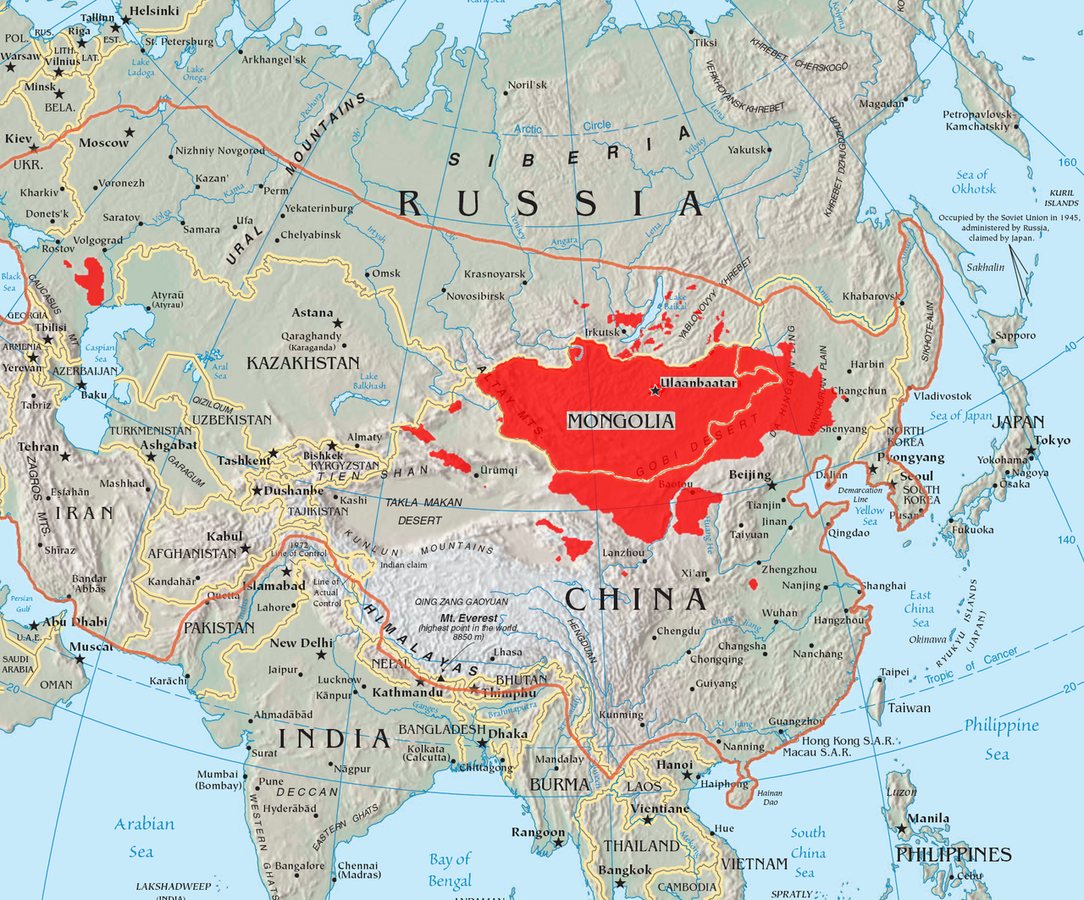
This map shows the boundary of the 13th-century Mongol Empire compared to today's Mongols. The red area shows where most Mongolian speakers live today.
Amarbayasgalant Monastery
Life expectancy in Mongolia
Musician playing the traditional Mongolian musical instrument, the morin khuur
Mongolian media interviewing the opposition Mongolian Green Party in 2008. The media has gained significant freedoms since democratic reforms began in the 1990s.
Naadam is the largest summer celebration.
Riders during the Naadam festival
Kazakh hunters in Mongolia with eagles
11 images

Around 30 percent of the population is nomadic or semi-nomadic, and horse culture remains important. Mahayana Buddhism is the majority religion, while the irreligious form the second-largest group. Most citizens are ethnic Mongols, and about 5 percent belong to minorities such as Kazakhs and Tuvans, who live mainly in the west. Mongolia joined the World Trade Organization in 1997 and is a member of the United Nations.

In 259 languages

EnglishČeštinaDeutschEspañolFrançaisItaliano日本語PolskiPortuguêsРусскийУкраїнська中文AbkhazianAcehneseAdygheAfrikaansShqipAmiአማርኛOld EnglishAngikaAragoneseالعربيةMoroccan ArabicEgyptian ArabicAsturianuঅসমীয়াAwadhiAzbAzərbaycanBalineseBavarianbat-smgБашҡортBatak TobaBikolБеларускаяBetawiБългарскиBhojpuriBislamaBlkবাংলাབོད་སྐད་BishnupriyaBrezhonegBosanskiBugineseБуряадCatalàcbk-zamCdoCebuanoНохчийнᏣᎳᎩکوردیی ناوەندیCorsicanCrimean TatarKashubianChurch SlavicЧӑваш чӗлхиCymraegDagDanskZazaDolnoserbšćinaCentral DusunDtyDivehiརྫོང་ཁEʋegbeΕλληνικάEsperantoEestiEuskaraExtremaduranفارسیPulaarfiu-vroSuomiFijianFøroysktArpitanNorthern FrisianFryskGagauzGaeilgeGcrGàidhligGilakiGalegoGuaraniकोंकणीGorontaloગુજરાતીGaelgHakka ChineseHausaʻŌlelo HawaiʻiעבריתFiji Hindiहिन्दीHrvatskiHornjoserbšćinaHaitian CreoleMagyarՀայերենInterlinguaIbanBahasa IndonesiaInterlingueIlokoIngushIdoIsvÍslenskaJamaican Creole EnglishLojbanJawaKara-KalpakTaqbaylitქართულიKabardianKbpTyapKgeKongoGikuyuҚазақшаខ្មែរಕನ್ನಡ한국어Karachay-BalkarکٲشُرKurdî (kurmancî)KomiKernewekКыргызчаLadinoLatinLëtzebuergeschLezghianLingua Franca NovaLigureLimburgishLldLombardLingálaລາວLietuviųLatviešuMadureseMagahiमैथिलीMokshaMalagasyMariMinangkabauMāoriМакедонскиമലയാളംমৈতৈলোন্МонголWestern MariमराठीMelayuMaltiMirandeseErzyaမြန်မာمازرونیNeddersass’sch (Nedderlannen)Neddersass’schनेपालीNewariNederlandsNorsk nynorskNovialNorskNrmNavajoOccitanOloOromooଓଡ଼ିଆИронPampangaPapiamentoਪੰਜਾਬੀPicardPiemontèisWestern PanjabiپښتوRunasimiRomânăRusynIkinyarwandaСаха тылаᱥᱟᱱᱛᱟᱲᱤसंस्कृत भाषाSicilianuScotsSarduسنڌيDavvisámegiellaတႆးSrpski (latinica)සිංහලSlovenčinaSlovenščinaAnarâškielâSamoanChiShonaSoomaaliShqipSranan TongoСрпскиSwatiBasa SundaSvenskaKiswahiliŚlōnskiSzyதமிழ்TayTuluTetumతెలుగుТоҷикӣไทยትግርኛTürkmen diliFilipinoTalyshToki ponaLea fakatongaTarokoTürkçeТатарTumbukaТываUdmurtئۇيغۇرچەاردوO‘zbekVenetoVepsTiếng ViệtWest FlemishVolapükWarayWolofWu ChineseMingrelianייִדישÈdè YorùbáVahcuenghZeelandiczh-yue

Редакція Factograf · Published October 14, 2026 · Partly based on Wikipedia, CC BY-SA 4.0 · Source article