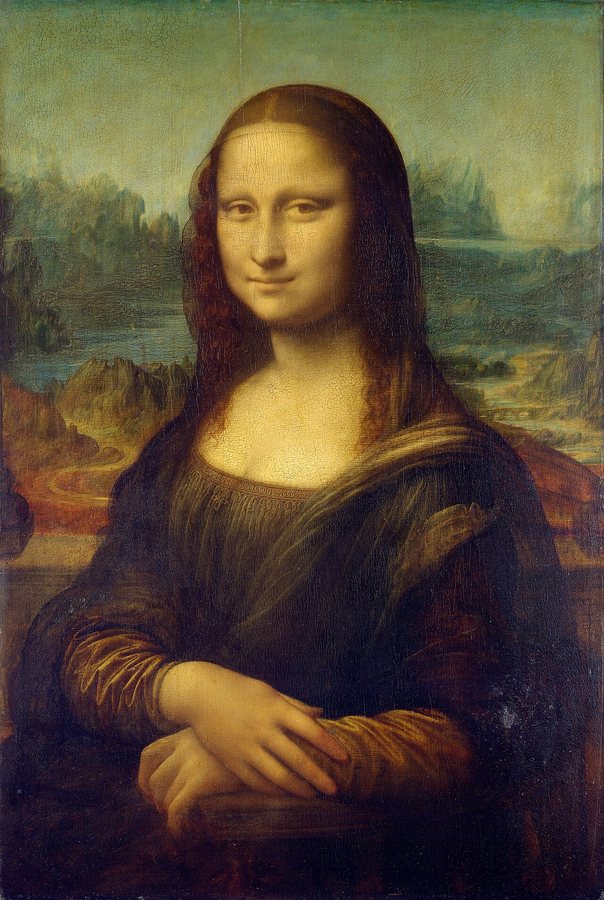
Mona Lisa is a half-length portrait painting by the Italian artist Leonardo da Vinci, regarded as an archetypal masterpiece of the Italian Renaissance. It is painted in oil on a white poplar panel and is traditionally considered to depict the Italian noblewoman Lisa del Giocondo. Its enigmatic expression, monumental composition, subtle modelling of forms and atmospheric illusionism are among its notable qualities. The painting has normally been on display at the Louvre in Paris since 1797.
Subject and origins


The title is based on the presumption that the painting shows Lisa del Giocondo, wife of the Florentine silk merchant Francesco del Giocondo, although her likeness is uncertain. The work is thought to have been commissioned for their new home and to celebrate the birth of their second son. A marginal note dated October 1503 confirmed that Leonardo was working on a portrait of Lisa at that time. Leonardo never gave the painting to the Giocondo family, and it later passed to King Francis I of France.
Fame and theft


The painting's global fame partly stems from its theft in 1911 by Vincenzo Peruggia, who claimed Italian patriotism as his motive. The painting was recovered in 1914, and the case generated unprecedented publicity for an art theft. It inspired many cultural works, including an opera, films and a song recorded by Nat King Cole. The painting is also among the most valuable in the world and holds the record for the highest known painting insurance valuation.