
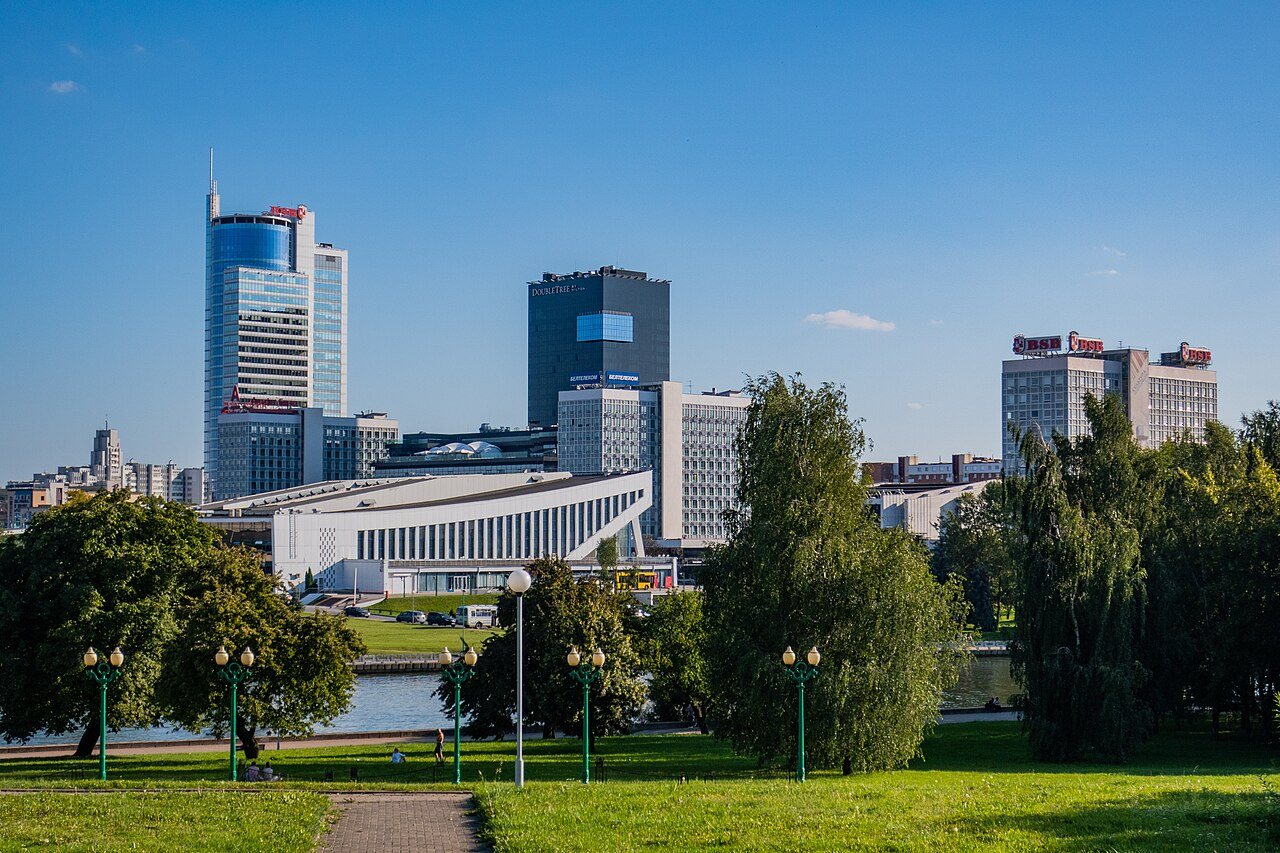
Minsk is the capital and largest city of Belarus, located on the Svislach and the now subterranean Nyamiha rivers. As the capital, it has a special administrative status and serves as the administrative centre of Minsk region and Minsk district. With a population of about two million, it is the 11th-most populous city in Europe, and it is one of the administrative capitals of the Commonwealth of Independent States and the Eurasian Economic Union.
Early and medieval history


Minsk was first mentioned in 1067 in the Primary Chronicle, in connection with a battle on the Nemiga River, and that year is widely accepted as its founding. Originally part of the Principality of Polotsk, it later became the seat of its own principality. It was absorbed into the Grand Duchy of Lithuania in 1242, and received town privileges under Magdeburg law in 1499. In 1569 it became part of the Polish–Lithuanian Commonwealth as the capital of Minsk Voivodeship.
Russian and Soviet rule


Minsk was annexed by the Russian Empire in 1793 following the Second Partition of Poland and became the centre of Minsk Governorate in 1796. After the Russian Revolution, it served from 1919 to 1991 as capital of the Byelorussian Soviet Socialist Republic, which later joined the Soviet Union. Following the dissolution of the Soviet Union, Minsk became the capital of the independent Republic of Belarus.