
Mary, Queen of Scots (1542–1587), also known as Mary Stuart or Mary I of Scotland, ruled Scotland from her infancy until her forced abdication in 1567. The only surviving legitimate child of King James V, she inherited the throne as a six-day-old baby and was raised partly in France, where she became queen consort. Her reign was marked by religious tension, a turbulent marriage and a claim to the English throne, which led to her long imprisonment by Elizabeth I and her execution in 1587.
Childhood and regency


Born at Linlithgow Palace, Mary succeeded her father, who died shortly after her birth. Scotland was governed by regents during her youth, first by the Earl of Arran and later by her mother, Mary of Guise. Plans to marry her to Edward, the son of Henry VIII of England, collapsed amid political conflict, leading to a military campaign known as the Rough Wooing. To keep her safe, she was sent to France, where she was betrothed to the Dauphin Francis.
Personal rule and downfall

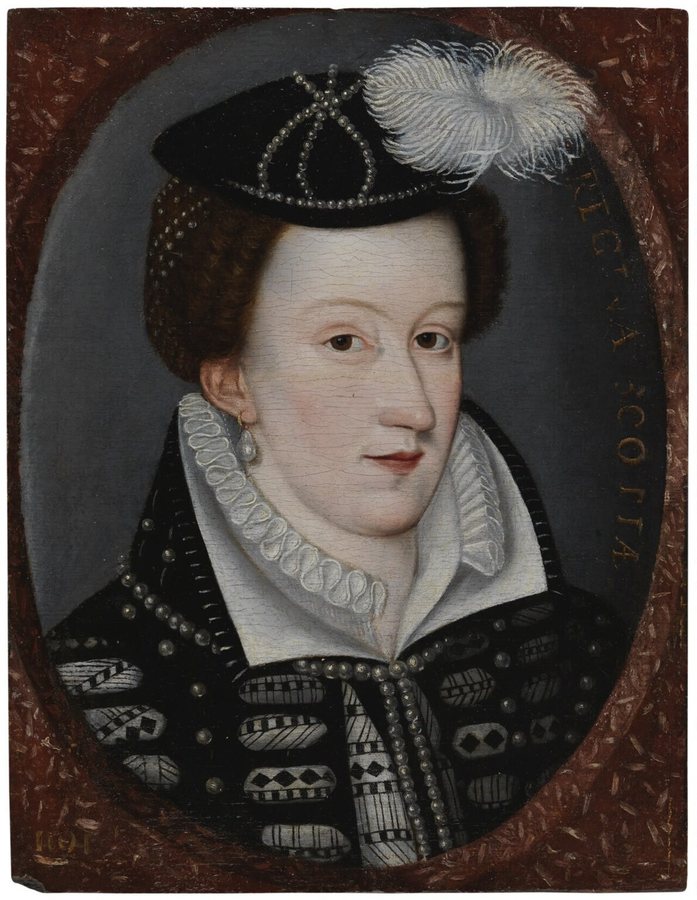


After returning to Scotland in 1561, Mary governed with tolerance and moderation despite deep religious divisions. Her marriage to Lord Darnley ended in violence, and her later union with the Earl of Bothwell provoked an uprising. Imprisoned and forced to abdicate in favour of her infant son, she fled to England, where Elizabeth I held her in captivity for many years before she was tried and executed in 1587.