factograf
EN
Sign in

peruvian, spanish and dominican novelist and writer (1936–2025)

Mario Vargas Llosa

Mario Vargas Llosa

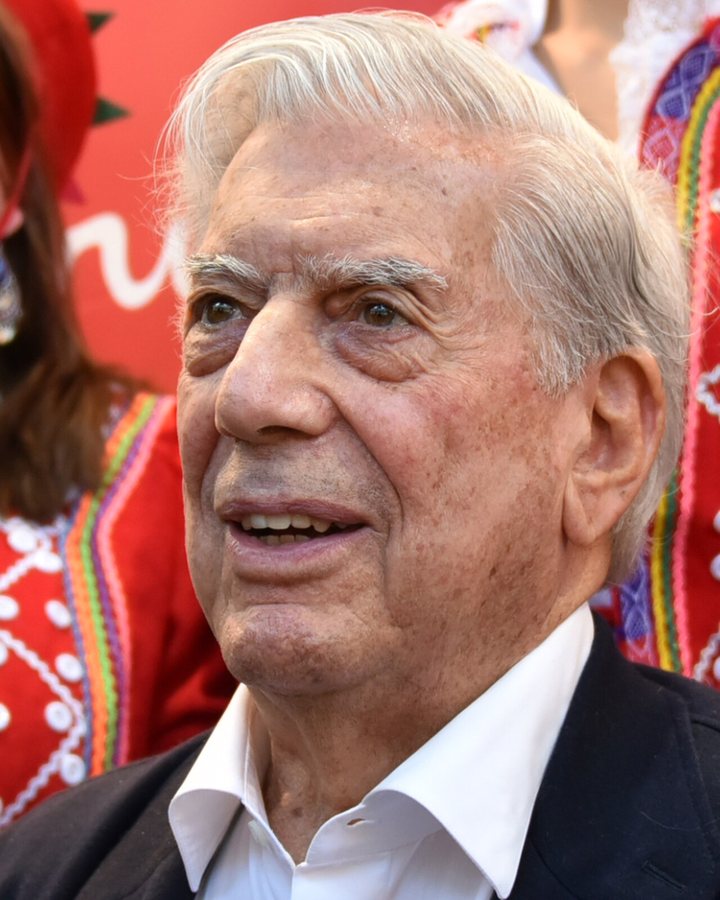
Mario Vargas Llosa was a Peruvian novelist, journalist, essayist and politician who died in 2025. He is widely regarded as one of the most important Latin American novelists of his generation, and some critics consider his international impact greater than that of any other writer of the Latin American Boom. In 2010 he received the Nobel Prize in Literature for his mapping of power structures and his portrayal of individual resistance, revolt and defeat. He also ran unsuccessfully for the Peruvian presidency in 1990.

Early life and career

Vargas Llosa's 1958 thesis Foundations for an Interpretation of Rubén Darío, presented to the National University of San Marcos
Vargas Llosa in 1982
Mario Vargas Llosa with Mexican President Enrique Peña Nieto in 2014
Argentine writer Ernesto Sabato (left) and Mario Vargas Llosa (right) in 1981
Vargas Llosa at the founding event of the Spanish political party UPyD in September 2007
Vargas Llosa (fifth from left) with Peruvian intellectuals and members of the Peruvian Academy of Language at the Raúl Porras Barrenechea Institute, 2011
Vargas Llosa acting in his play Los cuentos de la peste at the Teatro Español, 2015
Vargas Llosa in 2019
Vargas Llosa wearing a cap from Club Universitario de Deportes, the Peruvian football team he supported as a youth
9 images

Born in Arequipa in 1936, Vargas Llosa spent much of his childhood in Bolivia and northern Peru before moving to Lima as a teenager. He worked as a journalist while still young and studied law and literature at the National University of San Marcos. His debut novel, The Time of the Hero, published in 1963, drew on his own time at a Lima military academy and brought him wide attention. His later novels, including The Green House and Conversation in The Cathedral, established his international reputation.

Political views

Mario Vargas Llosa's honorary doctorate from Harvard University
Mario Vargas Llosa's honorary doctorate from the University of Cambridge
Mario Vargas Llosa's honorary doctorate from the National University of San Marcos
Mario Vargas Llosa's bachelor's degree from the National University of San Marcos
Mario Vargas Llosa, Nobel Prize photograph A
Mario Vargas Llosa, Nobel Prize photograph C
Vargas Llosa receiving the Gabriela Mistral Order of Educational and Cultural Merit from President Sebastián Piñera in 2010
Mario Vargas Llosa (2008)
8 images

Vargas Llosa was politically active throughout his life. He first supported the Cuban government of Fidel Castro but grew disillusioned with it, particularly after the imprisonment of the poet Heberto Padilla in 1971. He later described himself as a classical liberal. In the 1990 Peruvian election he led the centre-right Democratic Front and lost to Alberto Fujimori. After leaving direct politics he continued to write and supported right-wing candidates abroad.

In 104 languages

Редакція Factograf · Published October 14, 2026 · Partly based on Wikipedia, CC BY-SA 4.0 · Source article