
Juan Carlos I is a member of the Spanish royal family who reigned as King of Spain from 1975 until his abdication in 2014. Chosen by Francisco Franco as his successor, he helped dismantle the Francoist system and oversaw Spain's transition to democracy. He abdicated in June 2014 in favour of his son, who became Felipe VI. Since August 2020 he has lived in self-imposed exile from Spain over allegedly improper ties to business deals in Saudi Arabia.
Early life and training


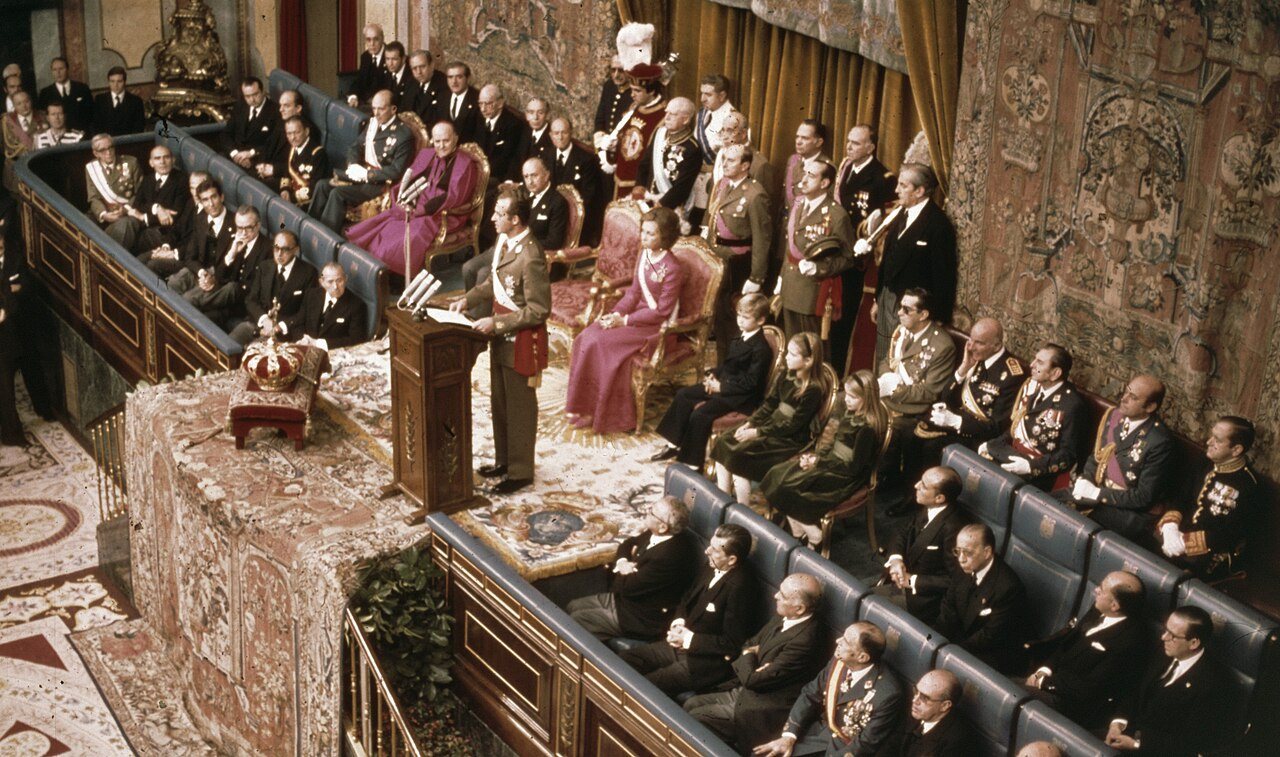
Juan Carlos was born in Rome in 1938 during his family's exile, after the proclamation of the Second Spanish Republic. He grew up largely under the political concerns of his father and of General Franco. He moved to Spain in 1948 for schooling, then joined the army and trained at the Military Academy of Zaragoza. In 1962 he married Princess Sophia of Greece and Denmark. The couple had three children: Elena, Cristina and Felipe.
Transition to democracy


Franco had expected Juan Carlos to continue his legacy, but soon after his accession in 1975 the king introduced reforms to dismantle the Francoist regime. These led to the 1977 general election, the first free election in Spain since 1936, and to the Spanish Constitution of 1978, approved by referendum, which re-established a constitutional monarchy. In 1981 he played a major role in preventing a coup that sought to revert to Francoist government in the king's name.
Later controversies


Hailed for his role in the transition, the king and the monarchy's reputation began to suffer after controversies surrounding his family arose. A public controversy over an elephant-hunting trip he undertook during a time of financial crisis in Spain added to the strain. The New York Times estimated in 2014 that his fortune was around 1.8 billion euros.