factograf
EN
Sign in

queen of Castile and León, and of Aragon by marriage, who co-reigned with Ferdinand II

Isabella I of Castile

Isabella I of Castile

Isabella I of Castile (1451–1504), also known as Isabella the Catholic, was Queen of Castile and León from 1474 until her death. Through her marriage to Ferdinand II of Aragon, she also became Queen of Aragon from 1479. Reigning together over a dynastically unified Spain, the pair are known as the Catholic Monarchs. Her reign marked the end of the Reconquista and the start of the Spanish Empire, which made Spain a major force in European politics.

Early life

Portrait of Isabella I of Castile
Birthplace of Isabella the Catholic, located in the town of Madrigal de las Altas Torres
Isabella's residence in her early years, with her mother and brother
Isabella in the Rimado de la Conquista de Granada, from 1482, by Pedro Marcuello
The wedding portrait of Ferdinand and Isabella, c. 1469
Ferdinand and Isabella
6 images

Isabella was born in Madrigal de las Altas Torres to King John II of Castile and his second wife, Isabella of Portugal. At her birth she stood second in the line of succession, behind her older half-brother Henry, but her brother Alfonso's birth later pushed her to third. After her father died, Henry IV ruled and kept his half-siblings under his care. Their living conditions were often poor, and Isabella was raised with a strong emphasis on religious devotion. Her education included a wide range of subjects, though Henry largely kept her away from the political turmoil of the kingdom.

Civil conflict and succession

The Proclamation of Queen Isabella
Portrait of Isabella at Casa de los Tiros in Granada
Ferdinand and Isabella with their subjects
Statue of Isabella by Felipe Bigarny, in the Capilla Real, Granada
The return of Christopher Columbus, with his audience before King Ferdinand and Queen Isabella
"Will of Isabella I"
6 images

In the 1460s, a faction of nobles grew hostile to Henry and backed Alfonso as a rival king, leading to civil war in 1465. Alfonso's death in 1468 left Isabella as the rebels' candidate. Instead of continuing the fighting, she negotiated the Treaty of Toros de Guisando with Henry, which named her his heir presumptive. The agreement also stated that she would not marry without his consent, though he could not force her into a marriage against her will.

Legacy

Isabella depicted with darker hair, c. 1485
Isabella and Ferdinand with their daughter, Joanna, c. 1482
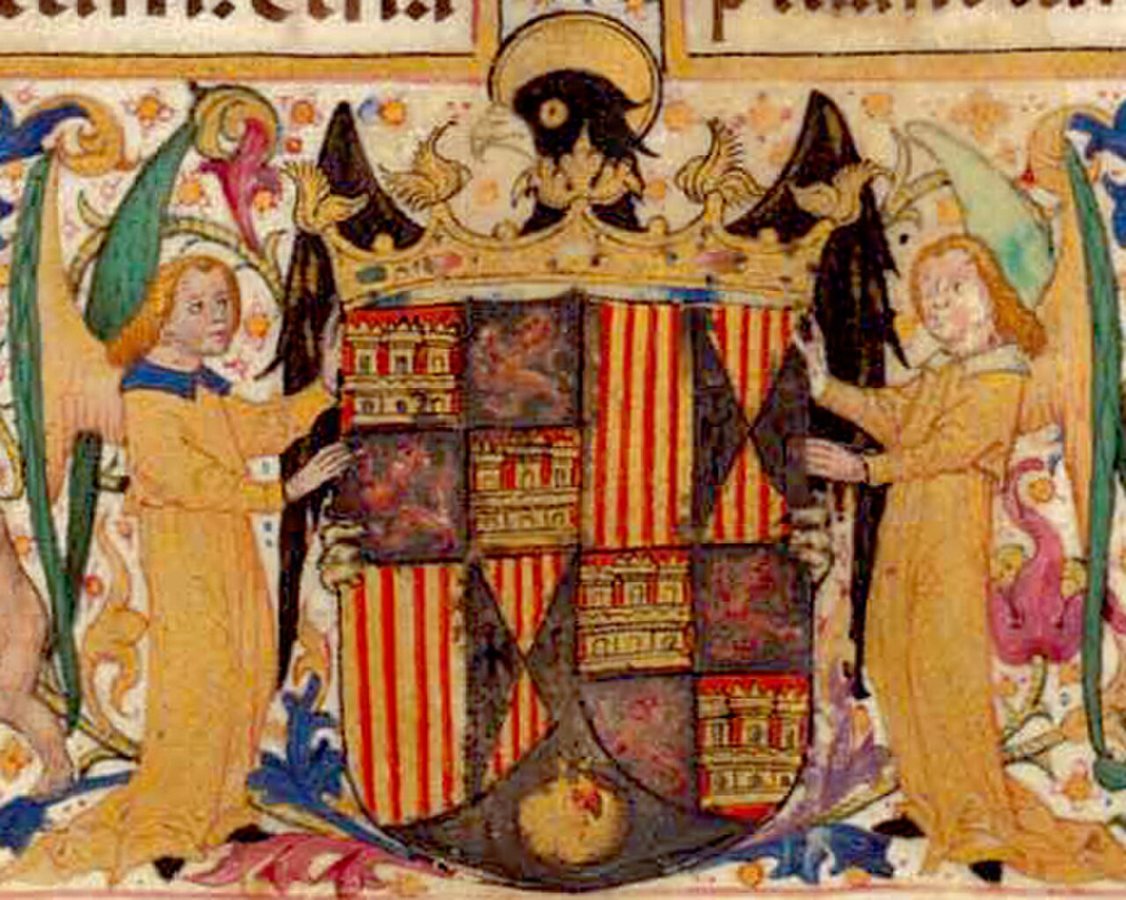
Escudo de Isabel la Católica, c. 1495
Queen Isabella and Christopher Columbus, issue of 1893
Grand Cross of the Order of Isabella the Catholic
5-cent US postage stamp: Columbus soliciting aid of Isabella
6 images

Isabella and Ferdinand's actions included completing the Reconquista, issuing the Alhambra Decree that ordered the expulsion of Jews from Spain, initiating the Spanish Inquisition, and financing Christopher Columbus's 1492 voyage to the New World. Pope Alexander VI granted the couple the title of Catholic Monarchs. Her beatification process was opened in 1958, and in 1974 she was granted the title of Servant of God.

In 93 languages

Редакція Factograf · Published October 14, 2026 · Partly based on Wikipedia, CC BY-SA 4.0 · Source article