factograf
EN
Sign in

president of brazil (1930–1945; 1951–1954)

Getúlio Vargas

Getúlio Vargas

Getúlio Vargas (1882–1954) was a Brazilian military officer, lawyer and politician who served as president of Brazil from 1930 to 1945 and again from 1951 until his suicide in 1954. Historians regard him as the most influential Brazilian politician of the 20th century because of his long and controversial rule, which spanned provisional, constitutional, dictatorial and democratic governments.

Early life and career

Getúlio Vargas's parents, Cândida and Manuel Vargas (O Cruzeiro magazine)
Getúlio Vargas at age 12
Graduation of Getúlio Vargas in 1907
Vargas at age 27 in 1909
President Washington Luís with members of his cabinet in 1926; Vargas, Minister of Finance, is in the second row, first from left.
Vargas visiting Caxias do Sul in 1928
Campaign poster for Vargas, 1929–30
Getúlio Vargas and João Pessoa
8 images

Born in São Borja in Rio Grande do Sul in 1882 to a powerful local family, Vargas briefly served in the Brazilian Army before studying law at Porto Alegre. He began his political career as a district attorney and then became a state deputy. After serving as Minister of Finance under President Washington Luís, he became state president of Rio Grande do Sul, where he introduced many policies.

Rise to power and dictatorship

Vargas (centre) and his wife (right) arriving in Rio de Janeiro
Vargas with members of his cabinet on inauguration day, 3 November 1930
Vargas sipping coffee on a commemorative postcard of an exhibition of the National Coffee Department, taken much later in his first presidency (1942)
A Brazilian factory in 1938, during Vargas's dictatorship
Correio da Manhã AN 447
Recruiting poster for the 1932 Constitutionalist Revolution showing Vargas in the hands of a Bandeirante, calling to "take down the dictatorship"
Vargas's voter registration, October 1934; his date of birth had already been changed to 1883.
7 images

After losing the 1930 presidential election, Vargas came to power through an armed revolution and governed under a provisional presidency until 1934, when he was elected under a new constitution. In 1937 he seized power, beginning the eight-year Estado Novo dictatorship. He led Brazil into World War II on the side of the Allies in 1942. Several revolts against him were suppressed, using methods ranging from mild peace terms to the jailing of political opponents.

Return and final years
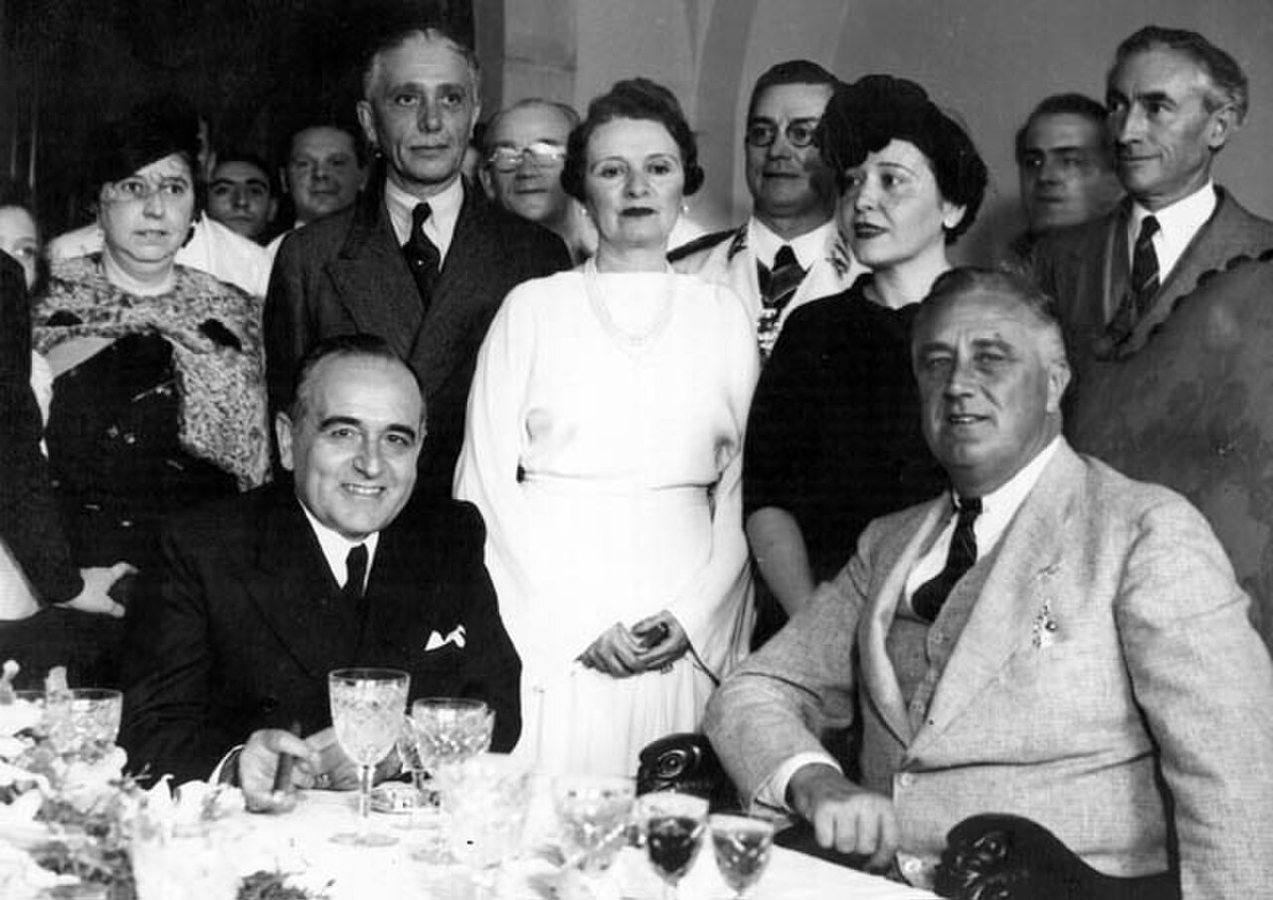
Vargas with U.S. President Franklin D. Roosevelt in 1936
Estado Novo propaganda showing Vargas promoting patriotic education to children, c. 1938
Getúlio Vargas and Italo Balbo in 1931
President Vargas and President Roosevelt aboard the USS Humboldt after a conference, 28 January 1943, with U.S. ambassador to Brazil Jefferson Caffery and Harry Hopkins
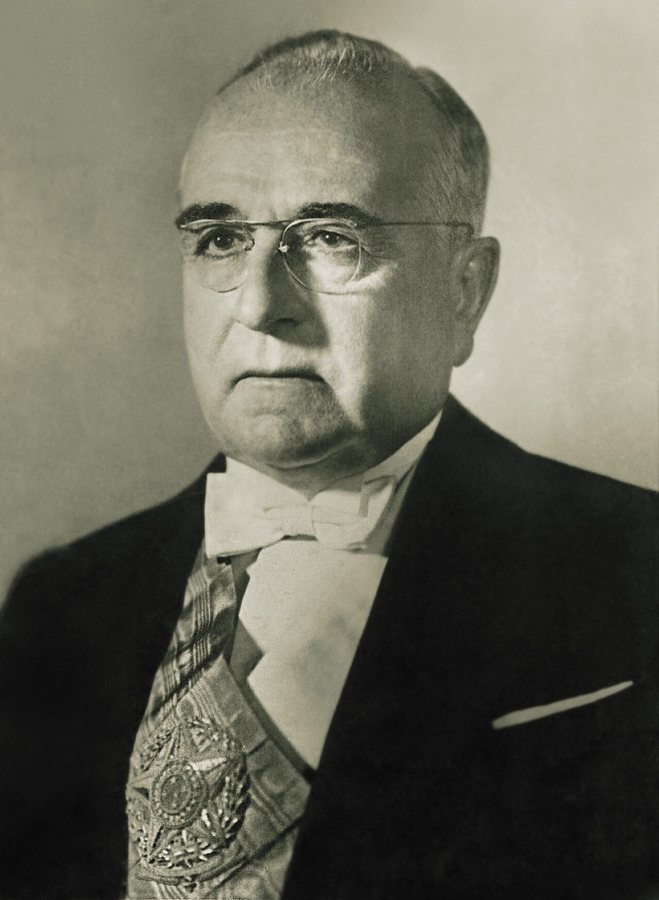
Vargas's official portrait for his second term, 1951
Display at the MHN of the pyjama shirt Vargas wore at the time of his suicide and the revolver he used
Bust of Vargas at the Imperial Museum grounds in Petrópolis
7 images

Ousted in 1945 after fifteen years in power, Vargas returned to the presidency after winning the 1950 general election. A growing political crisis led to his suicide in 1954, which brought his second presidency to an early end.

In 74 languages

Редакція Factograf · Published October 14, 2026 · Partly based on Wikipedia, CC BY-SA 4.0 · Source article