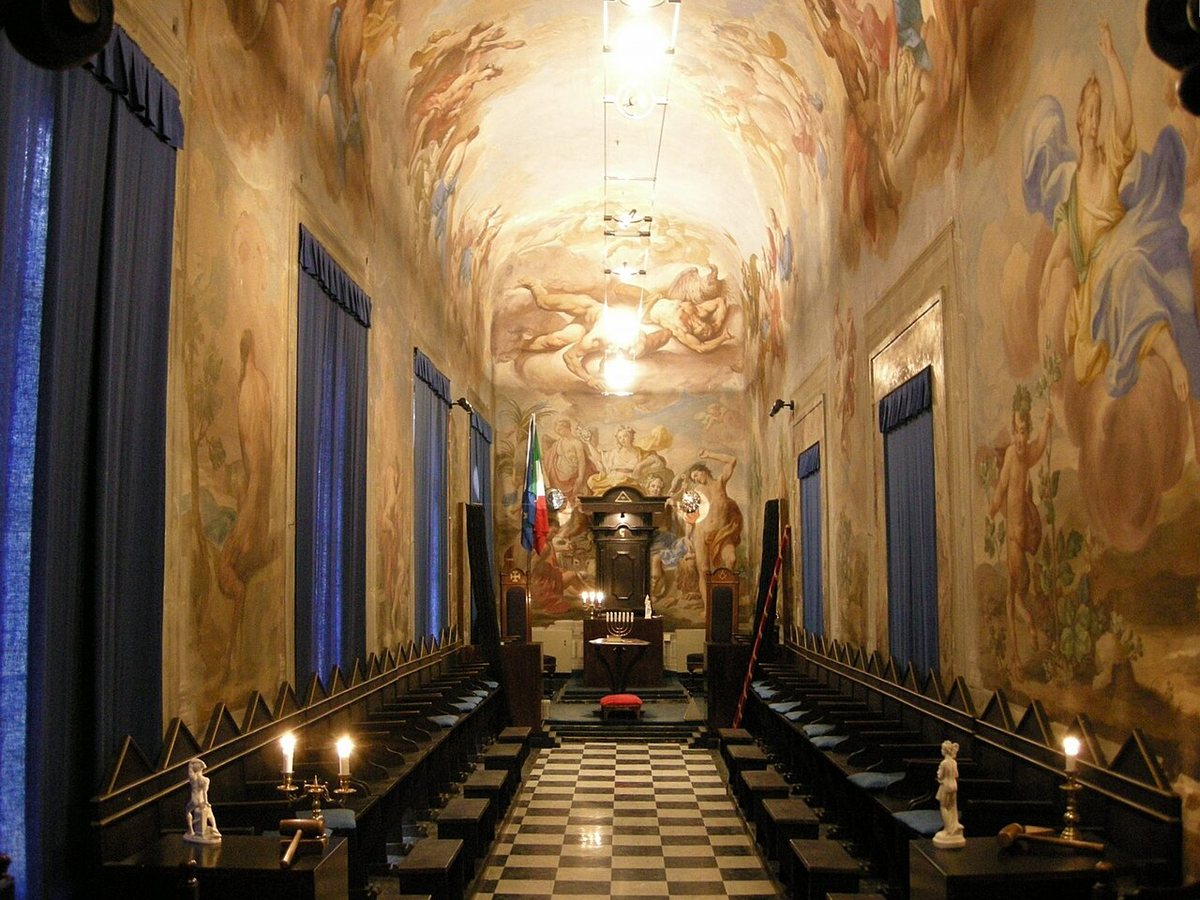
Freemasonry consists of fraternal groups that trace their origins to medieval guilds of stonemasons. It is considered the oldest existing secular fraternal organisation, with documents and traditions dating back to the 14th century. A primary purpose of Freemasonry is charity, and its members meet in local units called lodges. Modern Freemasonry includes Regular, Liberal or Continental, and Women's and Mixed-Gender branches, which differ in their membership rules and recognition of one another.
Lodges and Degrees


The Masonic lodge is the basic organisational unit of Freemasonry, usually supervised at the regional level by a Grand Lodge or Grand Orient. Lodges handle routine business, host ceremonies, and organise social and charitable events. Members advance through three degrees, Entered Apprentice, Fellowcraft, and Master Mason, each involving obligations, symbols and secret gestures. These three degrees form Craft Freemasonry, and further degrees are offered by separately administered bodies.
Criticism and Opposition


Freemasonry has faced criticism and opposition on religious, moral and political grounds throughout its history. The Catholic Church, some Protestant denominations and certain Islamic countries or entities have opposed membership or banned it. Some opposition has been rooted in antisemitism or conspiracy theories, and Freemasons have been persecuted by authoritarian states.