
The Cultural Revolution, formally the Great Proletarian Cultural Revolution, was a sociopolitical movement in the People's Republic of China launched by Mao Zedong, chairman of the Chinese Communist Party, in 1966. It lasted until his death in 1976. Its stated goal was to advance Chinese communism by purging remnants of capitalist and traditional elements from society and government. Mass upheaval, led largely by young Red Guards, spread across the country, and the period was marked by violence, chaos and widespread persecution.
Origins and early phase


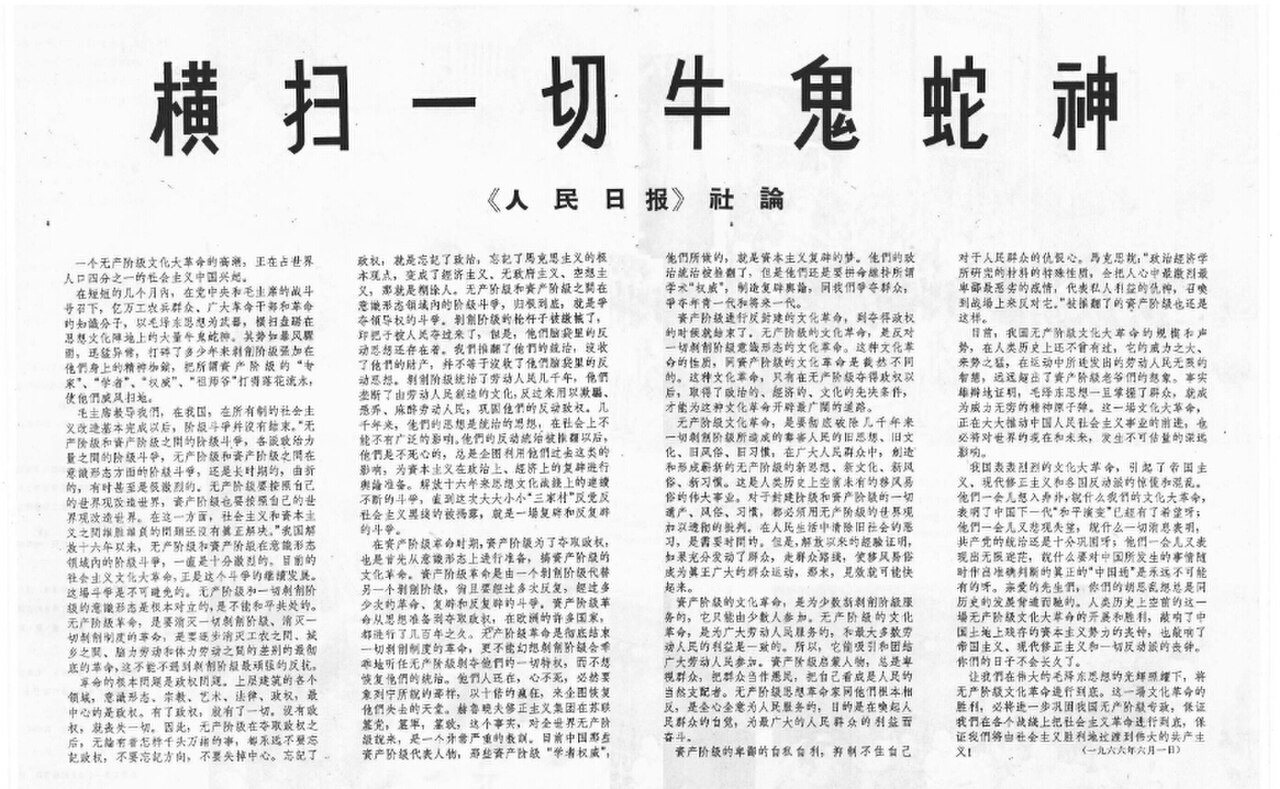


Mao argued in May 1966 that bourgeois elements had infiltrated government and society with the aim of restoring capitalism, and he urged young people to attack the party leadership. Unrest began in Beijing that summer and Red Guard groups formed across China. In 1967 radicals seized power from local governments and party branches and set up revolutionary committees, which often split into rival factions that fought one another. The Gang of Four rose to influence in 1972, and the movement continued until Mao's death.
Human cost and aftermath


Estimates of the death toll range from 1 to 2 million people. Tens of millions were persecuted, including senior officials such as Liu Shaoqi and Deng Xiaoping, and millions were targeted for their class background. Schools and universities closed, and historical and religious sites were destroyed. In 1978 Deng Xiaoping became paramount leader and began reform and opening up. In 1981 the Chinese Communist Party acknowledged the movement's failures, and it is still remembered in varied and complex ways in China.