factograf
EN
Sign in

1947–1991 tension between the Soviet Union and the United States and their respective allies

Cold War

Cold War

The Cold War was a period of geopolitical rivalry between the United States and the Soviet Union and their allies, the capitalist Western Bloc and the communist Eastern Bloc. It began after the Second World War and ended with the dissolution of the Soviet Union in 1991. The two superpowers never fought each other directly, but they backed opposing sides in regional conflicts known as proxy wars. The rivalry extended into an arms race, the Space Race, espionage, propaganda, embargoes and sports diplomacy.

Origins and division

Remains of the "Iron Curtain" in the Czech Republic, 2014
Map of Cold War military alliances in Europe
Map of Cold War economic alliances in Europe
Map of Cold War-era Europe and the Near East showing countries that received Marshall Plan aid, with red columns showing the relative amount of total aid received per nation.
American C-47 aircraft unloading at Berlin Tempelhof Airport during the Berlin Blockade
President Truman signs the North Atlantic Treaty with guests in the Oval Office
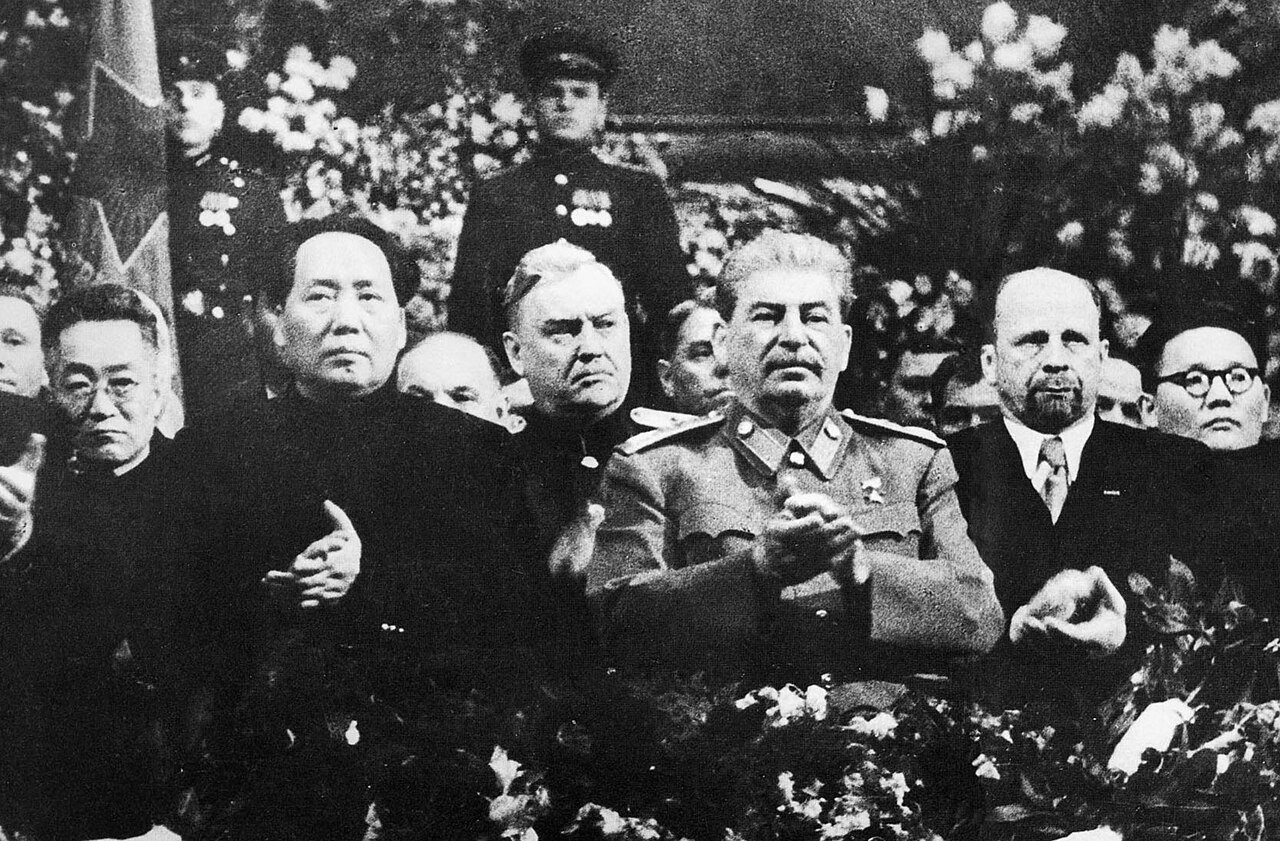
Mao Zedong and Joseph Stalin in Moscow, December 1949
General Douglas MacArthur, UN Command commander, observes the naval shelling of Incheon, Korea from USS Mt. McKinley, 15 September 1950
US Marines engaged in street fighting during the liberation of Seoul, September 1950
From left: Soviet head of state Kliment Voroshilov, Soviet first secretary Nikita Khrushchev and Finnish president Urho Kekkonen in Moscow in 1960
Kossuth Lajos Street seen from Ferenciek Square, afternoon of 25 October 1956
A destroyed tank at Móricz Zsigmond Circus during the Hungarian Revolution
12 images

Tensions between the wartime Allies grew after the death of Franklin D. Roosevelt in 1945, as his successor Harry Truman adopted a harder diplomatic line. Disputes over the Polish government and the United Nations deepened the rift. By 1949 the Soviet Union had installed satellite governments in Eastern Europe and North Korea, dividing Europe and Germany by an Iron Curtain. The Truman Doctrine of containment, the Marshall Plan and the founding of NATO and the Warsaw Pact formalized the division into two rival blocs.

Crises and détente

US President Richard Nixon shakes hands with Chinese Premier Zhou Enlai at Beijing Capital International Airport
Soviet official Nikolai Podgorny visits Tampere, Finland, on 16 October 1969
Leonid Brezhnev and Jimmy Carter sign the SALT II arms limitation treaty in Vienna on 18 June 1979
Iranian people protest against the Pahlavi dynasty during the Iranian Revolution
Protest in Amsterdam against the deployment of Pershing II missiles in Europe, 1981
The Soviet invasion during Operation Storm-333 on 26 December 1979
President Reagan meets Afghan mujahideen leaders at the White House, 1983
President Reagan and Prime Minister Margaret Thatcher at a working luncheon at Camp David, December 1984
Delta 183 launch vehicle lifts off carrying the Strategic Defense Initiative sensor experiment "Delta Star"
Mikhail Gorbachev in one-to-one discussions with US President Ronald Reagan
Mikhail Gorbachev and Ronald Reagan sign the INF Treaty at the White House, 1987
The beginning of the 1990s brought a thaw in relations between the superpowers
12 images

Early confrontations included the Berlin Blockade and the Korean War, which ended in a stalemate. The Cuban Missile Crisis of 1962 is widely considered the closest the conflict came to nuclear war. In the 1970s a period of détente brought diplomatic contacts with China and treaties limiting nuclear arsenals. Renewed tensions followed in 1979, before Mikhail Gorbachev expanded political freedoms in the Soviet Union in 1985, contributing to the revolutions of 1989 in Eastern Europe and the collapse of the Soviet Union in 1991.

In 178 languages

EnglishČeštinaDeutschEspañolFrançaisItaliano日本語PolskiPortuguêsРусскийУкраїнська中文AfrikaansShqipአማርኛOboloAngikaAragoneseالعربيةMoroccan ArabicEgyptian ArabicAsturianuঅসমীয়াAymaraAzbAzərbaycanBalineseBavarianbat-smgБашҡортBikolБеларускаяБългарскиBlkবাংলাBrezhonegBosanskiBtmБуряадCatalàНохчийнکوردیی ناوەندیCorsicanCrimean TatarЧӑваш чӗлхиCymraegDanskZazaΕλληνικάEmlEsperantoEestiEuskaraExtremaduranفارسیfiu-vroSuomiFøroysktNorthern FrisianFurlanFryskGan ChineseGaeilgeGcrGàidhligGalegoGuaraniHakka ChineseHausaעבריתFiji Hindiहिन्दीHrvatskiHornjoserbšćinaHaitian CreoleMagyarՀայերենInterlinguaBahasa IndonesiaIlokoIngushIdoIsvÍslenskaJamaican Creole EnglishJawaKara-KalpakTaqbaylitJjuქართულიKbpҚазақшаខ្មែរಕನ್ನಡ한국어Karachay-BalkarKurdî (kurmancî)KernewekКыргызчаLadinoLatinLëtzebuergeschLezghianLimburgishLldLombardລາວLietuviųLatviešuMokshaMalagasyМакедонскиമലയാളംМонголMnwमराठीMelayuMirandeseမြန်မာمازرونیNeddersass’sch (Nedderlannen)Neddersass’schनेपालीNewariNederlandsNorsk nynorskNorskNrmOccitanИронPapiamentoਪੰਜਾਬੀPicardPiemontèisWestern PanjabiپښتوRumantschRomanyRomânăСаха тылаSicilianuScotsSarduسنڌيSrpski (latinica)සිංහලSlovenčinaSlovenščinaSoomaaliShqipСрпскиSaterland FrisianBasa SundaSvenskaKiswahiliதமிழ்తెలుగుТоҷикӣไทยTürkmen diliFilipinoTalyshToki ponaTürkçeТатарئۇيغۇرچەاردوO‘zbekVenetoVepsTiếng ViệtWarayWu ChineseMingrelianייִדישVahcuenghZeelandiczh-yue

Редакція Factograf · Published October 14, 2026 · Partly based on Wikipedia, CC BY-SA 4.0 · Source article