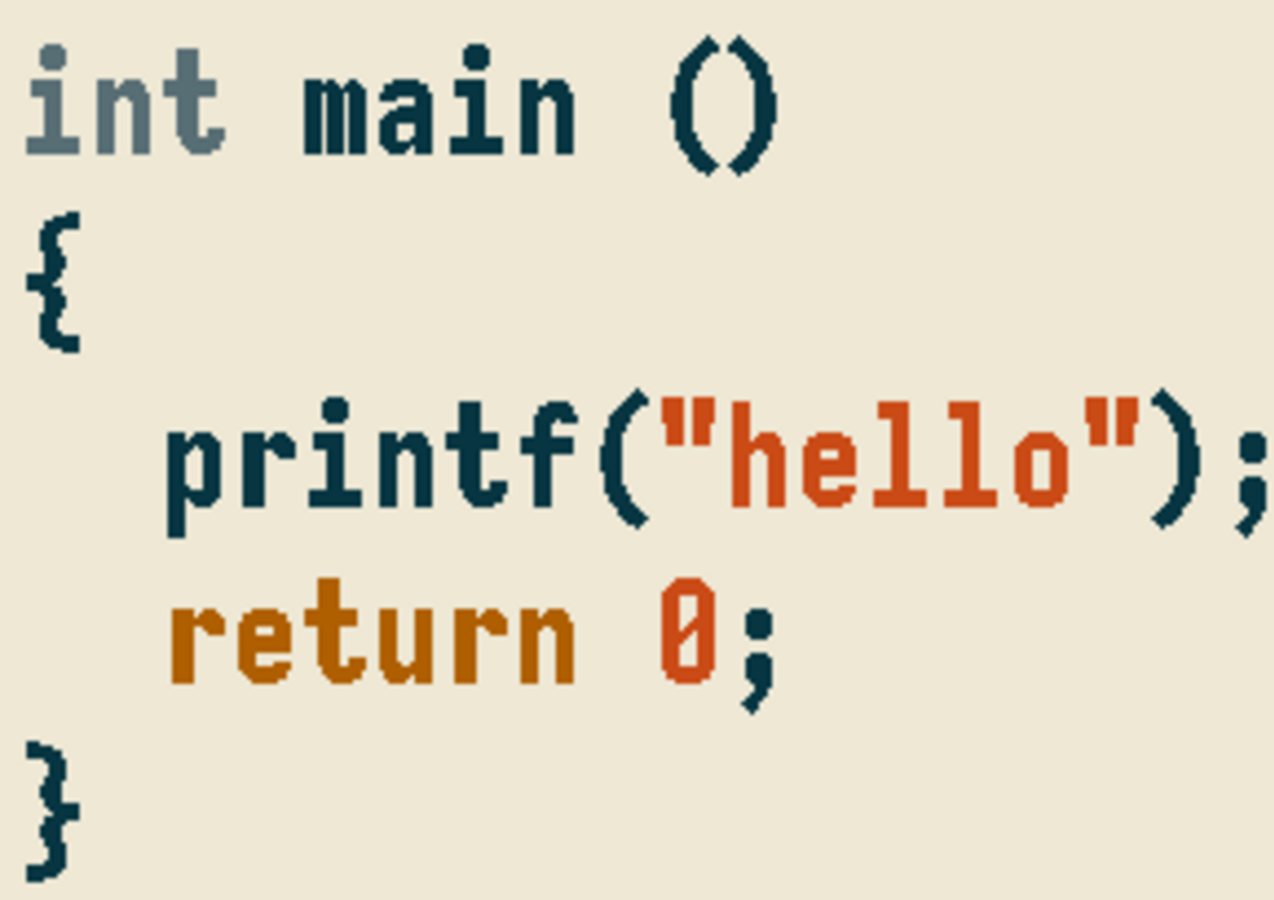
C is a general-purpose programming language created in 1972 by Dennis Ritchie. It gives programmers relatively direct access to the features of typical CPU architectures, and it is used on everything from supercomputers to microcontrollers. It has long been used to build operating system kernels, device drivers and protocol stacks, although its use in application software is declining.
Origins and standardization

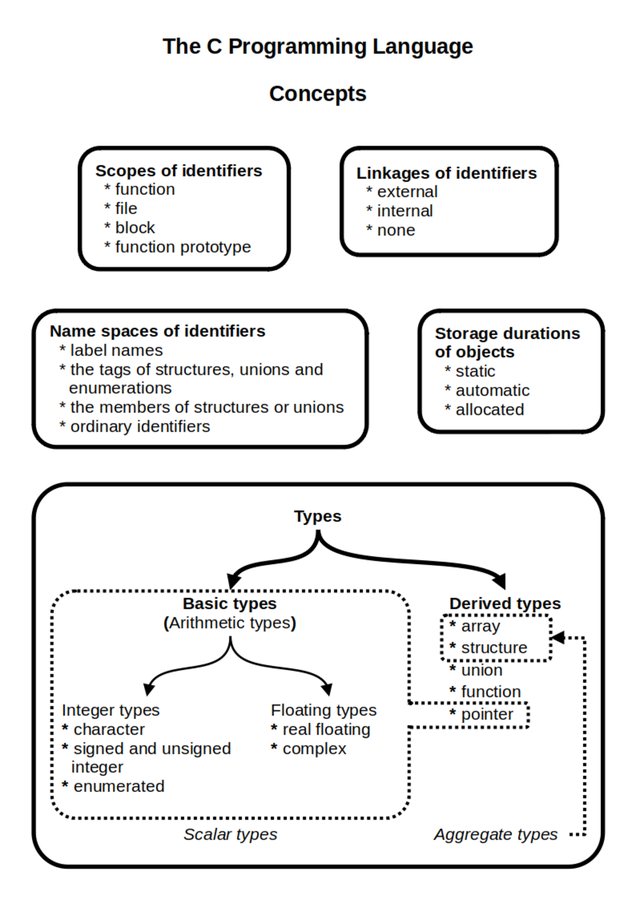
Ritchie developed C at Bell Labs between 1972 and 1973 as a successor to the B language. It was first used to write utilities for Unix and was later used to re-implement the Unix kernel. During the 1980s it spread widely, with compilers available for nearly all modern systems. The book The C Programming Language, co-written by its designer, long served as the de facto standard. Since 1989 the language has been standardized by ANSI and later jointly by ISO and IEC.
Design and features


C is an imperative procedural language that supports structured programming, lexical scope and recursion, with a static type system. Its core language is small, and features such as input and output, string handling and mathematical functions come from standard libraries. Programs written with portability in mind can be compiled for many platforms with few source changes. Features absent from the language, such as object orientation and garbage collection, can be added through external libraries.