
Angela Merkel (born 1954) is a German stateswoman and retired politician who served as Chancellor of Germany from 2005 to 2021. She was the first woman to hold the office and the first former East German to do so. She also led the Christian Democratic Union (CDU) from 2000 to 2018, and she was Leader of the Opposition from 2002 to 2005. Before entering politics she worked as a research scientist in quantum chemistry.
Early life and career
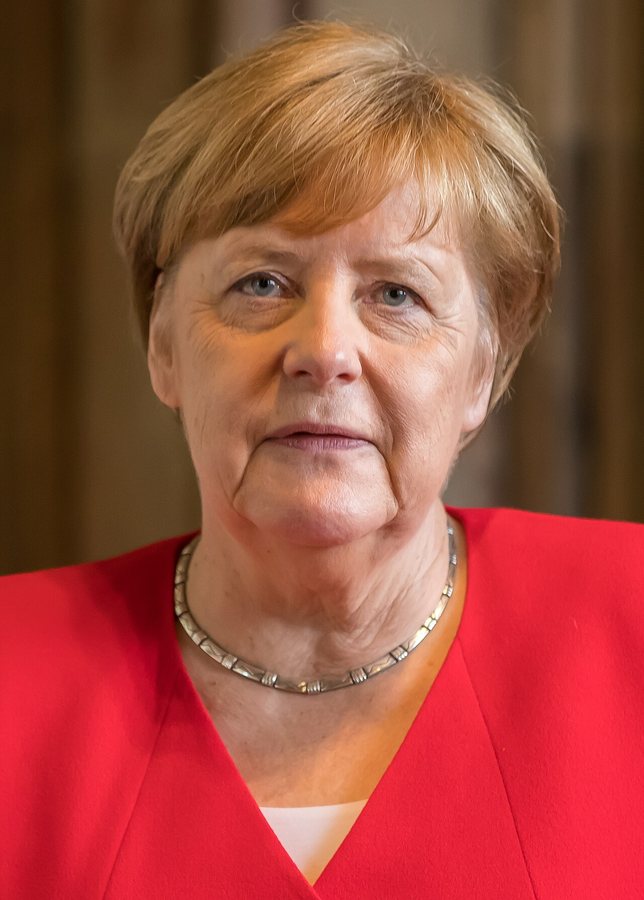


Merkel was born Angela Dorothea Kasner in Hamburg, in West Germany, but her family moved to East Germany when she was an infant, after her father accepted a church post there. She grew up in the countryside north of East Berlin and joined the communist Free German Youth movement in 1968. She earned a doctorate in quantum chemistry in 1986 and worked as a research scientist until 1989. Her family background includes German and Polish ancestry, a fact that became better known after a 2013 biography.
Rise to power


After the Revolutions of 1989, Merkel entered politics and briefly served as deputy spokeswoman for East Germany's first democratically elected government. Following German reunification in 1990, she won a seat in the Bundestag and became a protégée of Chancellor Helmut Kohl, serving in several federal ministers' posts. She was elected general secretary of the CDU after the party lost the 1998 federal election, and two years later she became its first female leader.
Chancellorship and legacy


Merkel was elected chancellor after the 2005 federal election, leading a grand coalition, and she was the first chancellor of reunified Germany raised in the former East. Her governments dealt with the 2008 financial crisis and the euro area crisis, and her domestic policies included a programme to develop renewable energy and phase out nuclear power. After the 2022 Russian invasion of Ukraine, her relations with Russia and Germany's economic dependence on Russia came under increased scrutiny.