factograf
EN
Sign in

king of Macedonia and conqueror of Achaemenid Persia (356–323 BC)

Alexander the Great

Alexander the Great

Alexander the Great was king of the ancient Greek kingdom of Macedon from 336 BC until his death in 323 BC. Son of Philip II, he came to the throne at 20 after his father was assassinated. Over roughly a decade of campaigning across Asia and Egypt, he built one of the largest empires of the ancient world, reaching from Greece to northwestern India. He was undefeated in battle and is widely regarded as one of history's most successful military commanders.

Early life and education
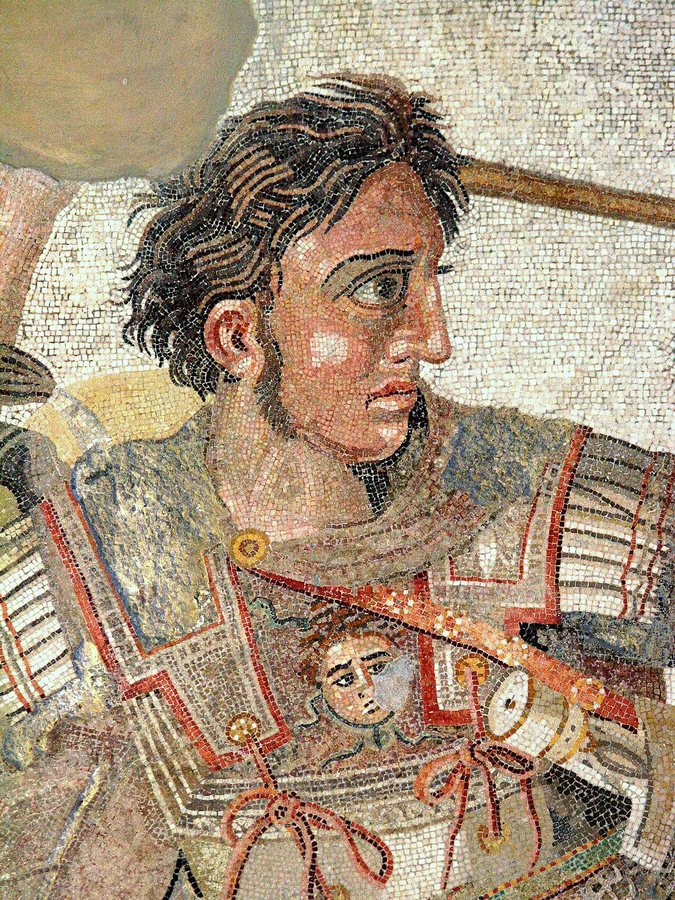
Detail of Alexander the Great from the Alexander Mosaic, cropped
Archaeological site of Pella, Greece, Alexander's birthplace
Roman medallion depicting Olympias, Alexander's mother
Philip II of Macedon, Alexander's father
Battle plan from the Battle of Chaeronea
Pausanias assassinates Philip II, Alexander's father, during his procession into the theatre
The Macedonian phalanx at the Battle of the Carts against the Thracians in 335 BC
Map of Alexander's empire and his route
Alexander Cuts the Gordian Knot by Jean-Simon Berthélemy (1767)
Name of Alexander in Egyptian hieroglyphs, written right to left, c. 332 BC, Egypt, Louvre Museum
Entry of Alexander into Babylon by Charles Le Brun (1665)
Site of the Persian Gate in modern-day Iran; the road was built in the 1990s
12 images

Alexander was born in Pella, the capital of Macedon, in 356 BC to Philip II and his fourth wife, Olympias. Legends about his birth and childhood, including stories of divine parentage, were later told about him. He was tutored by the philosopher Aristotle until the age of 16, and he was raised in the manner of noble Macedonian youths, learning to read, ride, fight and hunt.

Conquests and empire

Alexander's invasion of the Indian subcontinent
The Siege of Aornos by Andre Castaigne, painted 1899
The Phalanx Attacking the Centre in the Battle of the Hydaspes by André Castaigne (1898–1899)
The Victory of Alexander over Porus by Charles-André van Loo (1705–1765)
Asia in 323 BC: the Nanda Empire and the Gangaridai of the Indian subcontinent in relation to Alexander's empire and neighbours
Alexander at the Tomb of Cyrus the Great by Pierre-Henri de Valenciennes (1796)
A Babylonian astronomical diary (c. 323–322 BC) recording the death of Alexander, British Museum, London
19th-century depiction of Alexander's funeral procession, based on the description by Diodorus Siculus
Detail of Alexander on the Alexander Sarcophagus
Kingdoms of the Diadochi in 301 BC: the Ptolemaic Kingdom, the Seleucid Empire, the Kingdom of Lysimachus, and the Kingdom of Macedon, with the Roman Republic, the Carthaginian Republic and the Kingdom of Epirus
Alexander, wearing a kausia and fighting an Asiatic lion with his friend Craterus, late 4th century BC mosaic, Pella Museum
The Battle of Issus, 333 BC
12 images

Shortly after becoming king, Alexander secured control of the Balkans and took over leadership of the League of Corinth. In 334 BC he invaded the Achaemenid Persian Empire, winning decisive battles at Issus and Gaugamela and eventually overthrowing Darius III. He later invaded India, defeating the king Porus at the Battle of the Hydaspes, before his troops forced him to turn back. He died in Babylon in 323 BC.

Legacy

Alexander cameo by Pyrgoteles
Fresco depicting a hunt scene at the tomb of Philip II at Aigai, one of the few known artistic depictions of Alexander securely made during his lifetime, 330s BC
Stag Hunt Mosaic, the figure on the right possibly being Alexander, while the figure on the left wields a double-headed axe, likely alluding to Hephaistos and possibly his general Hephaestion
Mural in Pompeii depicting the marriage of Alexander to Stateira in 324 BC, the couple apparently dressed as Ares and Aphrodite
Alexander and his general Hephaestion, at the Getty Villa
World map by Eratosthenes (276–194 BC), using information from the campaigns of Alexander and his successors
Dedication of Alexander the Great to Athena Polias at Priene, now in the British Museum
Alexander's empire was the largest state of its time, covering approximately 5.2 million square km
Standing Buddha from Gandhara in Greco-Buddhist style, 1st to 2nd century AD, northern Pakistan, Tokyo National Museum
Medallion produced in Imperial Rome, demonstrating the influence of Alexander's memory, Walters Art Museum, Baltimore
Alexander in a 14th-century Armenian manuscript
Alexander in a 14th-century Byzantine manuscript
12 images

After his death, his empire fragmented in civil wars among his successors, and his death marks the conventional start of the Hellenistic period. He founded more than twenty cities, the most prominent being Alexandria in Egypt, and the spread of Greek culture he encouraged influenced regions as far east as India. He also became a legendary figure, and his tactics remain studied in military academies worldwide.

In 218 languages

EnglishČeštinaDeutschEspañolFrançaisItaliano日本語PolskiPortuguêsРусскийУкраїнська中文AbkhazianAcehneseAdygheAfrikaansShqipአማርኛOld EnglishOboloAngikaAragoneseAramaicالعربيةMoroccan ArabicEgyptian ArabicAsturianuঅসমীয়াAvaricAwadhiAzbAzərbaycanBalinesebat-smgБашҡортBikolБеларускаяBetawiБългарскиBhojpuriবাংলাBrezhonegBosanskiBtmБуряадCatalàCdoCebuanoНохчийнکوردیی ناوەندیCorsicanCrimean TatarKashubianChurch SlavicЧӑваш чӗлхиCymraegDanskZazaΕλληνικάEmlEsperantoEestiEuskaraExtremaduranفارسیfiu-vroSuomiFøroysktNorthern FrisianFurlanFryskGagauzGan ChineseGaeilgeGcrGàidhligGalegoGuaraniकोंकणीGothicગુજરાતીGuwHakka ChineseHausaעבריתFiji Hindiहिन्दीHrvatskiHornjoserbšćinaHaitian CreoleMagyarՀայերենHywInterlinguaBahasa IndonesiaInterlingueIlokoIdoIsvÍslenskaJamaican Creole EnglishJawaKara-KalpakTaqbaylitJjuქართულიKabardianKbpTyapKgeҚазақшаខ្មែរKanuriಕನ್ನಡ한국어کٲشُرKurdî (kurmancî)KernewekКыргызчаLadinoLatinLezghianLingua Franca NovaLigureLimburgishLldLombardລາວLietuviųLatviešuMadureseमैथिलीMokshaMalagasyMinangkabauМакедонскиമലയാളംМонголमराठीMelayuMaltiMirandeseမြန်မာمازرونیNeapolitanNeddersass’sch (Nedderlannen)Neddersass’schनेपालीNewariNederlandsNorsk nynorskNorskOccitanOloଓଡ଼ିଆИронਪੰਜਾਬੀPiemontèisWestern PanjabiپښتوRunasimiRkiRomanyroa-rupRomânăRusynСаха тылаᱥᱟᱱᱛᱟᱲᱤसंस्कृत भाषाSicilianuScotsSarduسنڌيSrpski (latinica)සිංහලSkrSlovenčinaSlovenščinaAnarâškielâChiShonaSoomaaliShqipСрпскиSaterland FrisianSvenskaKiswahiliŚlōnskiSzyதமிழ்TuluతెలుగుТоҷикӣไทยTürkmen diliFilipinoTalyshToki ponaTok PisinTürkçeТатарТываUdmurtئۇيغۇرچەاردوO‘zbekVenetoVepsTiếng ViệtVolapükWarayWu ChineseIsiXhosaMingrelianייִדישÈdè YorùbáVahcuenghZeelandiczh-yue

Редакція Factograf · Published October 14, 2026 · Partly based on Wikipedia, CC BY-SA 4.0 · Source article