
Albert Einstein (1879–1955) was a German-born theoretical physicist best known for developing the theory of relativity. He also made important contributions to quantum theory, and his mass–energy equivalence formula E = mc², which arises from special relativity, has been called the world's most famous equation. He received the 1921 Nobel Prize in Physics for his services to theoretical physics and his discovery of the law of the photoelectric effect.
Early life and education
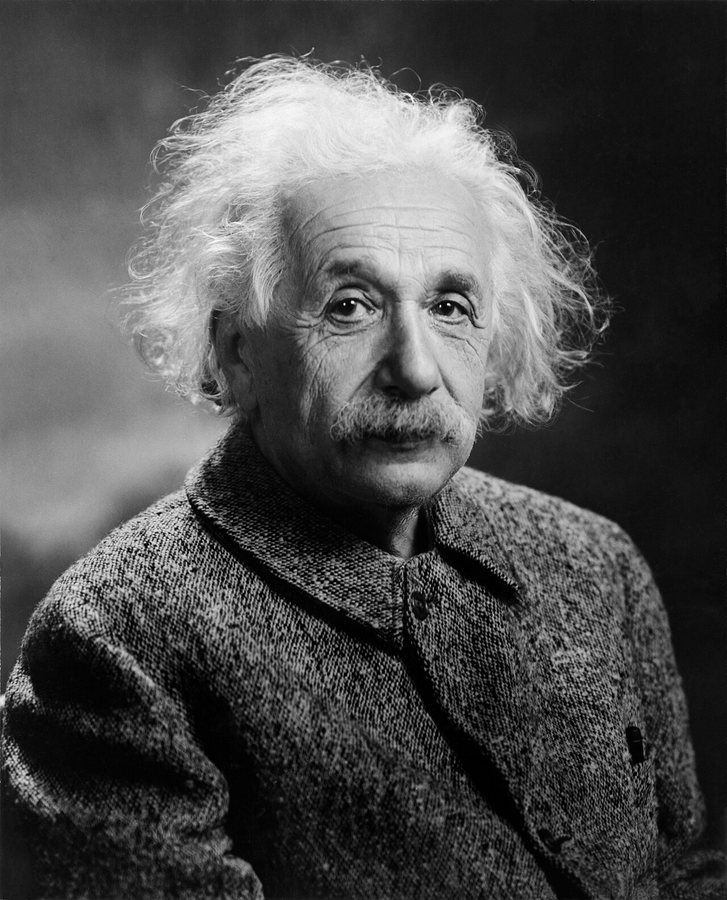


Born in Ulm in the Kingdom of Württemberg, part of the German Empire, Einstein grew up in Munich and later Pavia, where his family moved after their electrical business failed. He excelled at mathematics and physics from an early age, teaching himself algebra, calculus and Euclidean geometry as a child. He moved to Switzerland in 1895, gave up his German citizenship the following year, and later gained Swiss citizenship, holding it for the rest of his life.
Scientific breakthroughs


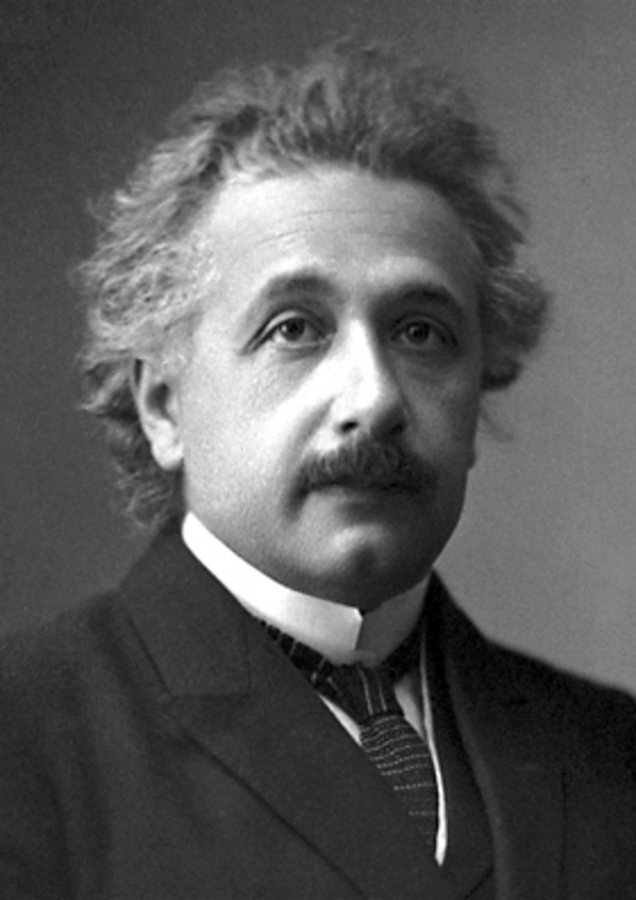


In 1905, sometimes described as his miracle year, Einstein published four groundbreaking papers covering the photoelectric effect, Brownian motion, special relativity, and the equivalence of mass and energy. In 1915 he proposed the general theory of relativity, which extended his work to gravitation. His later research included contributions to statistical mechanics and quantum theory, while his efforts toward a unified field theory and his objections to quantum randomness left him increasingly isolated from mainstream physics.
Later years


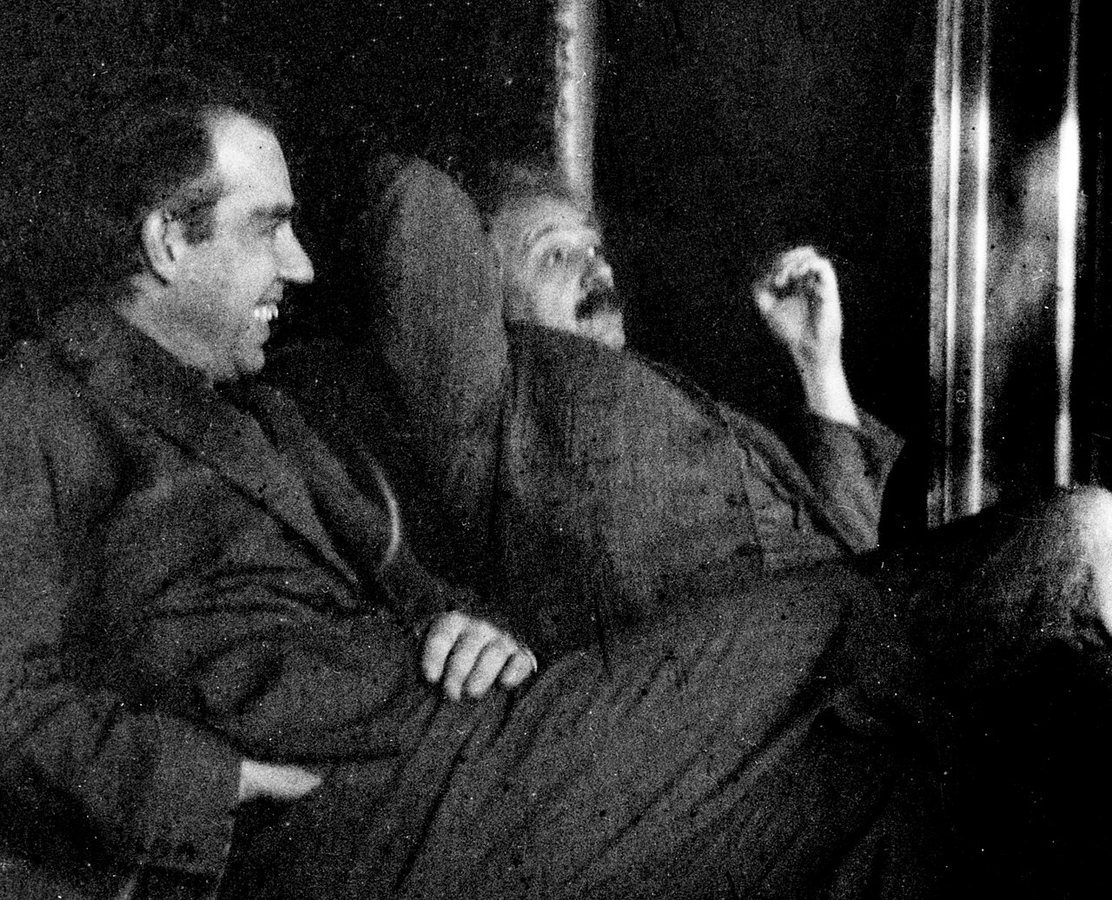


After the Nazis came to power in 1933, Einstein, horrified by the persecution of Jews, remained in the United States and became an American citizen in 1940. Shortly before World War II, he endorsed a letter to President Franklin D. Roosevelt warning of a possible German nuclear weapons program, which helped lead to the Manhattan Project. Many things are named after him, including the element einsteinium, and in 1999 he was named Time's Person of the Century.