factograf
EN
Sign in

fourth-largest city in Russia and administrative center of the Ural Federal District

Yekaterinburg

Yekaterinburg

Yekaterinburg is the administrative centre and largest city of Sverdlovsk Oblast and the Ural Federal District in Russia. Located on the Iset River between the Volga-Ural region and Siberia, it has about 1.5 million residents and up to 2.2 million in its urban agglomeration. It is the fourth most populous city in Russia and one of the country's main cultural and industrial centres, often called the "third capital of Russia" after Moscow and Saint Petersburg.

Founding and Imperial Era
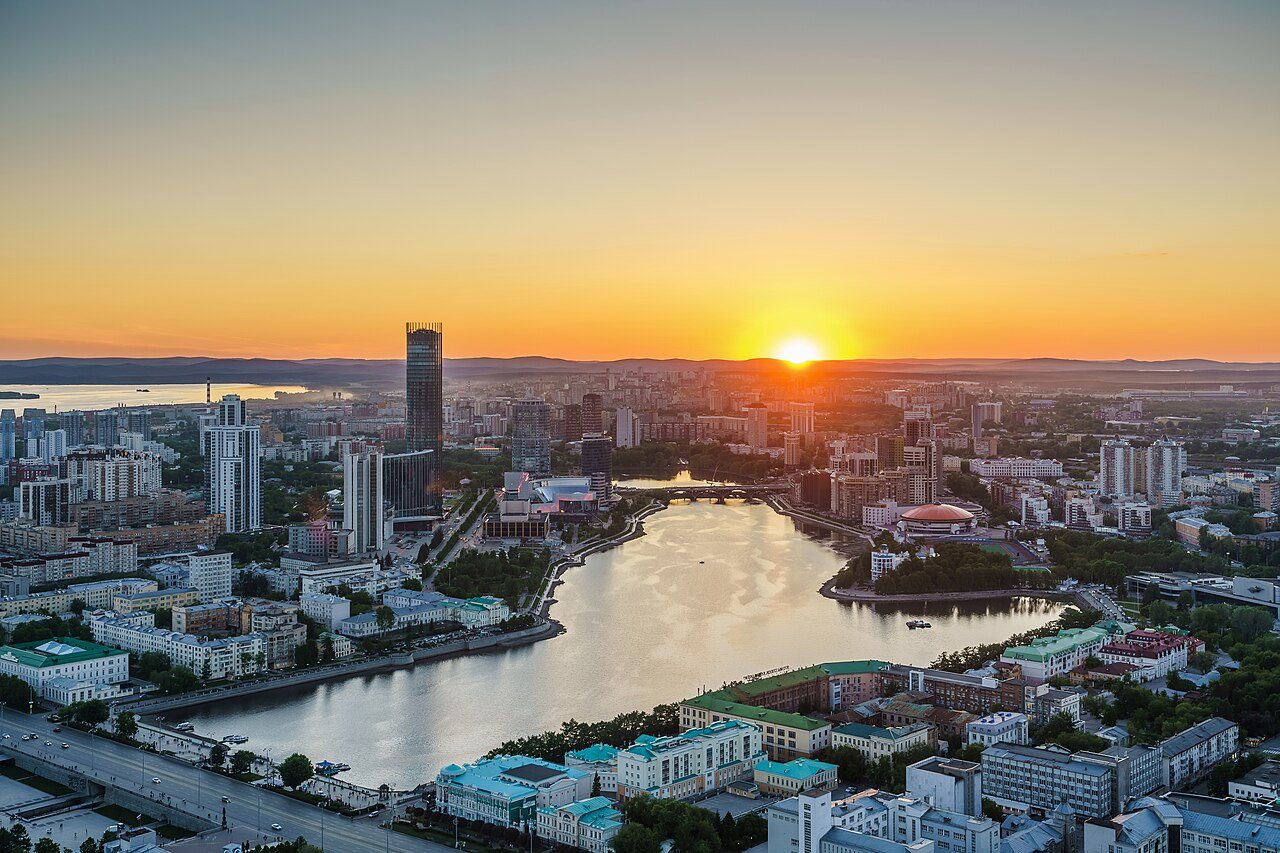
E-burg asv2019-05 img46 view from Vysotsky
Church on the Blood, Yekaterinburg-121
Sevastyanov House, district court, Yekaterinburg
E-burg asv2019-05 img30 UrFU Mira19
Yekaterinburg-2021-08 - 1
Yekaterinburg's downtown on the Iset embankment
Bronze Age five-sickle casting mold, Sverdlovsk Regional Museum of Local Lore
Uktus plant, 1730
Uktus plant, 1730
Yekaterinburg, 1789
Yekaterinburg, 1789
Plan of Yekaterinburg, 1743
Cathedral on the Blood stands on the site of the Ipatiev House, where the Romanovs, the last royal family of Russia, were murdered
Snow-covered statue of Yakov Sverdlov
12 images

Yekaterinburg was founded on 18 November 1723 and named after Catherine I, the wife of Peter the Great. It served as the mining capital of the Russian Empire and a strategic link between Europe and Asia. In 1781 Catherine the Great granted it the status of a district town of Perm Province and built the historical Siberian Route through the city. In the late 19th century it became a centre of revolutionary movements in the Urals, and during the Russian Civil War the Romanov family was murdered there.

Soviet Era and Renaming

This 1910 photo by Sergey Prokudin-Gorsky shows the tallest building in the Urals at the time, the Great Zlatoust bell tower
Building of the Administration of Yekaterinburg on 1905 Square
Building of the Legislative Assembly of Sverdlovsk Oblast
Residence of the presidential envoy to the Ural Federal District
Headquarters building of the Central Military District
Aquamarine apartment complex with the 188-meter Vysotsky skyscraper topped out in the background
Iset Tower, a 52-story residential skyscraper and the tallest building in Yekaterinburg, located near Yekaterinburg-City
Yekaterinburg-City along the Iset River
1st Pyatiletka Square, where Uralmash is headquartered
Vaynera Street, a pedestrian street with many shops
E22 bypass in the Chkalovsky District
Chkalovskaya station of the Yekaterinburg Metro
12 images

In 1924 the city was renamed Sverdlovsk after the Bolshevik leader Yakov Sverdlov. During the Soviet period a tram network was completed in 1929, and the city and its surroundings became a heavy industry powerhouse. The Sverdlovsk Metro opened in April 1991, and in September of that year the city regained its historical name.

Modern Significance

Koltsovo Airport
Koltsovo Airport
Regional Clinical Hospital No. 1
Main building of the Technical University of UMMC
Ural State Mining University
Yekaterinburg TV Tower before its demolition
Europe-Asia border marker near Yekaterinburg
Yekaterinburg Circus
Rastorguyev-Kharitonov Palace, built from 1794 to 1820
White Tower of the Ural Heavy Machinery Plant
District Officers' House
Construction site in Yekaterinburg
Central Stadium, Yekaterinburg, August 2022
12 images

Yekaterinburg is one of Russia's most important economic centres and was a host city of the 2018 FIFA World Cup. In the 21st century it has seen economic and population growth, which led to some of Russia's tallest skyscrapers being built there. The city hosts the headquarters of the Central Military District and the presidium of the Ural Branch of the Russian Academy of Sciences, and it is known for its constructivist architecture.

In 128 languages

Редакція Factograf · Published October 14, 2026 · Partly based on Wikipedia, CC BY-SA 4.0 · Source article