
Xi Jinping (born 1953) is a Chinese politician who has led the Chinese Communist Party since 2012 and became president of China in 2013. Born in Beijing to a revolutionary family, he spent several years as a rural youth during the Cultural Revolution before rising through provincial posts. Since taking power he has overseen an anti-corruption campaign, a restructured military, and an assertive foreign policy, and his ideology has been written into the party and national constitutions.
Early life and rural years
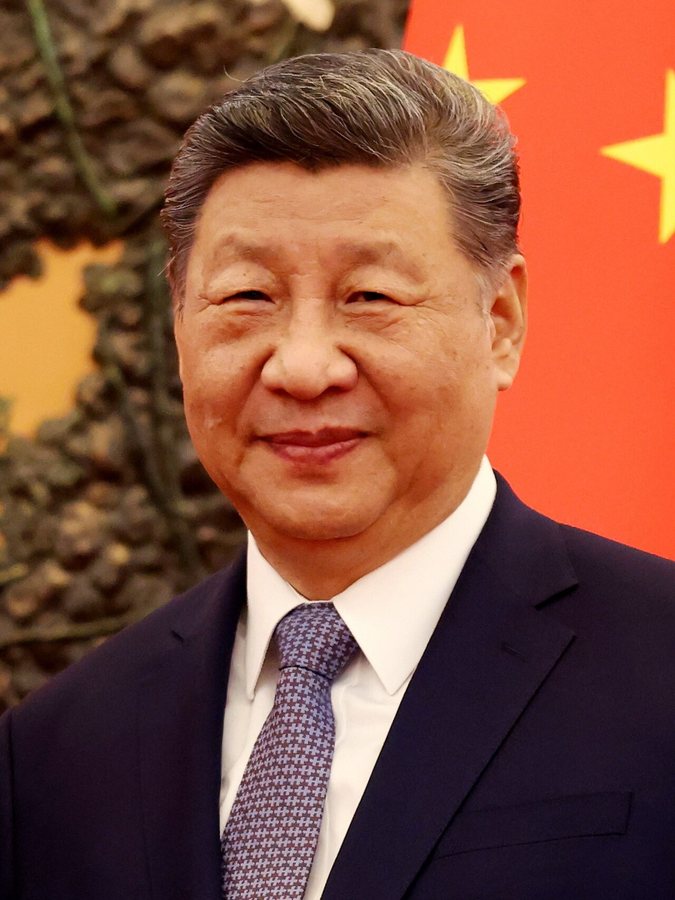


Xi was born in Beijing as the son of Xi Zhongxun, a Communist revolutionary whose career was disrupted by a purge in 1963. During the Cultural Revolution, Xi was persecuted because of his father's status and sent to Liangjiahe village in Shaanxi, where he lived in a traditional cave dwelling. After several attempts, he joined the party there and later led the village party branch. He then studied chemical engineering at Tsinghua University from 1975 to 1979.
Rise through the party


After graduating, Xi worked in the General Office of the State Council and then held local posts in Hebei, Fujian and Zhejiang. He briefly led the Shanghai party committee in 2007 after a predecessor was removed, the same year he joined the Politburo Standing Committee. He became vice president in 2008 and vice chairman of the Central Military Commission in 2010, before succeeding Hu Jintao as leader in 2012.
Policies and governance


His tenure has included the Made in China 2025 industrial policy, poverty alleviation and a broad anti-corruption campaign. Critics point to tighter state control, expanded censorship and surveillance, and crackdowns on private sectors and Hong Kong's pro-democracy movement. In 2018 the constitution was amended to remove presidential term limits, and he was re-elected in 2023 for a third term.