factograf
EN
Sign in

1914–1918 global conflict

World War I

World War I

World War I, also known as the First World War or the Great War, was a global conflict fought from 28 July 1914 to 11 November 1918 between the Allies (Entente) and the Central Powers. It caused an estimated 15 to 22 million deaths, including those resulting from war crimes and genocides, and contributed to the spread of the Spanish flu pandemic. The war brought major advances in weaponry, including machine guns, artillery, aircraft, chemical weapons and tanks.

Causes of the war

Battle of Verdun, 1916
British 39th Siege Battery of the Royal Garrison Artillery on the Somme, 1916
American troops advancing to the front line in the Forest of Argonne, France, 26 September 1918
Sul Grappa, cropped
Sul Grappa, cropped
Arab Camel Corps
Arab Camel Corps
Przemysl Fortress, photographed by Bain, Library of Congress
World empires and colonies around 1914
SMS Rheinland, a Nassau-class battleship, Germany's first response to the British Dreadnought, 1910
Long thought to show the arrest of Gavrilo Princip (right), this photo is now believed to depict an innocent bystander, Ferdinand Behr, on 28 June 1914
Crowds on the streets after the anti-Serb riots in Sarajevo, 29 June 1914
Cheering crowds in London and Paris on the day war was declared
Serbian Army Blériot XI "Oluj", 1915
12 images

The war grew out of the rise of the German Empire, which disturbed the long-standing balance of power in Europe, and from intensifying imperial rivalries. These were reflected in shifting alliances and an arms race between the great powers. Tensions in the Balkans reached a breaking point in June 1914, when a Bosnian Serb assassinated the heir to the Austro-Hungarian throne. Austria-Hungary declared war on Serbia, Russia mobilised in its defence, and within days Germany was at war with Russia and France, while the United Kingdom entered after Germany invaded Belgium.

Stalemate and collapse

Battleships of the High Seas Fleet, 1917
U-155 displayed near Tower Bridge in London after the 1918 Armistice
Refugee transport from Serbia in Leibnitz, Styria, 1914
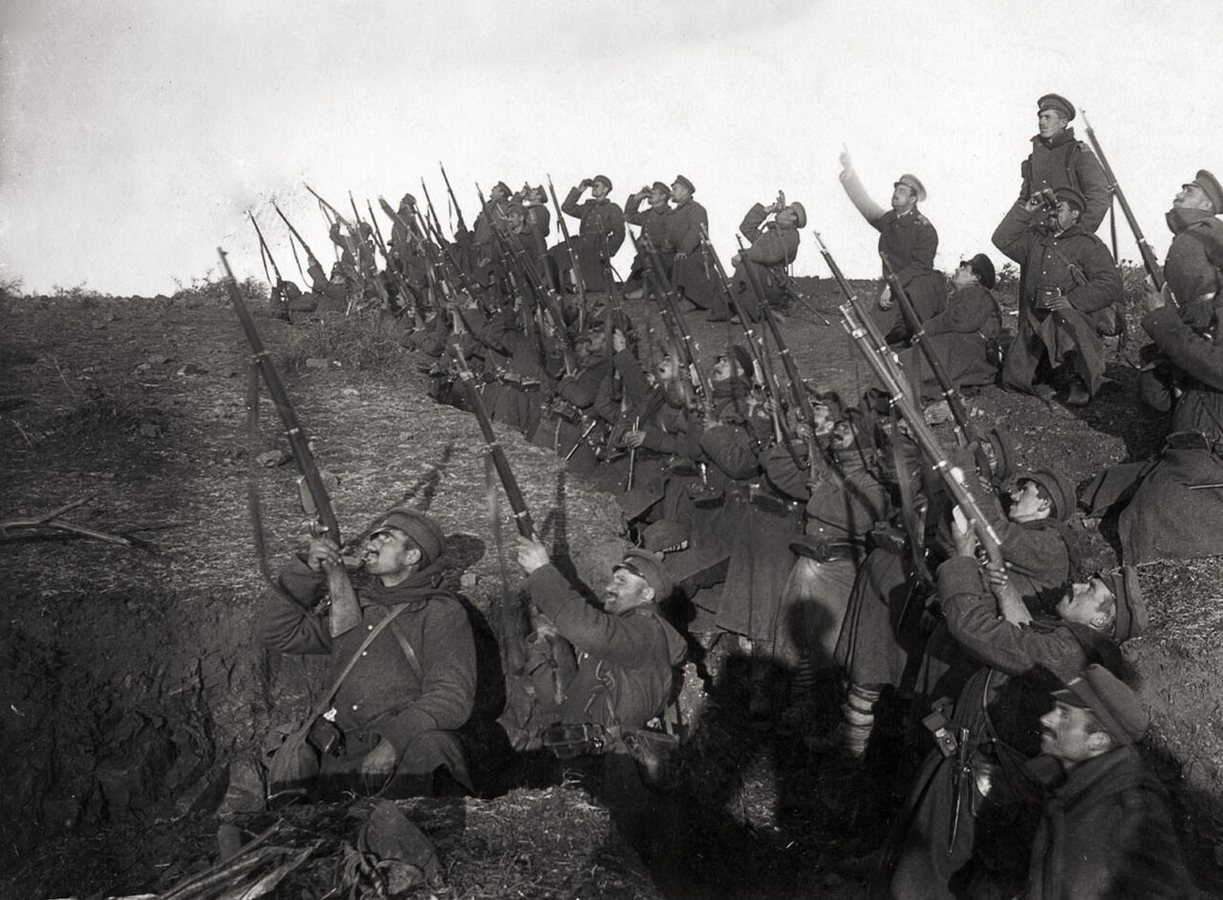
Bulgarian soldiers in a trench, preparing to fire on an incoming aeroplane
Austro-Hungarian troops executing captured Serbians, 1917; Serbia lost about 850,000 people during the war, a quarter of its pre-war population
Australian troops charging near a Turkish trench during the Gallipoli campaign
Russian forest trench at the Battle of Sarikamish, 1914–1915
Kaiser Wilhelm II and Prince Leopold of Bavaria inspecting Turkish troops of the 15th Corps in East Galicia, Austria-Hungary (now Poland)
Isonzo offensives, 1915–1917
Austro-Hungarian trench at 3,850 metres in the Ortler Alps, one of the most challenging fronts of the war
Tsar Nicholas II and Grand Duke Nikolasha after the Russian capture of Przemyśl, the longest siege of the war
"They shall not pass", a phrase typically associated with the defence of Verdun
12 images

Germany's plan to quickly defeat France failed, and the Western Front settled into a near-continuous line of trenches from the English Channel to Switzerland. Major battles such as Verdun, the Somme and Passchendaele did not break the deadlock. The United States joined the Allies in 1917, and after Soviet Russia signed a separate peace, Allied offensives in 1918 caused the German front to collapse. Facing revolution at home, Kaiser Wilhelm II abdicated, and an armistice took effect on 11 November 1918.

Aftermath

Italian troops reach Trento during the Battle of Vittorio Veneto, 1918
Ferdinand Foch (second from right) outside the railway carriage at Compiègne after agreeing to the armistice that ended the war there
Signing of the Treaty of Versailles in the Hall of Mirrors, Versailles, 28 June 1919, painting by Sir William Orpen
Greek prime minister Eleftherios Venizelos signing the Treaty of Sèvres
Dissolution of Austria-Hungary after the war
Men transporting a wounded Ottoman soldier at Sirkeci
Emergency military hospital during the Spanish flu pandemic at Camp Funston, Kansas, 1918
British prisoners guarded by Ottoman forces after the First Battle of Gaza in 1917
U.S. Army recruiting poster with Uncle Sam, 1917
Poster showing women workers, 1915
Poster urging women to join the British war effort, published by the Young Women's Christian Association, 1915
Bermuda Volunteer Rifle Corps First Contingent in Bermuda, winter 1914–1915, before joining the 1st Lincolnshire Regiment in France in June 1915; the two contingents suffered 75% casualties
12 images

The Paris Peace Conference of 1919–1920 imposed settlements on the defeated powers. Under the Treaty of Versailles, Germany lost significant territory, was disarmed and was required to pay large reparations. The collapse of the Russian, German, Austro-Hungarian and Ottoman empires created new national boundaries and independent states, including Poland, Finland and Czechoslovakia. The League of Nations was founded to keep the peace, but its failure to manage interwar instability contributed to the outbreak of World War II in 1939.

In 226 languages

EnglishČeštinaDeutschEspañolFrançaisItaliano日本語PolskiPortuguêsРусскийУкраїнська中文AbkhazianAfrikaansShqipአማርኛOld EnglishAragoneseالعربيةMoroccan ArabicEgyptian ArabicAsturianuঅসমীয়াAvaricAwadhiAzbAzərbaycanBalineseBavarianbat-smgБашҡортBikolБеларускаяБългарскиBhojpuriBlkBamanakanবাংলাབོད་སྐད་BrezhonegBosanskiBtmБуряадCatalàCdoНохчийнکوردیی ناوەندیCorsicanCrimean TatarChurch SlavicЧӑваш чӗлхиCymraegDanskZazaDolnoserbšćinaDtyΕλληνικάEmlEsperantoEestiEuskaraExtremaduranفارسیfiu-vroSuomiFøroysktArpitanNorthern FrisianFurlanFryskGagauzGan ChineseGaeilgeGcrGàidhligGalegoGuaraniગુજરાતીGaelgHakka ChineseHausaעבריתFiji Hindiहिन्दीHrvatskiHornjoserbšćinaHaitian CreoleMagyarՀայերենHywInterlinguaIbanBahasa IndonesiaInterlingueIlokoIngushIdoIsvÍslenskaJamaican Creole EnglishLojbanJawaKara-KalpakTaqbaylitJjuქართულიKabardianKbpTyapҚазақшаខ្មែរಕನ್ನಡ한국어Karachay-BalkarکٲشُرKurdî (kurmancî)KomiKernewekКыргызчаLadinoLatinLëtzebuergeschLezghianLingua Franca NovaLigureLimburgishLldLombardLietuviųLatviešuMadureseमैथिलीMokshaMalagasyMinangkabauMāoriМакедонскиമലയാളംМонголMnwमराठीMelayuMaltiMirandeseErzyaမြန်မာمازرونیNeapolitanNeddersass’sch (Nedderlannen)Neddersass’schनेपालीNewariNederlandsNorsk nynorskNorskߒߞߏNrmNyanjaOccitanOloOromooଓଡ଼ିଆИронPapiamentoਪੰਜਾਬੀPicardPiemontèisWestern PanjabiپښتوRunasimiRumantschroa-rupRoa (Tara)RomânăRusynСаха тылаᱥᱟᱱᱛᱟᱲᱤSicilianuScotsSarduسنڌيSrpski (latinica)සිංහලSkrSlovenčinaSlovenščinaSamoanChiShonaSoomaaliShqipСрпскиSwatiSaterland FrisianBasa SundaSvenskaKiswahiliŚlōnskiSzyதமிழ்తెలుగుТоҷикӣไทยTürkmen diliFilipinoTalyshToki ponaTürkçeТатарئۇيغۇرچەاردوO‘zbekVenetoVepsTiếng ViệtWest FlemishVolapükWarayWalloonWolofWu ChineseMingrelianייִדישÈdè YorùbáZeelandicⵜⴰⵎⴰⵣⵉⵖⵜzh-yue

Редакція Factograf · Published October 14, 2026 · Partly based on Wikipedia, CC BY-SA 4.0 · Source article