
Warsaw, officially the Capital City of Warsaw, is the capital and most populous city of Poland. It lies on the Vistula river in east-central Poland and is the country's seat of government as well as the capital of the Masovian Voivodeship. With an official population of about 1.87 million within a greater metropolitan area of around 3.5 million, it is the seventh most populous city in the European Union. Warsaw is classified as an alpha global city and serves as a major political, economic and cultural hub.
Origins and growth
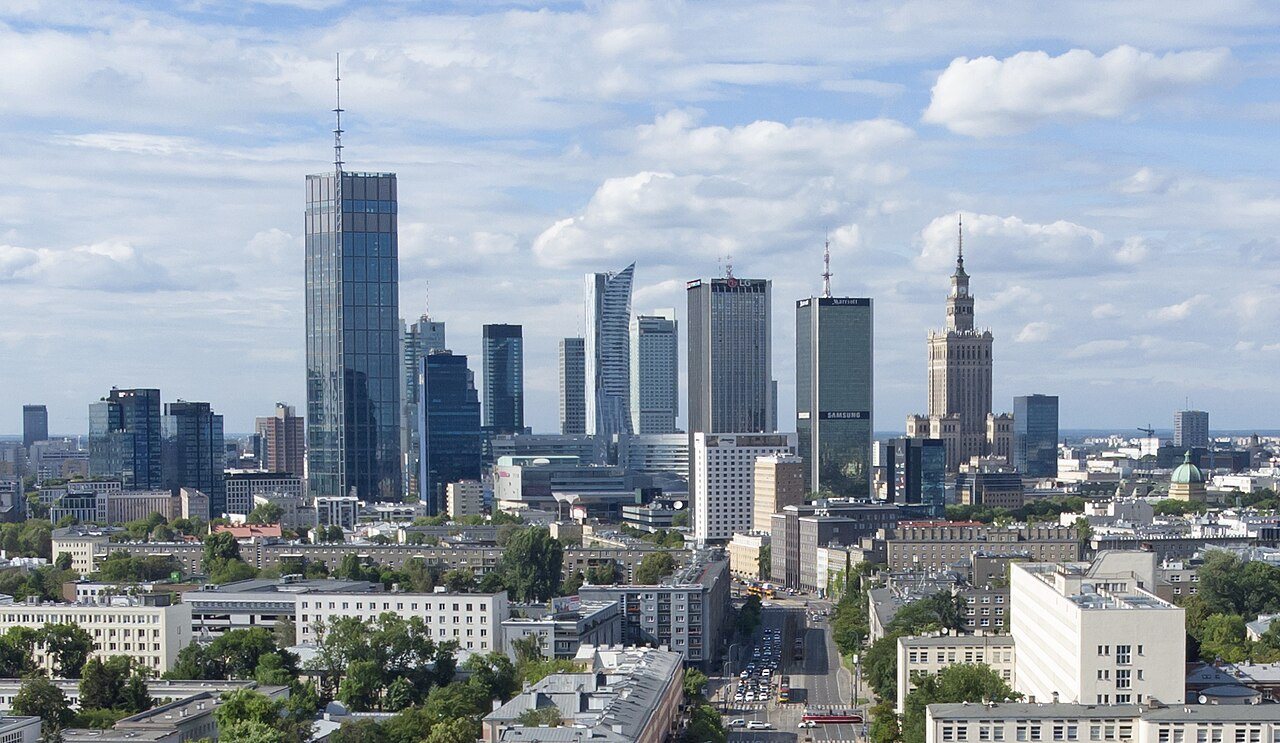


Warsaw began as a small fishing settlement and later developed into a fortified town. It became the seat of the Duchy of Masovia in 1413 and grew in importance after 1596, when Sigismund III moved the Polish capital and royal court there from Kraków. By the 18th century it had surpassed Gdańsk as Poland's largest city. It remained the capital of the Polish–Lithuanian Commonwealth until 1795 and later served as the seat of Napoleon's Duchy of Warsaw.
Wartime destruction


During the 19th century, industrialisation brought rapid population growth, and Warsaw became one of Europe's largest and most densely populated cities. It was bombed and besieged at the start of World War II in 1939. Much of the historic city was later destroyed and its diverse population decimated by the Ghetto Uprising in 1943, the Warsaw Uprising in 1944, and systematic razing. The reconstructed Old Town was listed as a UNESCO World Heritage Site in 1980.
Economy and culture


Warsaw is a significant economic centre for the region, home to the Warsaw Stock Exchange, the largest in Central and Eastern Europe. It hosts several European institutions, including the headquarters of Frontex. The city has one of Europe's largest concentrations of skyscrapers, and its primary universities, cultural institutions and landmarks include the University of Warsaw, the National Museum, the Royal Castle and the Wilanów Palace. Around a quarter of its area consists of parks.