factograf
EN
Sign in

sovereign state in Central Asia

Uzbekistan

Uzbekistan

Uzbekistan, officially the Republic of Uzbekistan, is a doubly landlocked country in Central Asia, bordered by Kazakhstan, Kyrgyzstan, Tajikistan, Afghanistan and Turkmenistan. It is one of only two doubly landlocked countries in the world. With more than 39 million people, it is the most populous country in Central Asia. Uzbek is the official language, spoken by the Uzbek people, who form more than 89% of the population. The country is a secular state with a semi-presidential government and is a member of the Commonwealth of Independent States, the United Nations and the Shanghai Cooperation Organisation.

Early and medieval history

Female statuette wearing the kaunakes, made of chlorite and limestone, from Bactria, early second millennium BC
Triumphant crowd at the Registan and Sher-Dor Madrasah, with the Emir of Bukhara viewing severed heads of Russian soldiers on poles, painted by Vasily Vereshchagin in 1872
Timur's empire at his death (map without vassals)
Two Sart men and two Sart boys in Samarkand, around 1910
Satellite image of Uzbekistan, March 2005
Cotton picking near Kyzyl-Kala, Karakalpakstan
Comparison of the Aral Sea between August 22, 1964 and August 25, 2026
Official portrait of Shavkat Mirziyoyev, cropped
Minnikhanov at Vladimir Putin's state visit to Uzbekistan, 27 May 2024, cropped
The Legislative Chamber of Uzbekistan, the lower house
10 images

Scythian nomads were among the first recorded settlers in the region, and Achaemenid and later Greco-Bactrian rule followed. Cities such as Bukhara and Samarkand grew wealthy from the Silk Road trade and became centres of the Islamic Golden Age. Timur later established the Timurid Empire, with Samarkand becoming a centre of science under Ulugh Beg, which gave rise to the Timurid Renaissance. Most of Central Asia was gradually incorporated into the Russian Empire during the nineteenth century.

Soviet era and independence

President Islam Karimov with U.S. Secretary of State John Kerry in Samarkand, November 2015
Leaders at the SCO summit in Samarkand, Uzbekistan, in 2022
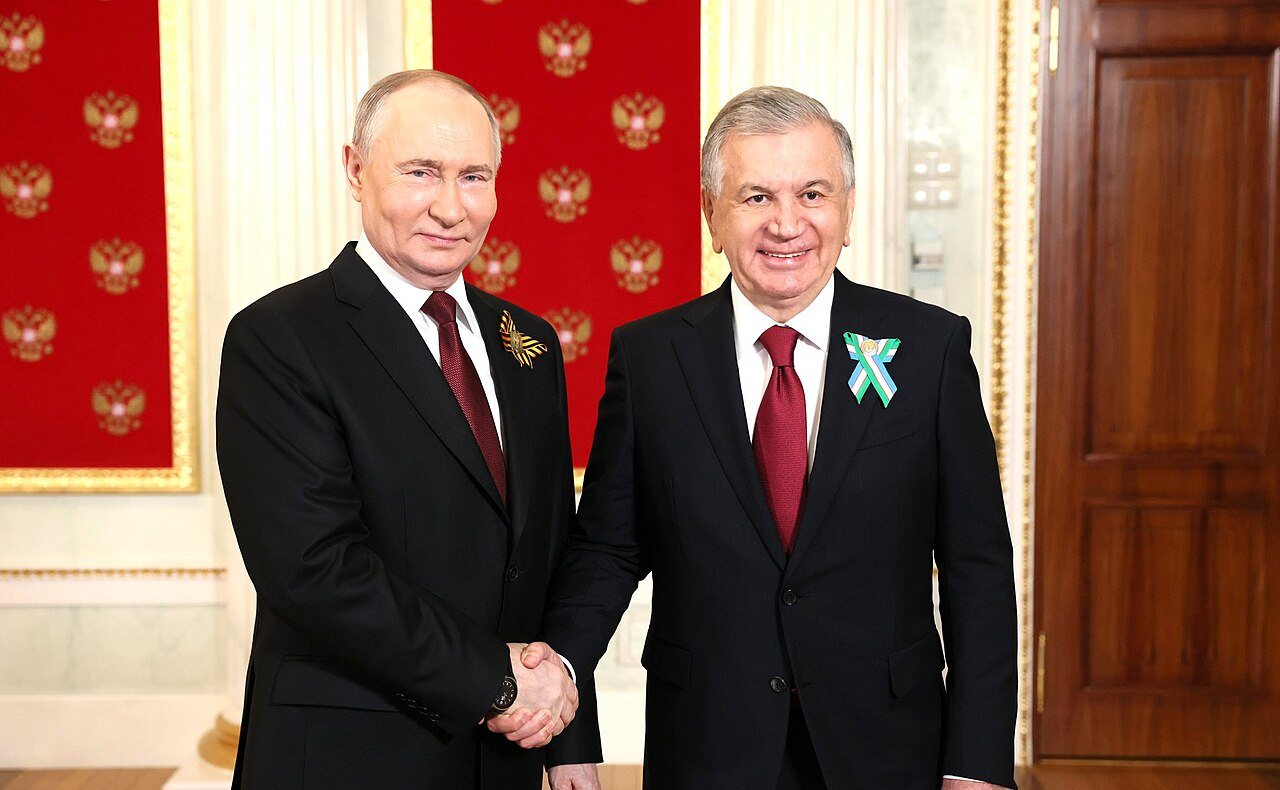
President Shavkat Mirziyoyev with Russian president Vladimir Putin before the Moscow Victory Day Parade on 9 May 2024
Uzbek troops during a cooperative operation exercise
Yodgorlik silk factory
Bread sellers in Urgut selling Samarkand non
Central Station of Tashkent
The Afrosiyob high-speed train
Newlywed couples visit Tamerlane's statues to receive wedding blessings
A page in Uzbek language written in Nastaliq script, printed in Tashkent in 1911
10 images

In 1924 national delimitation created the Uzbek Soviet Socialist Republic within the Soviet Union. During this period the country became a leading producer of cotton and melons and made notable advances in science and technology. Uzbekistan declared independence as the Republic of Uzbekistan in 1991 following the collapse of the Soviet Union. Since the death of its first president, Islam Karimov, the government under Shavkat Mirziyoyev has introduced significant reforms.

Economy

Mosque of Bukhara
Mosque of Bukhara
Bukharan Jews, around 1899
Traditional Uzbek pottery
Navoi Opera Theater in Tashkent
Embroidery from Uzbekistan
Silk and Spice Festival in Bukhara
Palov
Palov
Uzbek manti
Uzbek manti
Milliy Stadium in Tashkent
9 images

The economy is gradually moving toward a market system, and the currency became fully convertible at market rates in September 2017. The country is a major producer and exporter of cotton and has become the largest electricity producer in Central Asia, supported by power facilities from the Soviet era and natural gas reserves.

In 253 languages

EnglishČeštinaDeutschEspañolFrançaisItaliano日本語PolskiPortuguêsРусскийУкраїнська中文AbkhazianAcehneseAdygheAfrikaansShqipAmiአማርኛOld EnglishAngikaAragoneseAramaicالعربيةMoroccan ArabicEgyptian ArabicAsturianuঅসমীয়াAvaricAwadhiAymaraAzbAzərbaycanBalineseBavarianbat-smgБашҡортBikolБеларускаяBetawiБългарскиBhojpuriBislamaবাংলাབོད་སྐད་BishnupriyaBrezhonegBosanskiBugineseБуряадCatalàcbk-zamCdoCebuanoНохчийнᏣᎳᎩCheyenneکوردیی ناوەندیCorsicanCrimean TatarKashubianChurch SlavicЧӑваш чӗлхиCymraegDagDanskZazaDolnoserbšćinaCentral DusunDtyDivehiརྫོང་ཁEʋegbeΕλληνικάEsperantoEestiEuskaraExtremaduranفارسیfiu-vroSuomiFøroysktArpitanNorthern FrisianFryskGagauzGaeilgeGcrGàidhligGilakiGalegoGuaraniकोंकणीગુજરાતીGaelgHakka ChineseHausaʻŌlelo HawaiʻiעבריתFiji Hindiहिन्दीHrvatskiHornjoserbšćinaHaitian CreoleMagyarՀայերենHywInterlinguaIbanBahasa IndonesiaInterlingueIlokoIdoÍslenskaJamaican Creole EnglishJawaKara-KalpakTaqbaylitქართულიKabardianKbpKgeKongoGikuyuҚазақшаខ្មែរKanuriಕನ್ನಡ한국어Karachay-BalkarکٲشُرKurdî (kurmancî)KomiKernewekКыргызчаLadinoLatinLëtzebuergeschLezghianLingua Franca NovaLigureLimburgishLldLombardLingálaລາວLietuviųLatviešuMadureseMagahiमैथिलीMokshaMalagasyMariMinangkabauMāoriМакедонскиമലയാളംমৈতৈলোন্МонголमराठीMelayuMaltiErzyaမြန်မာمازرونیNeddersass’schनेपालीNewariNederlandsNorsk nynorskNovialNorskNavajoOccitanOloOromooଓଡ଼ିଆИронPampangaPapiamentoਪੰਜਾਬੀPicardPiemontèisWestern PanjabiپښتوRunasimiRomânăRusynIkinyarwandaСаха тылаᱥᱟᱱᱛᱟᱲᱤसंस्कृत भाषाSicilianuScotsSarduسنڌيDavvisámegiellaⵜⴰⵛⵍⵃⵉⵜတႆးSrpski (latinica)සිංහලSkrSlovenčinaSlovenščinaAnarâškielâSamoanChiShonaSoomaaliShqipСрпскиSwatiBasa SundaSvenskaKiswahiliŚlōnskiSzyதமிழ்TayTuluTetumతెలుగుТоҷикӣไทยTürkmen diliFilipinoTalyshToki ponaLea fakatongaTarokoTürkçeТатарTumbukaТываUdmurtئۇيغۇرچەاردوO‘zbekVenetoVepsTiếng ViệtWest FlemishVolapükWarayWolofWu ChineseMingrelianייִדישÈdè YorùbáVahcuenghZeelandicⵜⴰⵎⴰⵣⵉⵖⵜzh-yue

Редакція Factograf · Published October 14, 2026 · Partly based on Wikipedia, CC BY-SA 4.0 · Source article