
South Korea, officially the Republic of Korea, is a country in East Asia that occupies the southern half of the Korean Peninsula and nearby islands. It borders North Korea along the Korean Demilitarized Zone, with the Yellow Sea to the west and the Sea of Japan to the east. Its population of about 52 million is concentrated in the Seoul metropolitan area, where roughly half of the people live, with Busan, Daegu, and Incheon as other major cities.
Historical background


The peninsula was inhabited from the Lower Paleolithic period, and Korean kingdoms such as Goryeo and Joseon shaped a distinct national identity over many centuries. After Japanese annexation in 1910 and the end of Japanese rule in 1945, the peninsula was divided into Soviet and American occupation zones. The southern zone became the Republic of Korea in August 1948, and the Korean War from 1950 to 1953 ended in an armistice without a peace treaty.
Economy and democracy


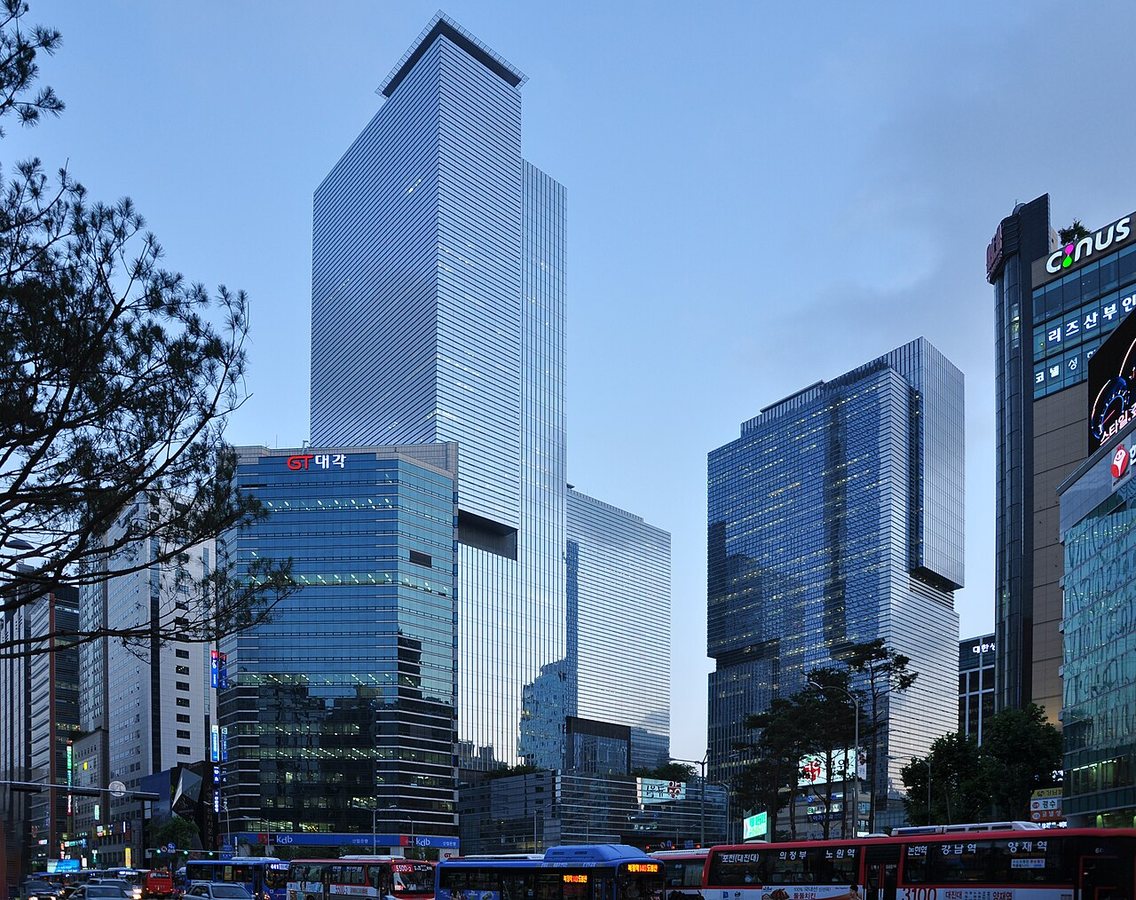


After decades of authoritarian rule, the June Democratic Struggle of 1987 led to the current Sixth Republic. The country has since developed into one of the world's largest economies, with strong exports, advanced technology, and a highly developed education system. It is a presidential republic with a unicameral National Assembly and is a major non-NATO ally of the United States.
Culture and influence


South Korea is known internationally for the Korean Wave, a wave of popular culture that includes music, television dramas, and films. Its traditional arts, cuisine, and sports such as taekwondo and baseball remain widely practiced. The country also has some of the fastest internet speeds and densest high-speed rail networks in the world.